

Image made with ChatGPT
Teaching is both an art and a science, and few frameworks articulate this better than Rosenshine’s Principles of Instruction. These ten research-backed principles provide a blueprint for effective teaching, focusing on elements such as scaffolding, questioning, and regular review. While they have long been a staple of high-quality instruction, integrating AI into how we further embed these elements provides an opportunity to enhance their impact and save teachers planning time. In this blog, I’ll explore why Rosenshine’s Principles remain so important and how AI can help teachers embed them into daily practice.
Why Rosenshine’s Principles Matter
Rosenshine’s framework is rooted in decades of research into how students learn best. His work draws from observational studies of the most effective teachers (Rosenshine, 2012), cognitive load theory (Sweller, 1988), and the science of retrieval practice (Agarwal & Bain, 2019). At its core, it highlights the importance of breaking down new learning into manageable steps, ensuring students aren’t overwhelmed by cognitive overload. This approach aligns closely with Vygotsky’s (1978) Zone of Proximal Development, where learners benefit from guided instruction before gradually moving towards independence. It also reinforces what we know about the power of retrieval practice, regularly recalling and applying knowledge strengthens memory and prevents forgetting (Roediger & Karpicke, 2006). Effective questioning is another key element, helping to diagnose misconceptions early and deepen student understanding, an idea supported by Black and Wiliam’s (1998) work on formative assessment. In short, Rosenshine’s principles are not just a teaching framework; they’re a synthesis of what cognitive science tells us about effective learning. The challenge, of course, is making them happen consistently in the classroom. This is where AI can play a crucial role; acting as a tool to support, streamline, and enhance these evidence– based strategies, rather than replacing the human connection at the heart of great teaching.
Harnessing AI to Support Rosenshine’s Principles
| Principle | Research | Prompts for AI |
Daily review  | The most effective teachers in the studies of classroom instruction understood the importance of retrieval practice, and they began their lessons with a five- to eight-minute review of previously covered material. Effective teacher activities also included reviewing the concepts and skills that were necessary to do the homework, having students correct each others’ papers, and asking about points on which the students had difficulty or made errors. Effective teachers also reviewed the knowledge and concepts that were relevant for that day’s lesson. | Create a multiple choice quiz on … Act as a knowledgeable Year … Religious Studies teacher who is an expert at reviewing previous learning. The quiz should be 10 questions long, have 4 possible answers and the correct answer identified. I would like the questions to get progressively more difficult but be written for the reading age of … year old. |
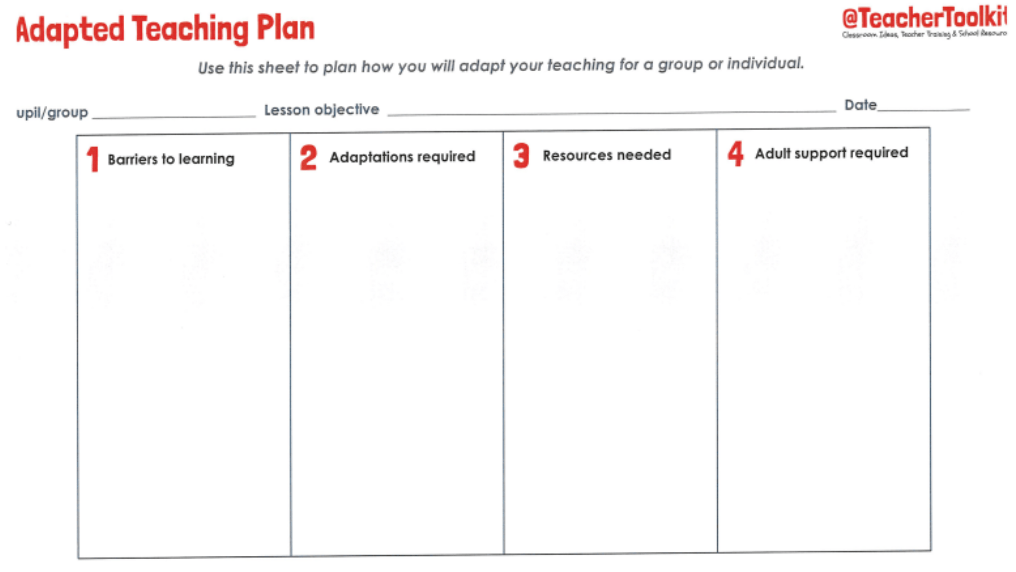
New material in small steps  | Our working memory, the place where we process information, is small. It can only handle a few bits of information at once—too much information swamps our working memory. Presenting too much material at once may confuse students because their working memory will be unable to process it. Some successful teachers taught by giving a series of short presentations using many examples. The examples provided concrete learning and elaboration that were useful for processing new material. | Create 4 tasks that will chunk the topic of … You are an experienced Religious Studies teacher, you know the importance of scaffolding tasks for your students. You are teaching … and many students are struggling with … Can you create a bank of tasks which chunks this topic into smaller more manageable parts. Are there underrepresented voices on this topic I can include? |
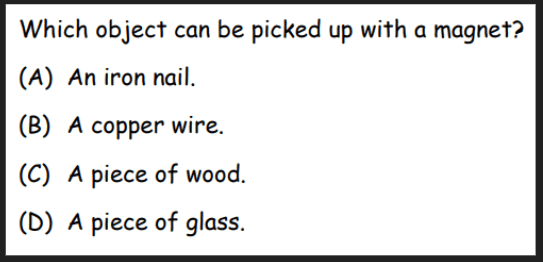
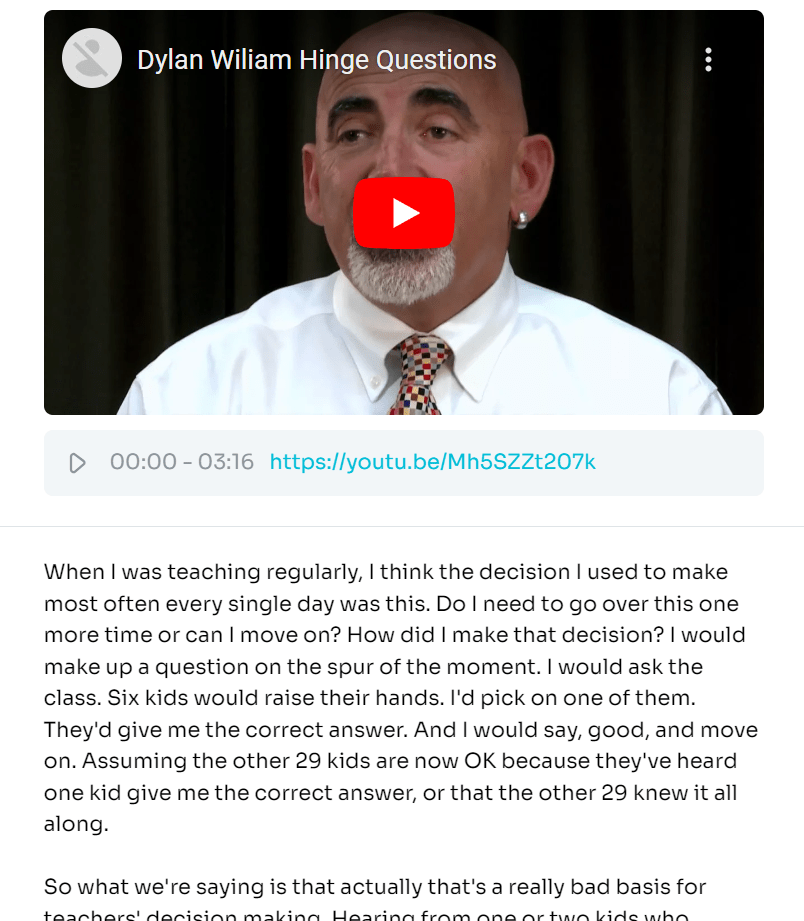
Ask questions  | Students need to practise new material. The teacher’s questions and student discussion are a major way of providing this necessary practice. The most successful teachers in these studies spent more than half of the class time lecturing, demonstrating, and asking questions. Questions allow a teacher to determine how well the material has been learned and whether there is a need for additional instruction. The most effective teachers also ask students to explain the process they used to answer the question, to explain how the answer was found. Dylan Wiliam – Hinge Questions | Create a sequence of hinge questions on the topic of.. Act as an experienced secondary Religious Studies teacher who is an expert in accessing students knowledge before moving on. You are well versed in Dylan Wiliam’s ‘hinge questions’. Create a set of hinge questions for … I would like the questions to get progressively more difficult but be written for the reading age of … year old. I would also like a bank of possible misconceptions within this topic. Are there underrepresented voices on this topic that I can include? |
Provide models  | Students need cognitive support to help them learn to solve problems. The teacher modelling and thinking aloud while demonstrating how to solve a problem are examples of effective cognitive support. Worked examples (such as a maths problem for which the teacher not only has provided the solution but has clearly laid out each step) are another form of modelling that has been developed by researchers. | Create a model of a GCSE Religious Studies exam answer to … You are an experienced Religious Studies teacher, you know the importance of modelling tasks for your students. You are teaching … and need to guide them through the process of writing an extended answer. Can you create a model answer, with questions to check knowledge, understanding and clarity at various points through the answer. The model should be written at a reading level of 15 years old. OR You are going to act as the teacher, modelling and showing how you have problem solved the answer to this question. You are an expert in Rosenshine’s principles of instruction and know the importance of providing models. I am a Year 10 Religious Studies student studying … . How should I answer this 12 mark question: … This is the mark scheme and/or assessment criteria: I would like you to pause and explain your workings out. I would also like you to ask me what I think I should add at various points during your answer too. This interaction should last 5minutes and by the end we will have worked together to understand what is required to answer this question. |
Guide student practice  | The most successful teachers presented only small amounts of material at a time. After this short presentation, these teachers then guided student practice. This guidance often consisted of the teacher working on the first problems at the board and explaining the reason for each step, which served as a model for the students. The guidance also included asking students to come to the blackboard to work out problems and discuss their procedures. Through this process, the students seated in the classroom saw additional models. | Create a ‘I do, we do, you do’ task on the role of Women in the Church, which follows the Edexcel iGCSE Religious Studies course on Human Rights. You are an experienced Religious Studies teacher; you know the importance of guided student practice. You are teaching them how to complete an extended answer on the role of women in the Church, you need to guide them through the process by modelling on the board. You want to get them practising with a slightly different question that you can collaborate on. Finally, you need another variation of the question so that they can complete it independently. The different questions should be written at a reading level of 15 years old. |
Check student understanding  | The more effective teachers frequently checked to see if all the students were learning the new material. These checks provided some of the processing needed to move new learning into long-term memory. These checks also let teachers know if students were developing misconceptions. | Create comprehension questions on the following [topic/text/video]. You are an experienced Religious Studies teacher; you are teaching year … and you know the importance of checking students’ understanding. You are teaching them … and they have just covered … Can you create a bank of questions which get more challenging following Bloom’s Taxonomy? The different questions should be written at a reading level of … years old. Are there underrepresented voices on this topic I can include? OR Create discussion questions or questions to use in a Harkness-style discussion on the following [topic/text/video]. You are an experienced Religious Studies teacher; you are teaching year … and you know the importance of checking students’ understanding by engaging them in discussion and debate. You are teaching them … and they have just covered … Can you create a bank of questions that facilitate questions to use in a Harkness-style discussion. The different questions should be written at a reading level of … years old. Are there underrepresented voices on this topic I can include? |
Obtain high success rate  | In two of the major studies on the impact of teachers, the investigators found that students in classrooms with more effective teachers had a higher success rate, as judged by the quality of their oral responses during guided practice and their individual work. A high success rate during guided practice also leads to a higher success rate when students are working on problems on their own. In a study of fourth-grade mathematics, it was found that 82 percent of students’ answers were correct in the classrooms of the most successful teachers, but the least successful teachers had a success rate of only 73 percent. The research also suggests that the optimal success rate for fostering student achievement appears to be about 80 percent. A success rate of 80 percent shows that students are learning the material, and it also shows that the students are challenged. | AI as Tutor/Mentor: Building your own prompt To build your own AI mentor, start with the learning goal. For instance, the goal for the assignment or lesson is … [include assessment objectives or learning outcomes] for students. Role: Tell the AI who it is. For example, you are a friendly, helpful tutor who gives students advice and feedback about their work. Goal: Tell the AI what you want it to do. For instance, give students feedback on their [project outline, assignment] that takes the assignment’s goal into account and pinpoints specific ways they might improve the work. Step-by-step instructions. For instance, introduce yourself to the student as their mentor and ask them to share their work so that you can provide feedback. Wait for the student to respond. Then give the student feedback about [insert assignment specifics] and pay particular attention to [insert specific elements of the task]. Provide the student with balanced feedback that lets them know how they can improve. Add personalisation. Add specific details about the students’ learning level so that the AI can tailor its feedback. For instance, this is a new project that students are working on. This is a first attempt at a proposed outline. General suggestions that address gaps, and missing steps, are helpful. Add your own constraints. For instance, you can tell the AI to provide students with suggestions but not to revise the work. Note, this final instruction may or may not work; the AI tends to “want” to be helpful. Final Step: Check your prompt by trying it out given an example top, middling, and bottom assignment. Take the perspective of your students – is the AI helpful? Does the process work? How might the AI be more helpful? Does it need more context? Does it need further constraints? You can continue to tweak the prompt until it works for you and until you feel it will work for your students. |
Scaffolds for difficult tasks  | Teachers successfully provided students with scaffolds, or instructional supports, to help them learn difficult tasks. A scaffold is a temporary support that is used to assist a learner. These scaffolds are gradually withdrawn as learners become more competent, although students may continue to rely on scaffolds when they encounter particularly difficult problems. Providing scaffolds is a form of guided practice. Scaffolds include modelling the steps by the teacher, or thinking aloud by the teacher as he or she solves the problem. Scaffolds also may be tools, such as cue cards or checklists, that complete part of the task for the students, or a model of the completed task against which students can compare their own work. | Copilot to create (WAGOLLs – what a good one looks like – and WABOLLs – what a bad one looks like) Create WAGOLLs – what a good one looks like – and WABOLLs – what a bad one looks like. You are an experienced Religious Studies teacher; you are teaching year … and you know the importance of scaffolding difficult tasks. You want to create WAGOLLs and WABOLLs for the following … [exam question/extended writing…] to support students in their understanding. The different answers should be written at a reading level of … years old. Are there underrepresented voices on this topic I can include? Follow up task: Prompt: Now create a how-to guide explaining how to write a top-level answer for my students, Parameters: Format this with headings and bullet points. Write it at a reading age of ___ years old. Keep it simple and easy to understand. Extract keywords and create definitions Create a glossary on the topic of … You are an experienced Religious Studies teacher; you are teaching year … and you know the importance of scaffolding difficult tasks. You want to create a glossary to support your students. Read ‘the text’. Extract the key terminology. Write a brief and simple definition of each key term. Write the definitions with a reading age of 11 years old. The text: |
Independent practice  | In a classroom, students usually practice new material on their own after the teacher-guided practice. This independent practice is necessary because a good deal of practice (overlearning) is needed in order to become fluent and automatic in a skill. When they practice enough, they can remember the material automatically without thinking too hard. This allows them to focus on understanding and using the material better. Practising on their own helps students review and improve their skills. Being fluent in a subject is important for learning more advanced material. | Create comprehension question on the following [topic/text/video]. You are an experienced Religious Studies teacher; you are teaching year … and you know the importance of checking students understanding. You are teaching them … and they have just covered … Can you create a bank of questions which get more challenging following Blooms Taxonomy. The different questions should be written at a reading level of … years old. Are there underrepresented voices on this topic I can include? OR Create an assessment with a rubric which assess the skills of knowledge, application and evaluation at 3 different levels, emerging, secure and excellent. You are an experienced Religious Studies teacher; you know the importance of setting student independent practice. You want to create an assessment for your year 9 class on the topic of… you need it to assess the skills of knowledge, application and evaluation at 3 different levels, emerging, secure and excellent. The rubric should be understandable and at the reading level of … years old. |
Weekly and monthly review  | Students need to read a lot and practise extensively to develop a good understanding of ideas and concepts. Research on cognitive processing suggests that teachers should provide extensive reading materials, frequent reviews, discussions, and activities to help students learn and remember new information. These classroom activities help students organise and store new information in their long-term memory. Regular rehearsal and review of information strengthens their long– term memory and helps students recall past learning automatically. To become an expert, students need to practise for thousands of hours. The more they practise, the better they will perform. | Create a multiple choice quiz on … Act as a knowledgeable Year … Religious Studies teacher who is an expert at reviewing previous learning. The quiz should be 10 questions long, have 4 possible answers and the correct answer identified. I would like the questions to get progressively more difficult but be written for the reading age of … year old. |
Conclusions: AI as a ‘Co-Pilot’, not a Replacement
The reality is, AI will not replace teachers, but it certainly can enhance our effectiveness. By using AI to automate some of the heavy lifting, teachers can free up more time for what matters most, building relationships, responding to student needs, fostering critical thinking and building time for oracy in the classroom. Rosenshine’s principles provide the ‘why’ behind effective instruction. AI provides the ‘how’ to make these principles more accessible in everyday teaching. When used strategically, AI can help us become even more efficient and impactful educators, without losing the human element that makes teaching so powerful. So, why not experiment? Try out some of these AI prompts, adapt them to your subject, and share what works. Teaching is evolving, and AI; when used thoughtfully, can be a valuable ally in making Rosenshine’s research a reality in our classrooms.
References:
Agarwal & Bain (2019) Powerful Teaching: Unleash the Science of Learning
Black, P., & Wiliam, D. (1998). Inside the Black Box: Raising Standards Through Classroom Assessment.
Fitzpatrick, D., (2023). The AI Classroom: The Ultimate Guide To Artificial Intelligence in Education
Roediger, H. L., & Karpicke, J. D. (2006). The Power of Testing Memory: Basic Research and Implications.
Rosenshine, B. (2012). Principles of Instruction: Research-Based Strategies That All Teachers Should Know.
Sweller, J. (1988). Cognitive Load Theory.
Vygotsky, L. (1978). Mind in Society: The Development of Higher Psychological Processes.







 This Teacher Blogs