Exams, what are they good for?

For our most recent Teach Meet, we discussed ‘exams, what are they good for?’. This was inspired by a debate I listened to from UCL on ‘What if… we got rid of GCSEs?’: It’s for this reason that the discussion focused more on GCSE’s as these are exams that all students will take, whereas 11+ and A Levels are not required for all. This also felt like an important topic as over the past two exams seasons we have seen CAGs and TAGs, and all with their complexities. However, I think it’s fair to say that a lot of us in the teaching profession have recognised that the process of TAGs in some ways seemed more fair and has only further highlighted the pitfalls of end of year terminal, high stakes exams. Yet, in schools there isn’t much call for getting rid of terminal exams, due to concerns around accessibility, equity and well-being. How could we ensure that TAGs are fair, schools are not pressured by parents or league tables and how can we prevent unconscious bias when marking? But once again we have experienced a year of educational disruption due to COVID, and can we hand on heart say that the quality of online learning has been equal across the country? Will a student who has had to isolate multiple times over the past two years have the same educational experience as someone who has not? All of this is why we need to really consider, what are exams actually good for? Do they have a place in the future?

Once again, we discussed three provocations; what is the purpose of exams (GCSEs), can we trust GCSE grades and what could be the alternative?

What is the purpose of exams/GCSEs?

In the UCL debate, Tim Oates (Group Director of Assessment Research and Development, Cambridge Assessment), looked at highest performing ‘systems’, not just those who have exams, and of the top five performing systems, all of them had high stakes assessments at 16. Of the 19 countries looked at (with high performing systems), two thirds had external high stakes assessments at 16. Although, not necessarily in as many subjects as we currently have here in the UK. But it can be said that exams at this age seem ‘the norm’.

So then, what is their purpose? We use GCSE specifications to structure schemes of learning, provide resources, provide curriculum coherence, staff development, independent assessment and accountability for schools. Unfortunately, the accountability element has overshadowed other more important purposes, especially as everything said before doesn’t really have anything to do with the students’ needs.

For students, we could argue that exams or GCSEs provide motivation for students and, of course, data on performance. They let us know about a child’s achievement in subjects and allow students to progress (further education). But do GCSEs really do this? When it comes to achievement, does the terminal exam really show what they have a deep understanding of? Significantly, exams are never a test of everything they have studied. And, if their aim is progression, then do the current exams really build the skills that they need to get on in the future?

One point that came from this was that although they don’t feel fully fit for purpose, they do serve one important purpose which is ensuring that students have some record and acknowledgement of their achievements. This is also something that Gill Wyness (Deputy Director, The Centre for Education Policy and Equalising Opportunities, IOE) explained in the debate. Evidence shows that the lowest attainers often don’t go on to complete anything above the GCSE, therefore if we abolish them, these students will have no marker of their attainment. Therefore it does serve as an important standardised benchmark.

Can we trust GCSE grades?

Next we looked at ‘trust’ and whether we can actually trust the grades that students are given. David Sherwood (Managing Director of Silver Bullet) looked into the way that grades are awarded. For example, a young person gets a grade 5 in History – is that trustworthy? Well, it’s overseen and regulated. Why wouldn’t it be? If we are not sure, we can have a second opinion just like in fields such as medicine and the law. We know examiners can get it wrong, and we were able to get scripts easily re-marked. However, since 2016, such an appeal has been disallowed. You can appeal, but the grounds are very narrow. Therefore, for years, people have been denied a second opinion. Now this seems odd as in 2010, Ofqual had 14 subjects double marked. Once by a ‘regular examiner’ and then again by a ‘senior examiner’. Surely only a few discrepancies? And that these discrepancies would be random. However, this gave two key results: 1. The discrepancies varied significantly by subject; 2. The discrepancies are bigger than you might have thought, e.g. 4 in 100 scripts in Maths had discrepancies, around 25 in 100 in Geography and around 45 in 100 in History. Therefore 1 in 4 grades are wrong, so how can we trust them? This is further skewed by the fact that the new numerical grading system, where the percentage that achieves a grade 9 changes each year, has meant that in one year 50% could get you a grade 4, and in another year this can get you a grade 7.

Gill Wyness looked at whether the fairest form of alternative assessment is teacher assessment and looks specifically at issues around bias. In her research she looked at how students taking the 11+ are assessed internally and externally, and the data that this provided. They found significant differences in their attainment from these two assessments. Black Caribbean children were likely to receive a grade lower from their teacher than from their final external test score, than white pupils. The same was true of students from poorer backgrounds. This research was also carried out on predictive grades and their accuracy, this shows that teacher predictions are often overinflated for certain groups.

We discussed the fact that in many industries, grades are very rarely looked at. They may look at the school or University that you come from but past a certain point, GCSE grades lose meaning when compared to genuine work experience and work based skills. Building on this line of thought, Christopher Napleton (Teacher of English with RSP at Sir John Lyons) introduced some interesting pedagogies from ‘democratic schools’, such as Sudbury Valley in Massachusetts and Summerhill School in Suffolk. A democratic school is one where students are trusted to take responsibility for their own lives and self-directed learning, and for the school community. Students can choose their own activities, they are free to engage (or not) with any course that is offered. These schools will accept students across a wide range of ages (commonly age four through the late teens) and do not segregate students by age, so that students can learn from interacting with other age groups. Most interestingly to our conversations, democratic schools don’t test students, because they hold that each person’s education is unique and personal, and that the very act of testing interferes with self-motivation and self-direction. That being said, when you look more closely at these schools there is still either some form of qualification or an option to sit exams. Once again, there is still evidence that for students to reach the next stage in their career or education, they need something to show where they are. For Sudbury in America, they offer a graduation procedure to students who seek a high school diploma and have been enrolled for at least three years. At Summerhill in the UK, they do still have the ‘option’ to sit exams. They can prepare for and sit GCSEs (the UK national examinations) or concentrate on other passions such as art, woodwork, science, music or just play outside in the rain.The removal of exams all together seems far from likely without a complete overhaul of all educational institutions, and there appears to be very little appetite for that.

What could be the alternative?

Having looked at ‘Democratic Schools’ as one view, we then discussed what other alternatives there could be for the exam system that we currently have. A system that still allows for ‘testing’ but not as we have seen it before. I used the suggestions from Tina Isaaxs (Honorary Associate Professor of Educational Assessment, IOE) in the debate as some alternatives and to see what else we could come up with. Tina Isaaxs had the following suggestions:

  1. Introducing GCSE ‘Light’ which is a set of tests, not exams, and these can be developed by independent agencies, free from Government interference.
  2. English, Maths and Science should be tests that are completed by 18 years of age, not by 16, and that these are the only exams to be assessed externally.
  3. Make EBACC subjects compulsory for all, but these subjects are only internally assessed. Outcome is assessed on 60% examination, 25% coursework and 15% teacher judgement.

Adam Giblin (Head of RPE at Northwood College for Girls) suggested looking at a mixture of shorter, more frequent examinations which are taken unit by unit or periodically over a period of time, perhaps up to the Spring term of Y11, followed by a final summative project-based assessment; similar to a mini-EPQ. How this would work might differ depending on subject but the basic principle of students using the knowledge they gain in Y10 to produce a more independent product/final project would be there. Students could make use of the smaller tests to see which area of each subject they might be best at developing a project in, playing to their strengths and giving them the best chance of achieving a good grade. Asking students to take time and sustained effort to produce something and develop an expert knowledge of a subject area will give them a better preparation for life at work. The short testing would also mimic work where we have to regularly take compliance tests and CPD, which is usual in most careers now.

To think even more radically, he suggested that we could have the short, unit based testing completed in Year 10/start of Year 11. Then in Year 11/12 develop into more “subject specific testing” in Year 11/Year 12, for example, English essay testing, Science experiment testing, History evidence analysis testing, which is still shorter, and then a Year 13 consisting of a project, volunteering (which is credited), higher-courses or extra-credit courses, First-Aid, work experience, etc. This model is more similar to those found in the USA, but would allow for students who are applying to universities to show their quality beyond exams and prepare those going into training or work with skills for their chosen careers. Of all the iterations of this idea, this is particularly interesting.

Conclusions

It is clear that not every student is ready to take exams at 16, so could we not consider the flexibility of allowing students to take qualifications when they are seen as ready? This might be sooner for some, and later for others. Models that look at democratic schools also have their merit, especially when considering future proofing students. But here there could always be a hierarchical issue of schools which take this approach being seen as less academic and then students who go to these schools and do seek out Higher Education could be disadvantaged. Finally, a move to a more modular and project based approach could be exciting, but requires a potential rethink of whether students are able to leave education at 16 if we were to follow a model similar to the USA. This approach requires much more thought: how would this be marked, how would it be supervised, what scaffolding would be required or allowed for students? From our discussions, it is clear we do not feel that the system we currently have in place is completely fair, nor does it actually provide our students with the skills that they will need beyond the classroom. However, it is also clear that alternatives are not particularly fair either, nor do we have the educational gravitas to bring at this present time. Interestingly, when listening to the debate, they did mention that when students were asked if they would rather have teacher assessments or sit the exam, the majority said that they would rather sit the exam. The debate itself ultimately concluded that externally marked exams at 16 is the best option we have. However, this feels like a shame, given the past two years of exam disruption, now feels like the time to push for change.

References

A.S.Neill’s Summerhill School. (n.d.). A.S. Neill Summerhill School. AS Neill Summerhill School. Retrieved April 12, 2022, from https://www.summerhillschool.co.uk/

Chapman, H. (2022, February 7). GCSEs and A levels 2022: ‘Grave’ fears over exam help ‘fairness’. Tes. Retrieved April 12, 2022, from https://www.tes.com/magazine/news/secondary/gcses-a-levels-2022-grave-fears-over-exam-aid-fairness

Sudbury Valley School. (2020). Sudbury Valley School. Sudbury Valley School: Home. Retrieved April 12, 2022, from https://sudburyvalley.org/

What if… we got rid of GCSEs? | IOE – Faculty of Education and Society – UCL – University College London. (2021, April 29). University College London. Retrieved April 12, 2022, from https://www.ucl.ac.uk/ioe/events/2021/apr/what-if-we-got-rid-gcses


Building confidence in a ‘post-COVID’ classroom

This time last year, schools had shut for a second time due to the COVID-19 pandemic, and although we have remained open this time, the continued disruption to students’ learning cannot be ignored. Earlier in the academic year, we hosted a Teach Meet specifically to look at building confidence in a ‘post-COVID’ classroom. I thought it would be pertinent to look at how we can build confidence in our classrooms, as from talking to teachers as well as parents and students, I think it’s fair to say that COVID has had a significant negative impact on our students’ confidence and that this may be the biggest blocker to their academic success, rather than easily identifiable gaps in learning. I don’t think we are in the ‘post’ Covid stage just yet; nevertheless, this Teach Meet did raise some really interesting ideas and responses which are meaningful today and beyond. For this Teach Meet, I took inspiration from the format that Lucy Crehan used in our final Teach Meet last year. So, discussions were based around 3 ‘provocations’: How can we build in lesson confidence? How can we lower the stakes around exams? And how can we fully future proof and develop genuine ‘grit’?

How can we build ‘in lesson’ confidence?

A few years ago I read Matthew Syed’s Black Box Thinking. It’s not explicitly about education but there is a lot that we can take from it for the educational sector. The book is titled ‘Black Box Thinking’ as it talks about how in aviation, they use the black box to pinpoint exactly what went wrong so that it can be fixed. This is key in aviation, as mistakes cost lives. That is why air travel is so safe. The ideas in the book around ‘failure’ and learning from mistakes are particularly relevant to the classroom, especially as fear of failure is something that has a real detrimental impact on the confidence of our students. Syed also looks at the car company Toyota, a highly successful business that uses instant feedback (and failure) to constantly ensure standards of their product and to avoid producing products that aren’t up to standard. If anyone on the production line is having a problem, or observes an error, they pull a cord which halts production across the plant. Senior executives then rush over to see what has gone wrong and help to fix it. This made me think about how we can normalise ‘failure’ and ‘mistakes’ in the classroom? If we accept them as part of the learning process then ‘failure’ might not have such a negative impact on confidence. 

To embrace this idea, I’ve been using a similar concept with my exam classes. When introducing a new concept or text, I issue them ‘bells’. This way, when there is something they are unsure of or need clarifying again, they simply ring the bell. As the bells are a frequent feature of the lesson, there isn’t a real ‘stigma’ around using them either. From this we discussed if there are other ways that we can ‘normalise’ or ‘celebrate’ failure in the class. In terms of ‘celebrating’ mistakes, we talked about how we as teachers can model mistakes, by making deliberate mistakes for students to spot. This could be in our thinking aloud when explaining how we have ‘solved’ a problem. Or by simply providing work that we have created which has several errors within it and then asking students to spot the possible errors. These are all great ways of emphasising how we can all make mistakes in our thinking/learning. A much ‘bigger’ idea, but one which the Education Endowment Fund has shown can add an additional 5+ months of progress, is Peer Tutoring. This includes a range of approaches in which learners work in pairs or small groups to provide each other with explicit teaching support. The common characteristic is that learners take on responsibility for aspects of teaching and for evaluating their success. This not only builds confidence in those being tutored but those tutoring which can build confidence which is then taken into the lesson (and beyond).

How can we lower the stakes around ‘exams’?

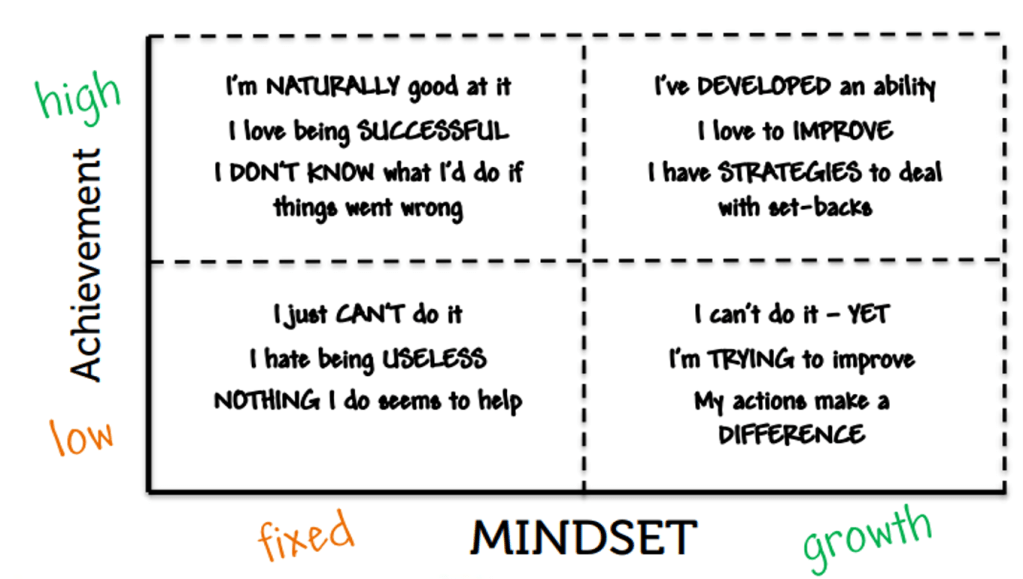
For the next provocation I shared some of the key messages from when I saw Carol Dweck and James Nottingham present their most recent research. In this seminar, Nottingham put forward the view that ‘We should never test… once! In fact we should test twice as much.’ Controversial, I know, but the rationale makes so much sense when it comes to embedding a growth mindset and lowering the stakes around ‘exams’. If we as teachers tell our students, “You have an end of unit test and this test is going to be recorded, sent home to parents and even determine your predicted grades, you have one week to revise”… students who value our subject will panic and spend that week fretting and revising none stop, those who do not value your subject (or have a huge fear of failure), will do nothing and say that is why they won’t do well. However, for all types of students, having high stakes end of unit tests, is telling them to have a fixed mindset of themselves. Rather, we should ‘surprise’ test students, let them know it is low stakes and that this test is to help them identify their strengths and weaknesses, so that they can revise for the real thing more effectively. Then, when they take the ‘real’ test, they will have made progress and most importantly, they will see that progress. Thus, their mindset will be more set for growth.

This led to discussion specifically on what else can we do to lower the stakes around exams? What was interesting here was that suggestions of support refered to both ends of the spectrum; modelling from the top and building up from the bottom. This was really useful, as the variety of approaches meant that there was something that could work for all of our students. One such example of support from the ‘bottom’ was collaborative planning and modelling next steps. In this students are given the exam question and asked to plan it together so that they feel it is a collaborative effort, this also means that any constructive feedback doesn’t feel personal as it has been a team effort. From this, the teacher can then model next steps, what do they need to do now to improve the answer. Again, they may continue to collaborate in how they implement the next steps or this can be the point at which they start independently writing. This will depend on the confidence of the class. The other idea we discussed looked more at ‘starting with the final product’. In this, the teacher models exam success by giving an exemplar, and then explaining how they got there through metacognitive talk (or think alouds). This models for students how they can themselves create an ‘exemplar’ answer. Most importantly, and also echoing what was said by Nottingham, the most important element in all of these ideas is feedback. Through feedback, whether verbal or written, whether engaging with collaborative ideas or talking aloud the thought process, students are encouraged and supported to feel more confident in their exam technique.

How can we future proof and develop genuine ‘GRIT’?

For our final provocation, we looked at Angela Lee Duckworth (2007) whose now famous research on whether we can measure ‘grit’, and carried out a questionnaire on Spelling Bee students. She found that those who scored highly, did so because rather than focus on what they do know, they focus on what they don’t know (they asked, what words can’t I spell?). This is the ‘mindset’ that we as teachers want to encourage, how we do this though, is a bit more difficult. How do we get our students to move out of their comfort zones of what they know (and just keep practicing that) to be replaced with the attitude that, in order to learn, I need to know what I don’t know and then work on that. This is more difficult, as it will essentially make students ‘less comfortable’. However, there are some excellent meta-cognitive tools such as using exam reflection and exam wrappers to get students to engage with what they don’t know or what they got wrong. This will also build the skills that they need for the future, as this form of self-regulation, involving self-awareness, critical analysis skills, and the ability to problem-solve is surely what future employers want to see? Thus, our final point of discussion was a tricky one. We considered, how do we support our students to know what they don’t know? And still keep them motivated?

Some practical ideas from this were that we could do more scaffolding at KS3 of meta-cognition. In fact the EEF research on metacognition talks about explicitly teaching meta-cognitive strategies, and in discussions it is clear that we all use these strategies, but don’t necessarily convey exactly what it is that we are doing? For example, when we ‘think aloud’ our workings in front of the class, we should say ‘I’m going to model my thinking, I want you to do this for the next problem. This is a form of meta-cognition that will help you in your independent learning and study skills’. The other practical tool that we can give to students to support them in knowing what they do and don’t know is by providing revision lists and topic overviews, which can be at any level. Having the ‘big picture’ of their learning will help them see what they know as well as what they are unsure of. A final, and really interesting thought that came from our discussions was the importance of fostering a culture of independent learning and love of learning. We have to give our students permission to think outside the box, make connections and ask the questions they really want to answer. Most of our students seem to be spending their thinking time trying to figure out what their teachers want, when rather than wanting to ‘please’ us, they and us teachers should gratify their own curiosity. This way they will not lose the impulse to be intellectually curious, as they have decided that what is required to pass the exam is more important than further pursuing the ‘why’? Or what next? Again, if we ensure that students feel supported in knowing the big picture of their learning, once they feel secure that they know this, they can start to look beyond this and make links and connections to other ideas. This can ignite their curiosity beyond the lesson and keep them motivated in their learning.

Conclusions

As always, these sessions are full of incredible ideas to magpie, as well as an opportunity to think and reflect on what will work for your students in your specific context. This makes me think about a quote from Dylan William, “Everything works somewhere; nothing works everywhere.” (Creating the Schools Our Children Need, 2018) and how important it is that we as professionals, engage in educational research to inform our practice, and then use our knowledge and expertise of our students to find the strategies that work for them. If we as professionals are constantly seeking to do this, our students will flourish, feel supported in their learning and feel more confident, even in the ‘post-COVID’ world. Thus, for me, my main take-aways are; learning from mistakes (not mistakes on their own) is something we should celebrate, confidence can be fostered in how we model metacognition, if we are forthcoming about the bigger picture of what they need to know, students can start to look beyond this and so become more confident and curious learners. 

COVID ‘keeps’

Part 2

As lockdown has returned and we are embracing another period of guided home learning, we decided that this half term’s Teach Meet should continue the discussion around COVID-Keeps. It may not have been the ‘new year, new me’ fresh start that we had hoped for when we said goodbye to 2020, but it still really important that we continue to celebrate our successes in the digital, and that we keep ourselves motivated for the remainder of this lockdown. For this blog, I am going to focus on the tools that have been particularly successful at Northwood, therefore there is a heavy focus on the Google Suite, that being said, Microsoft and other platforms do have useful equivalents too. Again, this is just a wonderful showcase of all of the fantastic work that our teachers are doing to support their students during this time, they really are an impressive team of professionals.

Our #NWCFamily COVID Keeps

Jamboard

The staff at Northwood also discussed their COVID keeps, and one clear winner was Jamboard. Our head of History, Mr Allen has found multiple uses for this, such as:

  • Collaborative essay planning
  • Sharing ideas, e.g. ‘for’ and ‘against’
  • Continuum discussion
  • Hierarchy of complexity

What is also so excellent about Jamboard is that once you have created resources, you can save them as a PDF. To add to this, https://ditchthattextbook.com/jamboard/ has loads of excellent ideas and templates that can be used on Jamboard.

Google Sites

For the P.E. department, trying to teach the Junior School as well as the Senior school has been particularly tough as they have really felt the ‘hybrid’ learning when large numbers of girls are isolating or whole year groups have been sent home. To combat this, they have set up a Google Site which allows them to share a variety of workouts at a variety of different levels.

Google Sites is also being skillfully used in Classics, Mrs Holder is a big fan as it’s easier to access than firefly, it is much quicker to access from any device and is more bespoke and personal. Mrs Holder has set up Google Sites for year 7-9 Latin as a revision tool for the whole year group, at each new stage where new grammar is introduced there is either a handout or a video tutorial uploaded, and it also has links to the online textbook. There is also a section for each form which means there is personalised learning. For Year 10 it is also used as a revision tool, for example, the Classic Civilisation class made podcasts which are also shared on their Site as a revision tool that everyone can access.

In RPE, Mr Giblin is getting our A Level girls to build their own revision website for the course, this will be in existence much longer than any handwritten revision notes and will benefit future students too.

Google Docs

The collaborate nature of Google Docs is a real winner and a tool that we have been using since before lockdown, but some of the features have really helped us be able to see progress and support students when we can no longer take in books or just have those conversations in class when moving around. Mrs Sharif explained how she had been using Google Slides to set comprehension questions with each student having their own slide. This then allows her to see their written work all at once and instantly, a COVID keep as she said how this gives her an even quicker overview of how the class is doing.

Google Docs has also been used by Science to collate their Virtual Assessment feedback, this way as multiple members of the department are marking work, they can share common mistakes and misconceptions. A really simple but effective way to use the collaborative features.

Screencastify

This​ is a free Chrome extension that allows you to record, edit, and share videos of your computer screen. Recordings can easily be shared via email, YouTube or Google Classroom. This has been a real asset for any staff who wish to pre-record lessons or tutorials. Sometimes you really need to demonstrate how something works and this allows you to keep a record of this for any students who might have missed a live (even virtually live) demonstration.

When we discussed live lessons vs pre-recorded lessons, one of our Classics teachers, Mrs Holder, who had been off with COVID explained how she had used this tool to pre-record some of her lessons. As she was using the free version, this also meant that she was limited to 5 minutes and really thought carefully about what would be in the 5 minute instructions.

Mote

This is a Chrome extension that lets you easily add voice comments and feedback to shared documents. Mote is integrated into Google Docs, Slides and Sheets, as well as Google Classroom, for easy recording and playback. This has been used by lots of staff to not only speed up their marking, but also to give really personalised and meaningful comments. Again, another beauty of the free version is that you are limited to 30 seconds for each note, meaning that what is said is really carefully considered. However, you can also leave as many verbal comments as you like, allowing you to really focus in on specific areas.  Mote also generates a transcript (which you can check before posting) meaning that along with a verbal comment, there is a written one too.

Kami

This is another Chrome extension, Kami allows teachers to share PDF files with students, and students can annotate the files via trackpad or keyboard shortcuts using several different features, including Highlight, Add Text, Draw On, Add Shapes, etc. Kami also allows students to work on documents that weren’t created in Google Docs, so for a lot of staff we have historical documents that are in word and for certain subjects like Maths or Science, the symbols that they use do not convert onto a Google Doc, therefore Kami means that these documents can be opened up on any device and edited without the original integrity of the document being lost.

Reflections

Once again, the staff at NWC have proven how resilient they are in these difficult times, as well as continually going above and beyond to ensure that our girls are supported and able to flourish through guided home learning. This is just a snapshot of the wonderful and creative tools that they are currently using, and will continue to use after guided home learning. I hope that these can be of use to other schools in our community and beyond too.

COVID ‘Keeps’

Part 1

I think we can all agree that when it comes to COVID and the year that was 2020, there is not much we wish to ‘keep’, in fact, for many of us, there is a lot we will want to forget. However, we cannot deny that it has accelerated teaching and in particular how teaching can use technology as a tool to enhance learning. At Northwood College for Girls, our digital vision set out in 2018, was one of organic growth. We didn’t want digital to be shoehorned in, but rather wanted to allow it to slowly take root and flourish. But in early 2020, with the sudden realisation that a national lockdown was imminent, we put in place many measures to support Guided Home Learning. The success of GHL has meant that the school has been able to continue supporting all of its students throughout lockdown and beyond, although I am now all too aware that we may never again get to enjoy a snow day… Even so, my first and my most important COVID keep is the one published by the EEF, that ‘Teachers are still better than any piece of technology’. Although technology has come into its own, there is no better tool for the classroom than us skilful teachers, and there certainly won’t be any Robot Teachers coming to replace us.

So just as teachers had to upskill overnight, online platforms upped their game too. That is why my second COVID keep is simply the impressive range of quality online resources, this means that even in life after lockdown, teachers can continue to use online platforms to enhance their teaching. Here is just a selection:

For Northwood College for Girls, the Google Suite was by far the most effective platform. Classroom in itself has been transformative, but that is not to forget all of the other wonderful Google Tools. In September we dedicated a whole INSET day to Google Training, which saw over 30 members of staff achieve their Google Level 1, a pretty impressive achievement. I would also like to point out that SLT approved this training well in advance of the pandemic, talk about forward thinking…

So, as an established nerd and lover of all things educational research, I wanted to look at how the metacognitive strategies that we already know work so well, can be adapted to work in a hybrid way, specifically; Dual Coding, Spaced Retrieval and Low stakes testing.

Dual Coding

This is the process of combining visual material with written materials to enhance memory. Two applications which are particularly useful for this are Jamboard (G Suite) and Mindmeister.

Jamboard is an interactive whiteboard, it makes learning visible and accessible to all collaborators on the jam session. Through Google Classroom assignments you can upload a template Jamboard and ‘make a copy’ for all students. This can be used for dual coding as you can pre-load images and text onto a Jamboard and ask students to explain the links. Or you can give them images which they need to explain.

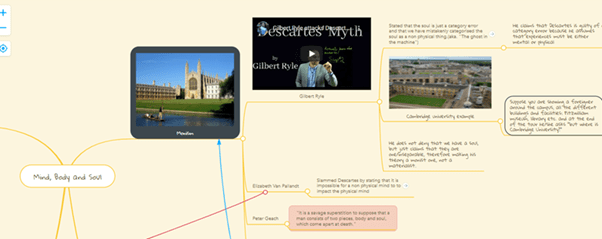
Mindmeister is an online mind mapping application that allows students to visually see their notes, add images and videos too. Our head of RPE has used this really effectively and his A Level students are big fans.

This image has an empty alt attribute; its file name is image-3.png

Spaced Retrieval

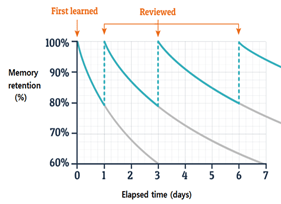
This is the principle that information is more easily learnt when it is split into short time frames and repeated multiple times, with time passing between repetitions. It is the opposite to cramming.

This idea is also supported by one of our Teach Meet articles from last year ‘Forgetting as the friend of learning’ by Robert A. Bjork and Elizabeth L. Bjork which explores certain conditions that produce forgetting also enhance the learning of that information when re-studied.

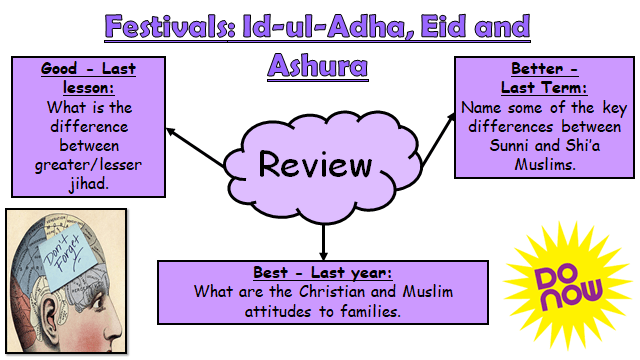
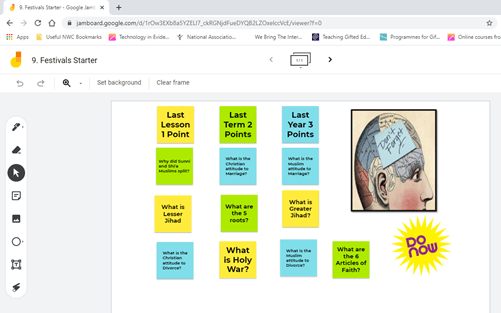
To support this, I have been using a few online versions of resources I had created pre-COVID. But I will be keeping the digital versions as they allow me a much clearer view of the students’ understanding. First is an example of a lesson starter where I would ask students in Year 11 to ‘dump’ down their knowledge from ‘last lesson’, ‘last term’ and ‘last year’.

But using Jamboard, and making it an assignment (and selecting ‘make a copy for each student’), I have asked the same questions but rather than relying on some A4L questioning of a few students, I can see via Google Classroom, all of their responses.

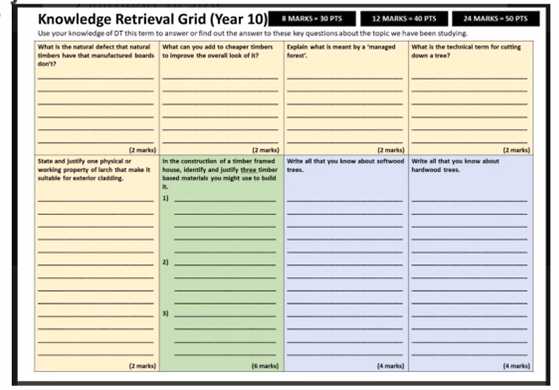
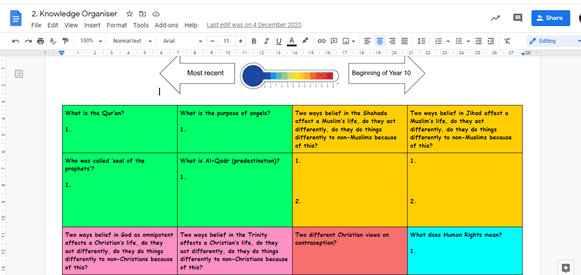
Here is another example, (although the original sheet is from a DragonFly course), I have used this idea to create a similar Google Doc for my year 11s. Again, by being a Google Doc, I can see their answers instantly.

Low stakes testing

This can be in the form of ‘retrieval practice’ which means deliberately recalling previously visited learning to enhance memory. By doing this as quizizz, it ‘lowers’ the stakes as this appears less intimidating than an ‘exam’ or mock’. Another example of a COVID keep for this is using Google Forms for vocab tests. Using the ‘quiz’ function in Google form, you can create a bank of vocab or knowledge quiz that self-mark too. Not only is this a time saver (once all are created) but we also know that for students to be more confident in ‘harder’ evaluation questions, they must be confident in the key words and concepts first.

Another reason why I will be keeping Google Forms over ‘Kahoot’ or ‘Quizizz’ is that you can export a spreadsheet of results and if you re-test your class on the same quiz, you can update the original spreadsheet each time to see their progress, as well as common mistakes.

Conclusions

Although there might be a lot that we want to forget about 2020, it is important to acknowledge that there were still many positives in 2020 too. It has taught us so much, from patience and empathy, to the ability to adapt and innovate. As we enter 2021, the memories of 2020 will not simply disappear, and in fact we are facing another few months of COVID related obstacles. Therefore, I hope this blog provides you with some positive strategies that can help you as we move through the beginning of 2021 and various forms of hybrid learning. There really are some wonderful things to keep from 2020, just look how far we have come.

References

DragonFly Training, Efficient Teaching and Hybrid Learning, 06.10.2020

Click to access Remote_Learning_Rapid_Evidence_Assessment.pdf

https://ditchthattextbook.com/jamboard/

https://ditchthattextbook.com/jamboard-templates/

Differentiation and Outstanding Learning: Is there a difference?

The inspiration for this half term’s Teach Meet came from reading Tom Sherrington’s Blog ‘To address underachieving groups, teach everyone better.’ In this, Tom is referring more to interventions aimed at sub-groups such as Pupil Premium, but this got me thinking about how we support our SEND students in particular. Tom says that “at some point ‘intervention’ really has to be simply ‘teaching’.  Given all the variables, uncertainties and unknowns, rather than chasing interventions, it is a far far better bet to focus on teaching everyone better.”

Essentially, Sherrington is saying that the reason why some students underachieve is likely to be a product of some insufficiency with the core teaching and learning process, and after looking into the EEF Blog: Five evidence-based strategies to support high-quality teaching for pupils with SEND, I couldn’t help but think that these five strategies are just strategies that I would expect to see in outstanding teaching. That is why this blog will examine how we teach those with SEND, and if this is in fact ‘differentiation’, or just inclusive and outstanding teaching.

One of the first areas of discussion was around the article: What do teachers think differentiation is?  In this David Didau states “Of all the impossible tasks expected of poor, overworked teachers, differentiation is one of the most troublesome.” And I must confess, I am from a generation of teachers who were taught to believe that differentiation is different worksheets and differentiated Learning Objectives. In fact, during my teacher training, you would not be able to refer to differentiation by outcome as differentiation at all. This was something that all of us remember being told. We went on to discuss ‘Setting vs Mixed Ability’, as evidence suggests that countries who select later reduce inequality in secondary school, and those from disadvantaged backgrounds do better.

In reality, the evidence from Hanushek and Woessmann shows that there was no negative effect of late selection on any group, even the brightest 5%. This reminded me of our first ever Teach Meet at NWC, where we discussed Cleverlands by Lucy Crehan, in the book Lucy was talking to a Chinese teacher who had visited the UK and thought it odd how students are given different levels of maths, explaining that those with ‘easy’ maths will never keep up. Again, this made us question, does differentiation by task (as well as setting) disadvantage and cap our students learning rather than support them? If we want to demonstrate outstanding learning, shouldn’t we start from the top and support all in getting there?

In his blog, What do teachers think differentiation is? David Didau explains how according to PISA 2015, “Adaptive instruction” is the most positively correlated factor with achievement (other than socio-economic profile). This is:

  • The teacher adapts the lesson to the class’s needs and knowledge.
  • The teacher provides individual help when a student has difficulties understanding a topic or task.
  • The teacher changes the structure of a lesson on a topic most students find difficult to understand.

However, the UK only places 15th for this. We discussed why this might be, and one excellent point was that in reality, ‘adaptive instruction’ is something that an outstanding teacher does so ‘seamlessly’ that perhaps it’s not that obvious. This not only highlights how important it is to know our students, something that we pride ourselves on at Northwood College for Girls, but also, that differentiation shouldn’t be obvious. We shouldn’t be telling a student that this work or worksheet is for your ability as this in itself is loading with fallacies. Firstly, that ability is set and secondly, that differentiation is explicitly telling students what their ‘abilities’ are.

Next we looked at SecEd’s article Differentiation in the classroom by Matt Bromley. One interesting idea we discussed from this was curriculum design. Bromley talks about the importance of teacher autonomy, but not individualism, meaning that schools should agree on a pedagogical approach or framework for all lessons. Now this seems restrictive, but the metacognitive reasoning is one that I found particularly interesting, plus, anyone who knows me, knows how much I like structure and routine.

This states that if we teach all lessons in a similar structure, students working memory has more room to absorb content. I do often wonder if we were to follow in a student’s footsteps for a day, how we would cope with spending just one hour on one concept/topic and then moving to another completely different one. I can find it difficult enough just going from a Key Stage 3 lesson to a Key Stage 5 lesson. This must be even more challenging for those with SEND.

Matt Bromley’s ‘4 Step Teaching Sequence’:

  1. Telling
  2. Showing
  3. Doing
  4. Practice

We discussed Bromley’s proposed structure, however, we were dubious about how you would realistically be able to do this over one lesson? And if you couldn’t, is it a consistent approach across classes? That being said, we discussed some interesting versions that are out there e.g. activate, explain, practice, reflect, review. As a lover of routine and structure myself, this idea really appeal to me, we all agreed that consistency is important in lessons and lesson structure. Nevertheless, our Deputy Head of Academic did make an important point, by putting in these structures we can dampen teachers’ autonomy and also what makes their lessons so special to students. If we start dictating a one size fits all approach to lesson structures, then we could run the risk of removing the vibrant experience that our students get from the school, the routine and security should be set by the teacher.

Bromley moves on to discuss one of the ‘dons’ of differentiation, Blooms Taxonomy, and another favourite from many of us during our teacher training. Thankfully, what he says about this thoroughbred of teaching does support our views. This is a useful tool for questioning, but dangerous for differentiation, as it implies that knowledge based questions are not as valuable, however, we know that you cannot analyse something that you do not know.

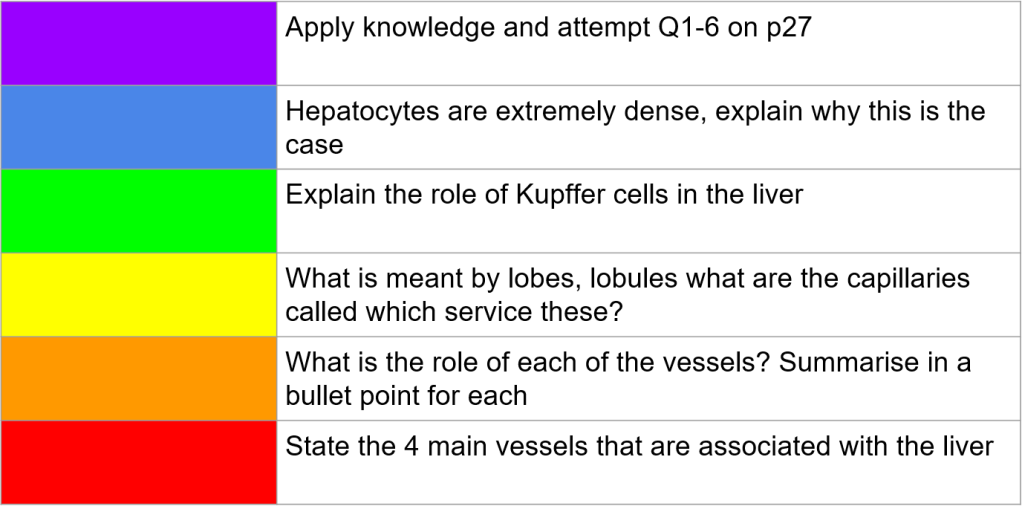
Image: An example of Mr Merk’s Rainbow Road.

This is why we now implement lots of key vocab quizzing. This also links in really well to Mr Merk’s ‘Rainbow Road’ which is an excellent resource that sets out a series of questions using Blooms, but the expectation is that all will get to the top, this just builds their knowledge and confidence. Much better than differentiated learning objectives. Rather than expecting different outcomes of different pupils, we should have high expectations that all our pupils will reach the same destination.

Finally, we discussed the EEF Blog: Five evidence-based strategies to support high-quality teaching for pupils with SEND. This is a useful and succinct tool kit; the five key strategies are: 1. Scaffolding, 2. Explicit instruction, 3. Cognitive and metacognitive strategies, 4. Flexible grouping and 5. Use Technology. But once again, we did ponder whether there is anything that we would do differently when teaching to the top? We specifically discussed ‘Cognitive and metacognitive strategies’, as our last Teach Meet looked at this, and our unanimous conclusions were that teaching metacognitive strategies is crucial in successful and outstanding teaching. This is because the research we looked at last time showed a small, but increased, impact that teaching these skills to an intervention group had over ‘re-teaching’ content.

We also discussed the fifth strategy, ‘Use technology’, which given the Post-COVID world we are currently educating in, it seemed only natural that we would. Again, what is interesting is that the suggestions of a visualizer to model worked examples and quizzing applications, are simply online versions of the metacognitive strategies that we already know work for all students. We were also united in our appreciation of how digital has been able to enhance our teaching and ability to support all students (even through lockdown).

After another uplifting and inspiring session, not only was I reminded of just how incredible our staff are, but also how passionate the teaching community is. We all agreed that what is important is ensuring that we have an inclusive classroom. This is synonymous with differentiation, but it is also synonymous with high standards and expectations, as well as the belief that all of our students can excel. So much of the research we discussed around supporting those with SEND, to us was outstanding teaching and learning. So, if we use these tools, we will ‘catch’ and support all of our students. As Viviane Robinson argues in Student-Centred Leadership (2011) that although “feet of varying shapes should not be shoved into the same ill-fitting shoe”, in teaching one size can fit all, but it has got to be the most impressive (and inclusive) shoe you ever did see.

With special thanks to Clare Alexander, our new SENDCO who help select this Teach Meets reading and Gareth Elliot who has worked hard to create partnerships with local schools in our community.

References:

Matt Bromley, Differentiation in the classroom. Available at: https://assets.markallengroup.com//article-images/213881/April2019-Differentiation.pdf [Accessed: 21.10.20]

Lucy Crehan, Cleverlands: The Secrets Behind the Success of the World’s Education Superpowers, 2016

David Didau, What do teachers think differentiation is? Available at: https://learningspy.co.uk/research/teachers-think-differentiation/ [Accessed: 20.10.20]

Kirsten Mould, EEF Blog: Five evidence-based strategies to support high-quality teaching for pupils with SEND. Available at: https://educationendowmentfoundation.org.uk/news/five-evidence-based-strategies-pupils-with-special-educational-needs-send/ [Accessed: 21.10.20]

Viviane Robinson, Student-Centred Leadership, (2011) Jossey-Bass Leadership Library in Education

Tom Sherrington, To address underachieving groups, teach everyone better. Available at: https://teacherhead.com/2018/09/17/to-address-underachieving-groups-teach-everyone-better/ [Accessed: 21.10.20]

Creating Brave Spaces

Making our girls 10% braver during Covid-19.

“You’re on mute” might have been the phrase of 2020, but we certainly want to make sure that our girls are not muted in their education or character. This year has been far from the year we expected and one which has really shown how flexible and creative those in the teaching profession are. Overnight, educators everywhere were upskilling and learning new ways to carry on teaching their students. Now that we have returned to school, and are trying to restore some form of ‘normality’ into our students lives, I wanted to look at how we can support our girls and staff as we all transition back into the classroom, and how we can continue to ensure that our girls are 10% braver.  We often talk about the importance of developing our girls’ resilience, ability to learn from failure and how to celebrate their own success. I feel that due to Covid, our girls confidence will be knocked and with the chaos that surrounded the summer exams, fear of failure will be more prevalent than ever. So to tackle this issue, I want to look at applying Maslow’s hierarchy of needs to ensure girls have self-esteem and self-efficacy (Maslow, A Theory of Human Motivation, 1943), in particular, how we can apply this to support the best classroom climate to allow our girls to strive this academic year. As I have completed a Women into Leadership course, I am all too aware of how few women do pursue leadership ambitions and how important it is that women are inspired to follow their dreams. Girls are outperforming boys at school and university, yet men continue to outstrip women in terms of salaries and representation at the top of management structures (Kuriloff et al, 2017). This is also true in schools, a government report on the school workforce in England, in 2012, showed that the state education sector is 74% female, yet only 65% of Headteachers are women. The issue is far more prevalent in secondary schools. Here, 38% of the workforce are male and 62% are female. But when you look at Headteachers, the numbers are reversed: just 36% are women. So this is why this is important to me and why it is important for our girls.

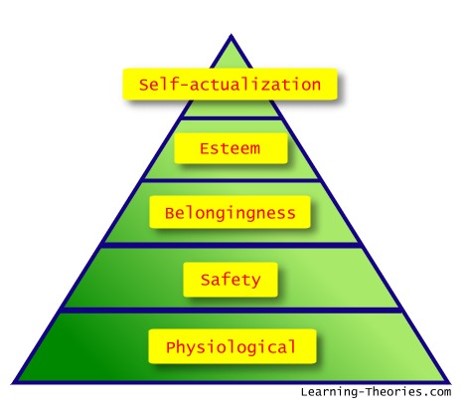
Maslow’s Hierarchy of Needs

This explains what we human beings need in order to be motivated and successful, Maslow’s Hierarchy of Needs has often been represented in a hierarchical pyramid with five levels. The four levels (lower-order needs) are considered physiological needs, while the top level of the pyramid is considered growth needs. The lower level needs must be satisfied before higher-order needs can influence behaviour. The levels are as follows:

  1. Self-actualization – includes morality, creativity, problem solving, etc.
  2. Esteem – includes confidence, self-esteem, achievement, respect, etc.
  3. Belongingness – includes love, friendship, intimacy, family, etc.
  4. Safety – includes security of environment, employment, resources, health, property, etc.
  5. Physiological – includes air, food, water, sleep, other factors towards homeostasis, etc.

Maslow emphasises that people need to feel safe in order to achieve self-actualization. Feeling safe in the classroom is more than simply about a sense of comfort. Rather, it is about feeling safe to step outside of your comfort zone with the knowledge that risks are accepted and encouraged, where teachers help students feel safe to make mistakes.

To ensure that our girls feel safe in the classroom, it is important that we have the right ‘classroom climate’. This refers to the fundamental mood, attitudes, standards, and tone that you and your students feel when they are in your classroom.  A negative classroom climate can feel hostile, chaotic, and out of control. A positive classroom climate feels safe, respectful, welcoming, and supportive of student learning. Thus bringing it back to Maslow’s hierarchy of needs. The good news is that a classroom’s climate doesn’t just happen, it’s created! Regardless of our girls’ past experiences, there are things you can do to deliberately shape the climate of your classroom into a positive learning environment.

These are some suggestions, but it’s important that you personalise these to your teaching style and the needs of your lesson. There might be more rules and routines in a science lab than a RPE classroom.

Strategies

1. Develop and reinforce classroom rules and norms that clearly support safe and respectful behaviour. Having classroom rules helps you create a predictable, safe learning environment for your students. Rules give your students clear boundaries and opportunities to practice self-regulation and make good choices. When students feel safe and respected both emotionally and physically, they are able to focus better on learning.

How to:

Girls will be taught a variety of lessons in the same space, therefore they may start to view teachers as coming into ‘their area’. Although at break and lunch time the room is ‘theirs’, they should see it as ‘ours’ when we are teaching. This is for multiple reasons, firstly, any ‘playground issues’ shouldn’t be brought into the classroom so they need to see this no longer as a social space but as a space for learning. And building on that, they need to respect that they are now in your classroom and so should be giving you their full attention. It might sound ‘draconian’ but it’s a good idea to insist that girls stand at the beginning of the lesson, until you greet them to be seated. It’s more to remind them that the lesson has begun and this is the time for learning.

Clear start of a lesson: Have clear and easy starters, as you might be coming from the other side of the school, here are three that just require a board pen…

  1. Nine box squares: Write nine key words, used in the previous lesson, in boxes on the board. Challenge students to make an accurate sentence of at least three words, or a short paragraph using them all.
  2. Play key word bingo: Ask students to select six words from a list of key words on the board to create a bingo grid. Read out the definitions to students. As they identify them, they tick off their bingo cards. The first student to get a full house wins.
  3. Analyse an object: Bring an item/image/artefact to the lesson, ask students to discuss what the lesson is about or how it links to what they have been learning.

End of the lesson: Along with our usual A4L plenaries, it is also a possible idea to have girls pack up at the end of every lesson (even though they aren’t going anywhere). It means their desks don’t become cluttered and that they see a firm end to one lesson to allow the beginning of another.

Another important skill that has an impact on the girls wellbeing is the feeling of being in control/organised. So although it might be ok to let ‘forgetfulness’ slide at first, (it has been 6 months after all), it is important to not allow girls to fall into bad habits around organisation.

Organisation: When they start the day, they should have their books/equipment for lessons 1 & 2, 3, 4 & 5, just as they would if they were moving around the school. For months everything has been in one space (their bedrooms/dining rooms/studies etc) and they haven’t had to think about this preparation for some time, but knowing that they need to have X, Y and Z will help them build back good habits and make them feel more in control.

Folder dividers with the specification on (for A Level and GCSE) can help reduce cognitive load, sense of pride in work and give our girls an awareness of the ‘big picture’/ the ‘why’.

This applies to the digital too and is why we have been working really hard with the girls this year to ensure that they are digitally organised too. They should have a digital folder for the academic year and within that folders for every subject they study.

2. Promote positive peer relationships. You want to create an environment where your students support and are kind to one another.

How to:

Notice and reinforce casual positive interactions between students on a daily basis. If you see a girl supporting her peer with technology, praise that behaviour. Pay attention to the social dynamics of your classroom. Do some students have trouble making friends? Do some students have trouble getting along with others? Who has a lot of friends? Who has few friends? You could have a no hands up policy on your classroom. Change the seating plan frequently as you start to notice these dynamics more.

Having seating plans is something that we encourage and review frequently already, but as we have situations where girls are remaining in their form rooms, we wanted staff to be as ‘creative’ with their seating plans as possible – not alphabetical order. At the beginning of this year we were hoping to be able to move the girls within their form rooms as it’s really important that they get up and move seats for each lesson. Initially we asked staff to remember health and safety measures by ensuring that they kept hold of their seating plans and wiped down the desks with virucide. Unfortunately, we have had to review this and decided to keep our girls in the same seating plans for the day (except for subjects where they are set). Although this is not ideal, as now girls may be spending the entire day in the same place, one idea inspired by Zara’s assembly, is that at the beginning of the lesson I am going to ask all girls stand in their power pose (think Wonder Woman) for two minutes, at least it will get them out of their chairs.

Drop everything and speak: If you have a class (or class members you know don’t like to speak) and want to practice this skill. Have all students read out their speeches/debates at the same time. Due to Covid, this will have to be done quietly as they shouldn’t be raising their voices, but it does mean that everyone gets to practice speaking and they will feel less insecure about public speaking.

This can also be achieved through class reading as this also allows everyone in the classroom a sense of voice, community and everyone is heard.

Toyota Bells: We know our girls are very much motivated by success, however, failure is seen as something to fear and often a barrier to learning. Mathew Syed’s ‘Black Box Thinking’ looks at why mind set is so important for success, and why failure is not something we should fear, but rather something we should embrace. Take for example, the car company Toyota, a highly successful business that uses instant feedback (and failure) to constantly ensure standards of their product and to avoid producing products that aren’t up to standard. If anyone on the production line is having a problem, or observes an error, they pull a cord which halts production across the plant. Senior executives then rush over to see what has gone wrong and help. This is why we need to implement a ‘Toyota pull cord’ in our classrooms. To embrace this idea, I have started using a similar concept with my exam classes. When introducing a new concept or text, I issue them ‘bells’. This way, when there is something they are unsure of or need clarifying again, they simply ring the bell.

3. Nurture positive relationships with all students. You need to let your students know that you not only care about their progress in the classroom, you also care about them as human beings.

How to:

Greet your students by name. Again, year group bubbles mean that they won’t necessarily be walking through your door for you to greet them so instead you can make a ‘show’ of the register. Get them to say or even sing ‘Good morning Mrs/Miss/Mr/Sir …’ and ensure you look at them when you say their name whilst taking the register. This lets them know that you notice and care that they are there and it will also help you learn their name quicker too.

Surprise tests: This concept inspired by Dweck and Nottingham has really lowered the stakes for tests and the wider impact is that students feel more confident at having a go in general as they know the value of failure. But again, with extra anxiety around exams and the belief that every mark counts (as we just don’t know what the summer exam series will be), it’s important to keep ‘surprise’ tests as a purely informative experience. That data isn’t going anywhere; it is just there to support their learning journey as well as their confidence.

Autonomy: Giving students ‘good, better and best’ learning outcomes and allowing them to choose their own outcome. You can also use Google Forms to inform your teaching, for example, asking the girls which topics they want to revise first or how they want to revise.

Conclusions

A lot of these ideas are just about the way we interact with our girls on a daily basis and we are doing most of these things naturally. But as we start the new academic year, it’s always important to remind ourselves of these things so that we can set up the right classroom climate that we want to create. It is much easier to hit the ground running than to try and change your behaviour a term in. Also, with recent events and the potential for another lockdown, so many of these ideas can translate into the digital and if this does happen again, it will be so important that we can support our girls in being brave.

As with all research, it is important that we can measure how well our classroom climate is doing. This is possible through simply checking in with your students throughout the year during one-on-one interviews, or ask for their written responses to some of the following types of questions: Do you feel safe in our class? Are students in our class kind to each other? Do students in our class follow the rules? Do you feel included by the other students? What else would you like me to know about you? Make adjustments as necessary based on your students’ feedback to ensure a positive learning environment for your students.

*Please note that these are only suggestions, it is important that you follow your schools own risk assessment and any changes that are made as a result of Government advice.

References

Matthew Syed, Black Box Thinking, 2016

Future Learn: https://www.futurelearn.com/courses/educating-girls/1#section-requirements [accessed 20.02.20]

Maslow, A Theory of Human Motivation, 1943

Kuriloff et al, 2017

Key Factors in Creating a Positive Classroom Climate, Rachel Kamb, 2012, https://www.cfchildren.org/blog/2012/08/key-factors-in-creating-a-positive-classroom-climate/ [Accessed 14.02.20]

https://www.learning-theories.com/maslows-hierarchy-of-needs.html [accessed 25.02.20]https://www.gov.uk/government/statistics/school-workforce-in-england-november-2012

Practice makes… improvements

Practical strategies to reduce cognitive load and improve memory.

Some of these strategies are thanks to the Dragonfly training I went on earlier in the year and have been adapted to fit RPE as that is my area of expertise, however I’m sure these can be adapted to all subjects in the curriculum at all Key Stages too. Also a special thanks to A. Giblin for supporting these ideas and trialling them in his lessons too.

Cognitive Load theory suggests that because short term memory is limited, learning experiences should be designed to reduce working memory load in order to promote schema acquisition. If we look at the statistics around ‘how much does the average student remember tomorrow?’

  • Student demonstration 89%
  • Teacher Demo with questions 49%
  • Teacher Demo 32%
  • Teacher explains it with questions 19%
  • Teacher explains it 9%
  • Read it 4%

We can see that strategies should get students actively engaging with the material that we wish them to learn. How much demand a task puts onto a student’s cognitive load also depends on the size of the task and the difficulty of the task. This is why when constructing lesson materials such as PowerPoints, the ‘magic number’ is 7, not just because of Harry Potter, but because having more than 7 pieces of information, including images, on one slide is an overload on the working memory. The following strategies can reduce the cognitive load of a task and increase memory: dual coding, interleaving, spaced learning and retrieval practices. This blog will give specific techniques that fit into these categories, but a lot of these tasks also fall into more than one category.

Dual coding

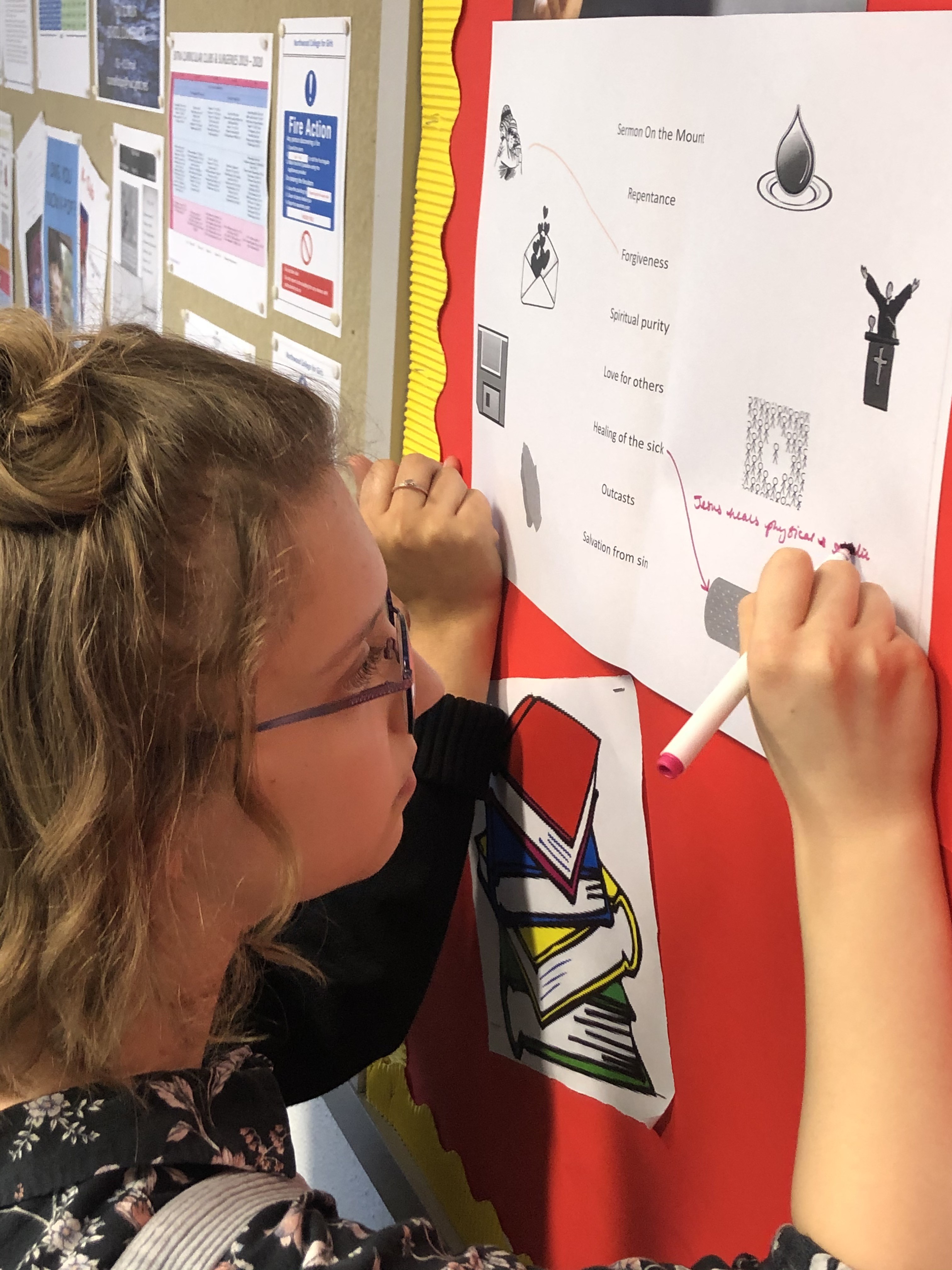
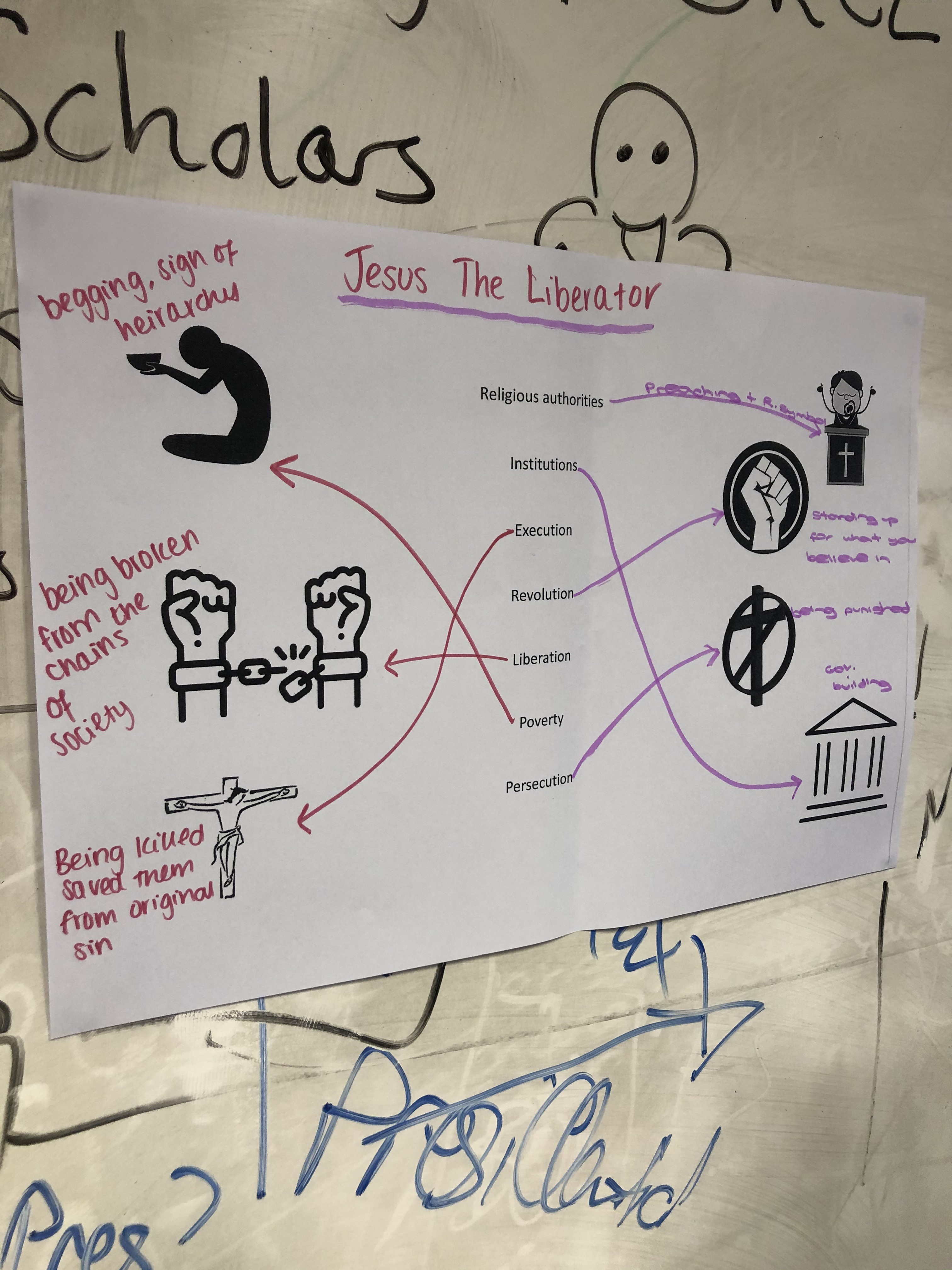
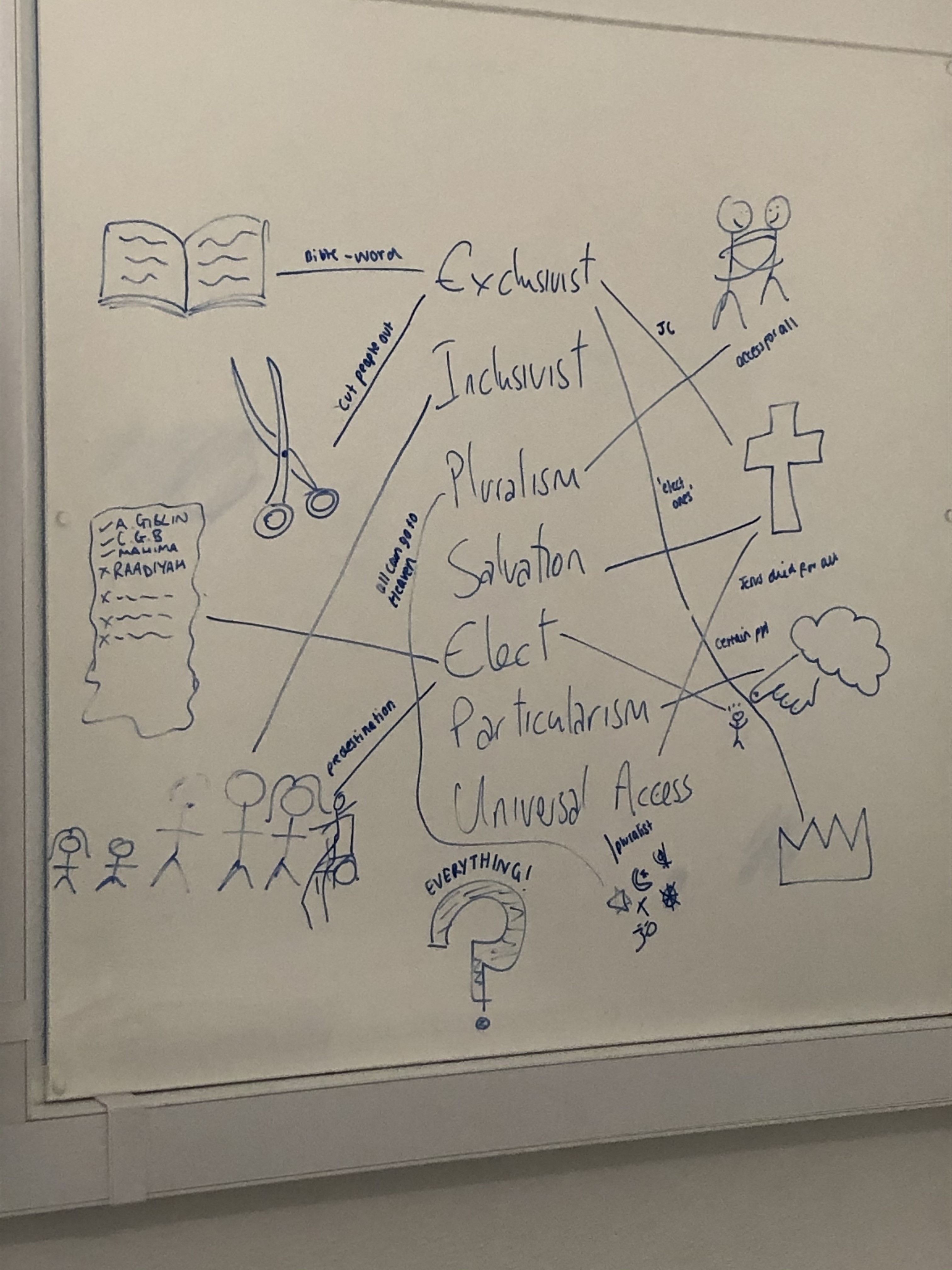
This is the process of combining visual material with written materials to enhance memory. One example of how this can be used is ‘The Concept Map’. For this strategy, students are presented with key words and images (or graphs) that provide an overview of a topic on a sheet of paper. Students are asked to link a word to an image or graph with a pencil line and on that line they must explain the logic of the link. This gets students engaging with key concepts and justifying their understanding. If you want to develop this further, each pair of students then present their links to the class and you can even attach the sheets to the classroom wall for revision purposes.

Interleaving

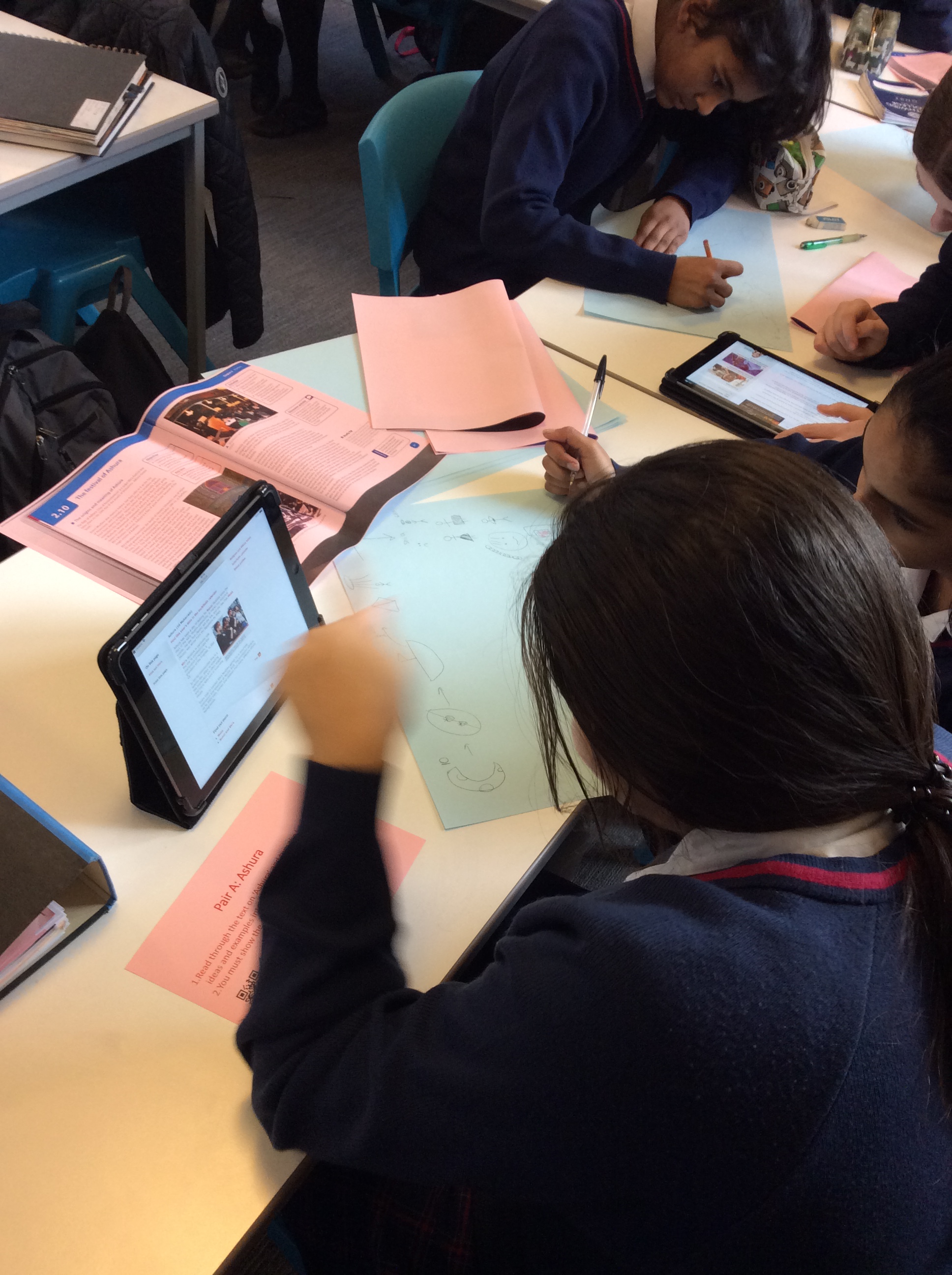
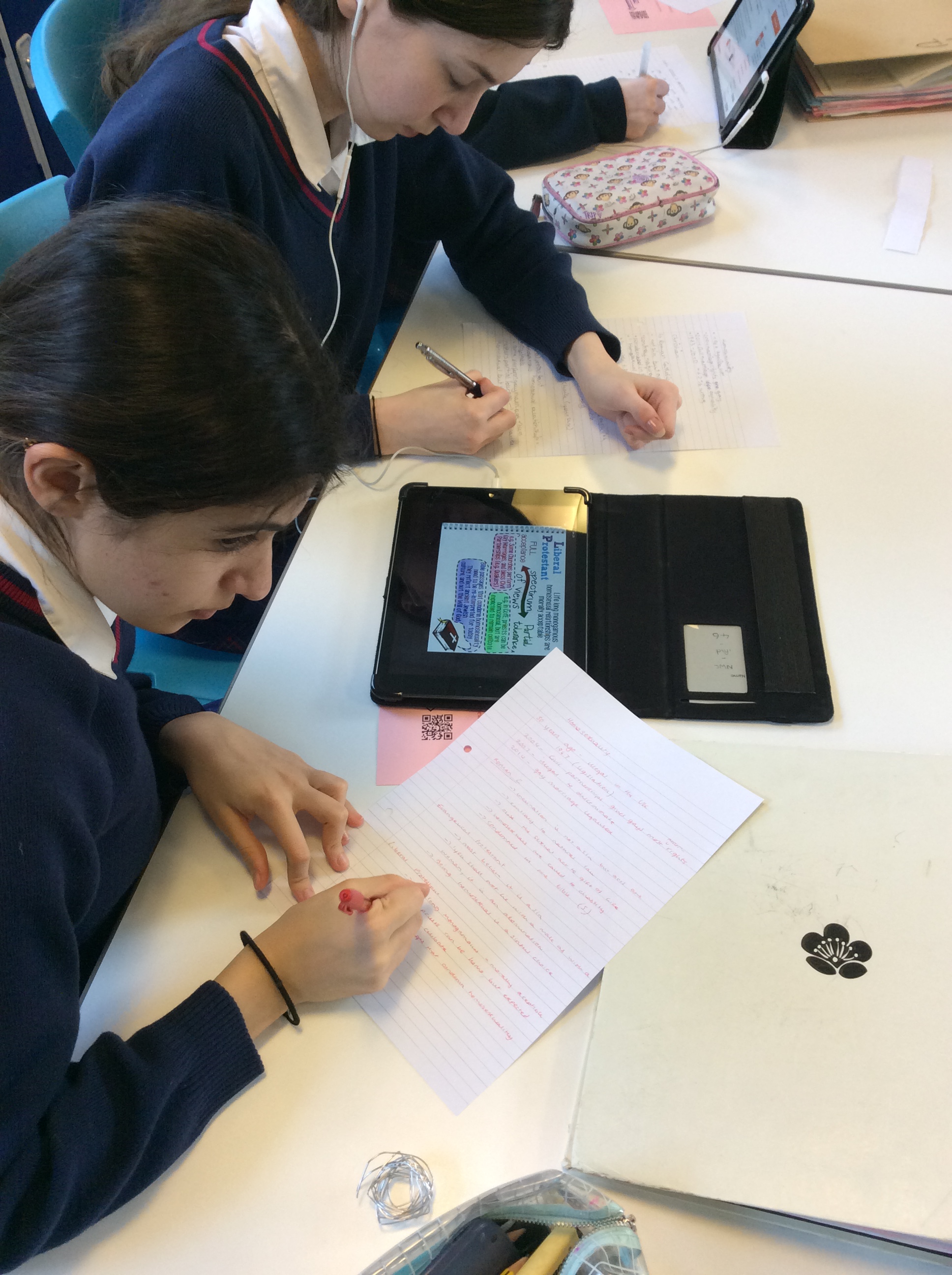
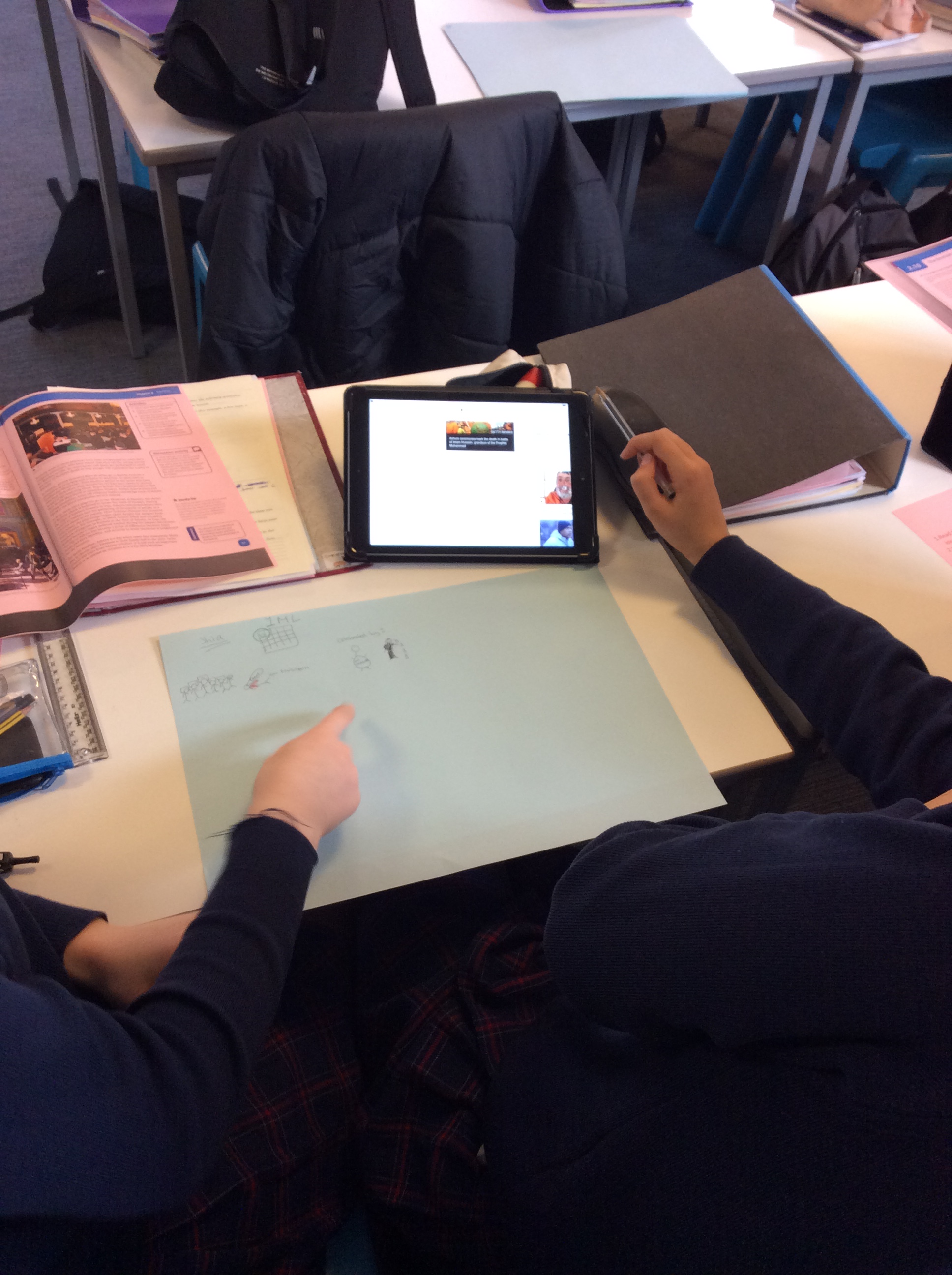
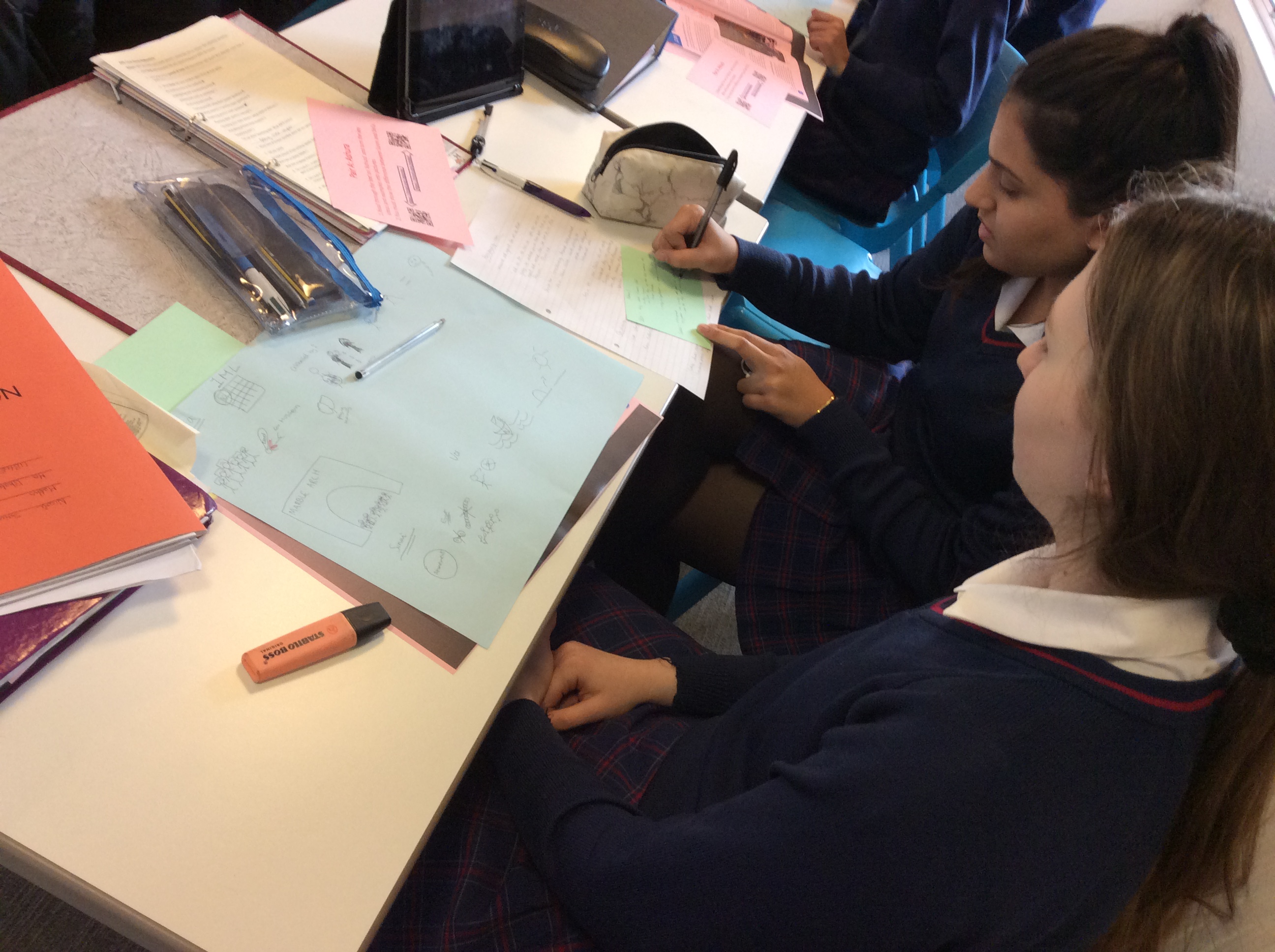
This is a learning strategy that involves switching between topics and ideas which have been shown to improve the long-term learning relative to blocking study of the same topic or idea. One example of how this can be used is ‘Buying and Selling’. This has students engage with two different topics of the same subject, this example is from RPE (subject) and was a revision task based off of the two questions which had the lowest marks in the recent mock: 1. Ashura and 2. Homosexuality (topics). Once you have identified which two topics you will be examining, divide the class in half and each half into pairs, pair A and pair B. Pair A: Read through the text on ‘Ashura’ and turn the key ideas and examples into pictures (dual coding too). Pair B: Watch the video that explains the different attitudes to Homosexuality. With your partner, list the 3 different Christian views. Then describe the Muslim attitudes.

Once they have completed this activity, one student from pair A swaps with a student from pair B. The ‘home partner’ explains to the ‘visitor’ the task and the answer (very similar to speed dating). Then the original pair re-forms. The visitor explains the task and the answer to the original home student. Alternatively, you can have the new A and B pair teach each other rather than asking them to re-form their original pair. Furthermore, to ensure that there is maximum engagement and ownership over the task, you can ‘increase the stakes’ by setting an exam question on both topics at the end to ensure that they all produce quality work.

Student becomes the teacher; therefore, they should remember 89% of the information…

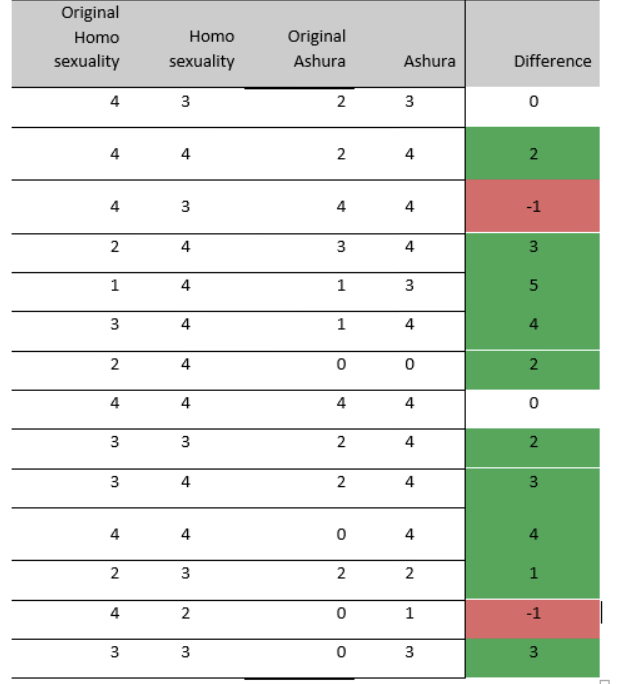
Here is an example of some of the data showing how students achieved in the initial mock and then the next attempt at exam practice on this topic.

Nearly all the outcomes are positive. The two who which are negative both confused Catholic and Protestant views, so limited their marks. This also highlights a common mistake of confusing denominations, which in turn opens up an opportunity for whole class feedback to address this misconception.

Spaced Learning

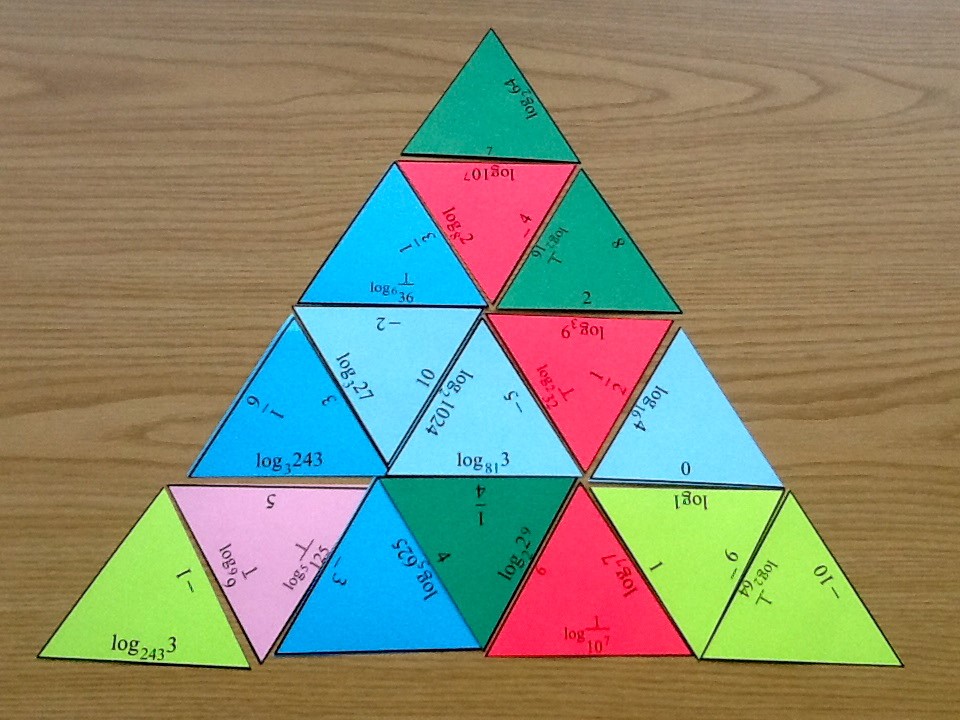
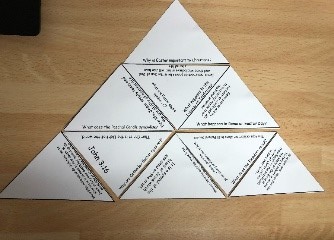
This follows the principle that information is more easily learnt when it is split into short time frames and repeated multiple times, with time passing between repetitions. It is the opposite to cramming. You can also see evidence for why this works on a previous blog ‘Forgetting’. For this, one example is Tarsia. This is a way of getting students to engage with question and answers, these are essentially a set of question and answers, however the answers are on adjoining shapes which will then construct a much larger shape. Both these examples show the form of a pyramid.  These are often used in Maths but can be used in any subject and can also focus on one unit or many. Once you have a bank of these, you can get them out at any point and they don’t have to be the subject you are currently studying.

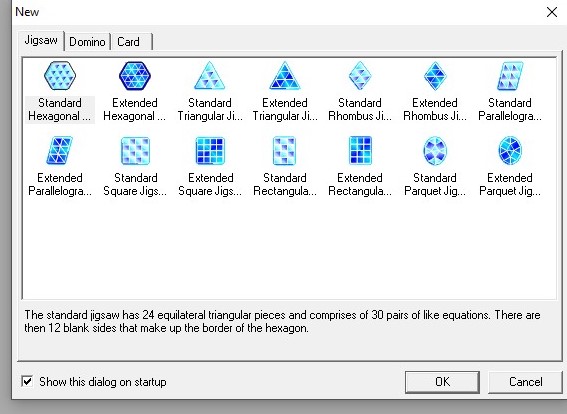
You can download the software to automatically generate the shape at: http://www.mmlsoft.com/index.php/products/tarsia Once installed you can choose multiple designs. This allows you to input questions and answers which will then be made into the desired shape. You could even ask students to create their own question and answers which you then input. A time saver and gets students revising the content more than once.

Retrieval Practices

This is the principle of deliberately recalling previously visited learning to enhance memory. Recovering knowledge from long term memory where it was previously stored. The more difficult the retrieval practice, the better it is for long-term learning. Here are a couple of examples as some require more forward planning and some can be done on the ‘fly’.

Quizzing or Coloured Index Cards

Quizzing helps students recall information from mind. Paper-and-pencil and computer /web-based quizzes can be used. Note that quizzes may require you to write retrieval questions in advance, but to save time, this can form part of a task that you set for students as revision or you can use online platforms which already have banks such as Google Quizziz or Kahoot.

Alternatively, each student could have their own set of coloured index/flash cards, with the letters A, B, C, and D on them (or true/false, or 1, 2, 3, etc.). This way, you can ask a question (on the fly) and students can show you the appropriate card to identify their response. It’s an easy alternative to using quizzes, and you can provide immediate feedback.

Bell Work or Exit Tickets

This can take the form of giving small slips of paper at the very beginning of class as students are entering the classroom (“bell work”) or before students leave the classroom (“exit tickets”) that include questions about content learned in class. This requires you to plan in advance your questions for the activity, but you could even make this simpler by writing one command for all slips on the board, e.g. “Write down everything you remember from the previous class”. This engages students in retrieval practice, while conserving classroom time so you can focus on teaching.

All of these strategies and activities are already well embedded into out teaching and learning at Northwood College for Girls. But as we are starting to think about specific revision techniques and strategies for the summer exams, which are fast approaching, I thought this would serve as a reminder of ideas. As well as a reminder that what we are already doing, is already embedding these principles.

Forgetting

This year we have kicked off our Teach Meets with readings from Barak Rosenshine, Michael Linsin and Robert A. Bjork and Elizabeth L. Bjork. These articles looked at ‘the principles of instruction’, ‘silent modelling’ and ‘forgetting’. So why the title ‘forgetting’ when it was only the theme of one paper? Well, although the article on instruction by Rosenshine might read as though it is the bread and butter of teaching, there are some concepts that as we get to this point in the term, it can be important to remind ourselves of and Linsin’s practical example for instruction is one that we may want to try, and some may want to forget. As the autumn term draws to a close, it’s always refreshing to hear the opinions of our experts here at Northwood and also provided a nice opportunity to take a break from the ‘nitty-gritty’ of report writing and marking, to just remind ourselves of why we love our jobs. And this passion certainly came across in our discussions.

The Principles of Instruction, Rosenshine (2012)

This article presents 10 researched-based principles of instruction, along with some practical suggestions for the classroom. Here Rosenshine presents the following principles:

  1. Begin a lesson with a short review of previous learning.
  2. Present new material in small steps with student practice after each step.
  3. Ask a large number of questions and check the responses of all students.
  4. Provide models.
  5. Guide student practice.
  6. Check for student understanding.
  7. Obtain a high success rate.
  8. Provide scaffolds for difficult tasks.
  9. Require and monitor independent practice.
  10. Engage students in weekly and monthly review.

Although we did not dissect every point of Rosenshine’s ‘principles of instruction’, we all agreed that it was nice to refresh ourselves of these basic principles, especially when it is nearly the end of term and we can all feel ‘bogged-down’ with the administrative part of the job as oppose to the teaching and learning, which is the real reason we all became teachers in the first place. Our discussions did focus on some of the following areas:

We all agreed that Rosenshine’s ‘principles of instruction’ are fundamental for successful delivery of new skills and content. However, whether these principles were adequate for every lesson was certainly up for debate. Stages 1-8 are good reminders, especially for the initial teaching of new skills and content, but as we at Northwood value ‘soft skills’ such as resilience and independence, we were cautious that following this rigidly in every lesson could promote an ethos of ‘spoon feeding’ which will not translate to University or Careers.

That being said, some of what Rosenshine wrote, back in 2012 is certainly re-appearing under the term ‘meta-cognition’. For example, the emphasis on reviewing prior learning at the beginning of each lesson. Something which most teachers do instinctively, but the research around why this is so effective has gathered momentum over the last few years.

Some staff felt that Rosenshine’s article was too ‘instructional’ and prescriptive, but if we ensure that the ‘instructional’ side of teaching specific skills and fundamental facts that are required for later application is done successfully, we are able to allow more time for independent activities later on. This view and the principle that underlines step 7 does resonate with the skills progression at NWC… this means that steps 9 and 10 can be the most successful, and these were viewed as the most practical.

Research from Dragonfly Training explained the following statistics around ‘How much does the average student remember tomorrow’ if they use the following process.

  • Read it: 4%
  • Teacher explains it: 9%
  • Teacher explains it with questions: 19%
  • Teacher Demo: 32%
  • Teacher Demo with questions: 49%
  • Student demonstration: 89%

This supports not only Rosenshines principle of instruction but also the ‘generation effect’, which states that information is better remembered if it is generated from one’s own mind rather than simply read. Thus, it’s not surprising that staff believe that the most important ‘take away’ from the article is that a blend of all the steps is required.

Why silent modelling is a powerful strategy, Michael Linsin (2014)

This article looked at one practical strategy which cropped up within Rosenshine’s ‘Principles of Instruction’, modelling. The premise being that modelling is a key part of instruction, however often done poorly, e.g. rushed, points missed or too much teacher talk that distracts students from learning.

According to the article, modelling in silence can enhance learning outcomes for the following reasons:

  1. It makes you more interesting.
  2. It purifies your instruction (don’t need to worry about confusing or choosing the wrong words).
  3. It makes paying attention easier – by narrowing the senses needed to just one, sight, following becomes easier.
  4. It triggers an unforgettable movie in their mind, they will see themselves in their minds eye successfully doing the same.
  5. It allows direct access, all students, including second language learners, have direct access to you at your best.
  6. It improves performance.

From this a few staff members said they had tried this, one even gave an example from a previous school where there was a whole week every year, where students were not allowed to ask questions and therefore all tasks were modelled silently. They said that by the end of this week, students had a new appreciation for staff input, but also felt more independent in their ability to problem solve for themselves. With our focus this year on being ‘10% braver’, wouldn’t it be nice to have a week where students are not allowed to ask questions or all lessons are in silence? Or even just a day?

One observation we did all agree on is that you would need very good classroom management to maintain/ have success, but equally, a good ‘blend’ of this with other strategies is key. That being said, the article does state that it is not a strategy to rely on every time you model, as ‘carefully’ chosen words and explanations can be additionally effective. But, silent modelling will make you better at choosing these words.

Forgetting as the friend of learning: Implications for teaching and self-regulated learning, Robert A. Bjork and Elizabeth L. Bjork (2019)

This article was chosen as one of our Northwood Pillars is ‘meta-cognition’. This explores certain conditions that produce forgetting also enhance the learning of that information when re-studied. These are: change of environment, increasing the delay from when something is studied to when it is tested or restudied and interleaving.

Varying environmental contexts:

Restudying material in a different location, where there isn’t the ‘context effect’, means that more of it will have been forgotten, but this will actually enhance later recall, especially if students are re-tested in a different environment. This is particularly interesting, as we often carry out end of unit tests in the classroom, but their summer exams are always in the sports hall. Practically then, we should encourage the students to study in multiple locations will enhance the latter recall of that material. This is because context change induces encoding variability, essentially, a change of scene when restudying means we associate the information with a greater range of contextual cues.

Increasing the interval between study opportunities:

This is known as the ‘spacing’ effect: If material is restudied after a delay, rather than tested, increasing the delay between such study episodes has benefits, not costs in terms of the ability to recall the material later. Recent research has found that the use of spacing resulted in a 10% to 30% difference in final test results. However, students often don’t realise the benefit of this as ‘cramming’ gives results when tested the next day, which is why students who are pre-warned or anticipate an end of unit test, appear to do well, however the material is not committed to their long-term memory. This misunderstanding around the meaning and role of errors, aka assuming that errors are bad, can lead students to avoid effective learning procedures such as practice quizzes and asking questions. Whereas, responding to difficulties successfully, encourages processes that support learning, comprehension and remembering.

Interleaving vs blocking:

Blocking is the practicing of one topic or skill over and over, which produces ‘good’ results when tested instantly. Interleaving is the mixing up of the practice of different subjects and skills which leads to better results when tested later. Teachers are susceptible to thinking that ‘blocking’ instruction by problem or skill helps students and that interleaving can cause confusions. However, blocking can actually create an unreliable sense of understanding or comprehension and then a disappointing performance on a later test. In fact, a critical component of doing well on important tests, is deciding what procedure is required to solve a given problem. For example, in the RPE A Level, they are only examined on 4 of 9 possible units, and it’s not always clear which topic or synoptic element they will need in order to develop a greater level of analysis and application. Therefore, it is key that we encourage solving a problem rather than remembering the solution. Learners need to find operations and activities that will make the ‘to-be-learned’ material recallable after a delay. This is interesting as clearly modelling and instruction has a place, but this must be significantly varied so that the ‘model’ isn’t just learnt and so students learn to problem solve.

Conclusions:

We must remember that at NWC, our girls are so lucky to have a day packed full of different subjects, different teachers and different teaching styles. This is what makes their learning experience and what makes it ‘un-forgettable’, therefore one of my main ‘take-aways’ from this teach meet is that ‘variety is the spice of life’, ensuring that teaching and learning is soundly based in research is step one, how we then use our professional judgement to achieve skills and knowledge development should come from this, and this may look different depending on a variety of contexts. If we didn’t have this wonderful variety, every girl would be sat in 5 lessons where X amount of minutes are spent instructing, X amount of minutes are spent being modelled, and so on. In fact, I’m now tempted to start changing venues and locations to make lessons even less forgettable, except for when forgetting enhances the learning process.

References:

The Principles of Instruction, Rosenshine (2012)

Why silent modelling is a powerful strategy, Michael Linsin (2014)

Forgetting as the friend of learning: Implications for teaching and self-regulated learning, Robert A. Bjork and Elizabeth L. Bjork (2019)

Mindset Growth

Reflections on presentations by Carol Dweck and James Nottingham

With an emphasis in education on ‘soft’ skills, such as resilience, perseverance and various other ‘character’ traits, schools have been ‘chomping at the bit’ to embed character programmes into their school ethos and even into their lessons. But, how do you teach a child to be ‘resilient’? How do you teach a child to have a ‘growth mindset’? The answer is, you can’t and that is why I have always viewed these ‘programmes’ with an air of caution and even cynicism. That, however, doesn’t mean that I don’t believe these qualities are important, in fact quite the opposite. These character traits are more important than ever. But, we as teachers should be creating an environment where we can help our students develop these traits every day. That’s why we can’t decide that ‘today we are going to do resilience’ and ‘next week we are going to do growth mindset’.  Rather, we should be facilitating a mindset for growth in every lesson of everyday. So when I had the fortune of seeing Carol Dweck and James Nottingham, I was intrigued to see what they had to say about the implementation of ‘growth mindset’ and I was very relieved to hear that it wasn’t through ‘character programmes’.

Fixed mindset vs Growth mindset

Fixed mindset is the belief that our intelligence is fixed ‘no matter how hard I try, I will only ever be able to do X’ and Growth mindset is the belief that our intelligence can be developed, ‘if I work hard, practice and keep trying, I will able to achieve Y’. One of the ‘growth mindset’ myths that came out of Carol Dweck’s research was the idea that we are one or the other. However, in reality, we are constantly fluctuating in our mindset.

High growth might be the ‘sweet spot’ but no one is constantly in that state.

Copyright: James Nottingham

Practical advice from Dweck and Nottingham:

  1. Don’t make promises e.g. ‘if you practice you’ll get better’ – ask ‘what did you do to improve last time?’ (Answer will often be ‘practice’) – then ask them to look back on the journey, it works better in retrospect.
  2. The power of ‘yet’ – When a student says ‘I can’t do this’, don’t say ‘yes you can’, which is often the tempting response, instead say ‘I know you can’t, not yet’.
  3. There is a danger of rewarding achievement e.g. rewarding coming first rather than the process, for example someone who has come from 140th out of 140, to 80th out of 140.

Mindsets take root, only in fertile soil: Applying Growth Mindset, according to James Nottingham.

So the million dollar question for schools and teachers, how do we make Growth Mindset a reality? James Nottingham stated that there are five factors which have the biggest impact on others mindset: Feedback, Success, Mistakes, Personalised Learning and Failure. And it is how and when we feedback that underpins pretty much everything else.

Feedback

This is the most significant way to make progress, but as James Nottingham pointed out, one third of the time feedback leads to negative outcomes (whether it was our intention or not). For example, a positive and caring message too soon can have a negative outcome as it might stop a student from learning. Students need to struggle and be out of their comfort zone. Therefore, when a student is struggling in class, we need to fight our instinct to come ‘swooping’ in with the answer as we want to help them, but rather let them struggle as part of the learning process.

Creating a Growth Mindset marking policy

Marking and most importantly, the feedback that comes from marking, should not focus on ‘how well a student did’ but rather, ‘how much progress have they made so far and what they can do next to improve.’ Therefore, Nottingham suggests that the following are 3 key requirements for effective marking feedback:

Theory Practice
What am I trying to achieve? Clear learning outcomes. And yes, they do serve a purpose when recorded into their books as it allows the student to know the ‘big picture’ of their learning for that lesson.
How much progress have they made?  A WWW based on progress e.g. You have incorporated 5 new key words in this piece.
What could I do next to improve? An EBI which gives next steps e.g. To develop this work, all 5 key words should be directly linked to the topic of the paragraph.

‘Never’ mark a finished piece of work:

Now this one took me by surprise, but once explained by Nottingham, I was sold. I’ve always embraced the importance of feedback and always ensured that students are doing something with the feedback they are given. However, I hadn’t considered that this feedback on a ‘finished’ piece of work can be demotivating, as we are saying ‘you tried your best, but you still needed to do this…’. If we only mark work that is ‘done’ we are promoting a fixed mindset ‘How have I done?’ whereas marking a draft and giving feedback encourages growth mindset as we support our students in knowing ‘you need to do X, Y and Z in order to improve’ and then allowing them to do it. It’s important to pause here, James Nottingham was not promoting the dreaded ‘triple marking policy’ which caused so much bad press as well as heightened teacher workload. He did say that once the advice is given, then you simply check that they have implemented your advice. After all, we want to encourage independent learning too. In fact the following are the 7 steps to feedback success, but ideally there would be no need for step 7:

  1. Agree goals
  2. First attempt
  3. Self (or peer) review
  4. Edits
  5. Teacher feedback
  6. Final edits
  7. Grade – only if you have to!

Mistakes and misconceptions

James Nottingham also emphasised the importance of creating a classroom climate where mistakes are ‘ok’, for example, when getting a class to start their first draft, state that you are going to be looking for the mistake we can learn the most from and if the climate is right, you can use this draft to support everyone in the class. This is also where it would be useful to have a visualiser or Chromecast to share the ‘best’ mistakes with the class. Using these devices you can project a piece of work and as a class, give constructive feedback to improve it. It is likely that the mistakes in one piece of work will be echoed in others too. However, it is so important that you know your class well enough and have a culture where mistakes are seen as part of the learning process. However, if you are worried that the classroom climate isn’t quite right for this yet and you know the common misconceptions of a certain topic, draft a piece yourself which is full of mistakes so you can correct it together as a class. Nottingham encouraged the audience to remember that , mistakes are not ‘good’ but they do help us to learn, therefore, learning from mistakes is good.

Tests

Nottingham suggested that ‘We should never test… once!’ In fact we should test twice as much. Controversial, I know, but again the rational makes so much sense when it comes to embedding a growth mindset. If we as teachers tell our students, “you have an end of unit test and this test is going to be recorded, sent home to parents and even determine your predicted grades, you have one week to revise”… students who value our subject will panic and spend that week fretting and revising non stop, those who do not, will do nothing and say that is why they won’t do well. However, for both types of students, we are telling them to have a fixed mindset of themselves. Rather, we should ‘surprise’ test them, let them know it is low stakes and that this test is to help them identify their strengths and weaknesses, so that they can revise for the real thing more effectively. Then, when they take the ‘real’ test, they will have made progress and most importantly, they will see that progress. Thus, their mindset will be more set for growth.

Conclusions

So, it may come as no surprise that my ‘let’s do growth mindset’ cynicism was left at the door when I went to see Carol Dweck and James Nottingham, and now I will be making sure that I embed the following into my practice to ensure that all my students develop a mindset for growth. I will be walking into all of my classrooms with the clear message “I don’t value high achievers coasting, I value you helping others out, I value your mistakes”. I will consider carefully the most effective time to give feedback and whether it is truly meaningful to mark a ‘finished’ piece of work, I will be dusting off the visualiser in my cupboard and utilising the Chromecast function on my Chromebook, I will be testing twice as much and most importantly, I will be modelling a growth mindset myself. But if you catch me on a fixed mindset day, remember ‘no one has one type of mindset’, we are constantly fluctuating between them. 

Are we setting ourselves up to fail?

FAIL

Failure, a word synonymous with negativity (like the infamous red pen…) but is failure really all that bad? This blog comes to you thanks to another wonderful colleague who introduced me to the book ‘Black Box Thinking’ by Mathew Syed. This book looks at why mindset is so important for success, and why failure is not something we should fear, but rather something we should embrace. As Eleanor Roosevelt said, “learn from the mistakes of others. You can’t live long enough to make them all yourself”. Although this book is not specific to education, there was so much here that resonated, as our girls are very much motivated by success, however, failure is seen as something to fear and often a barrier to learning. So to make this blog meaningful, I hope to pull out some practical strategies that we could use which have been inspired by this book.

“The history of science, like the history of all human ideas, is a history of error…. But science is one of the very few human activities- perhaps the only one- in which errors are systematically criticised and fairly often, in time, corrected. This is why we can say that, in science, we learn from our mistakes and why we can speak clearly and sensibly about making progress” (Karl Popper, 1965)

Failure vs Feedback

As teachers we know the significance of feedback, but what is the difference between failure and feedback? If a student submits a work that is 40/40 then is there any feedback to improve their work? Technically no…. Here is when we would challenge them further. But when they achieve 35/40, they certainly haven’t failed, but they will need feedback in order to improve, this is why it is important that all students ‘get it wrong’ at some point. This is also why so many teachers are now moving away from simply ‘grading’ work or grading it at all. What is meaningful is the feedback you give, highlighting errors, misconceptions and then giving the scaffolding that will allow our students to move forward. This has manifested in many ways (and acronyms) such as DIRT, ReAct, Next Steps etc. But what is important is that you challenge students to act on their error. Therefore, meaningful feedback must move beyond ‘What Went Well’ and ‘Even Better If’ to include a task which gets them to engage with their EBI. The impact of this is so important that it is effective to set time aside in a lesson for students to complete these tasks.

Take for example, the car company Toyota, a highly successful business that uses instant feedback (and failure) to constantly ensure standards of their product and to avoid producing products that aren’t up to standard. If anyone on the production line is having a problem, or observes an error, they pull a cord which halts production across the plant. Senior executives then rush over to see what has gone wrong and help. Well this got me thinking, sometimes it’s not until an end of unit exam or assessment that you notice that a student (or sometimes multiple students) have misunderstood a key concept. By this point they have in their mind made a ‘high stakes’ error whereas if we had this Toyota pull cord, the error could be addressed whilst still at a ‘low stakes’ level in the class. (Matthew Syed, pg 53). To embrace this idea, I have started using a similar concept with my exam classes. When introducing a new concept or text, I issue them ‘bells’. This way, when there is something they are unsure of or need clarifying again, the simply ring the bell. However, before simply giving them the answer, it is effective to ask them questions which will tease the answer out (often to their annoyance) and try to get the other students to suggest a solution.


Marginal gains and creative leaps

Throughout Black Box Thinking, there are lots of examples of businesses which have a successful mindset, therefore, there is a lot that we as educators can learn from their successes and in some cases their failures. The book talks about marginal gains and how businesses will roll out prototypes as early as possible to get market research (and essentially, instant feedback), from this they will change and adapt. Even businesses that are considered successful still carry out market research to ensure they are meeting the growing needs of their customers and then adapt from the feedback. These are marginal gains and these bring about progress. But only some progress.

However, they also need to take a ‘creative leap’ in order to be truly successful. This could just be an entrepreneur taking the leap to invest all their savings into a new idea. It needs to be based on research but there still needs to be that leap of faith. For example, Blockbuster was using the concept of marginal gains to grow the company, they tweaked their design, changed the lay out, introduced Blu-ray and so on. However, in 2000 they had the opportunity to buy Netflix but they didn’t, and as we all now know, in 2013 they went into liquidation as the business platform was obsolete. This is the exciting (and scary) part of innovation, we don’t know what way new technologies are going to take us. But we certainly need to take that creative leap if we want to stay ahead.

So how can we implement this in schools, well in terms of whole school, there is the creative leap around digital technology. The research out there to say it supports learning, although present, is limited. On a classroom level, we could pose our students ‘the impossible exam question’, this will put them out of their comfort zone and be far from what they were expecting. Again we must remember that it is ok for things to be hard and even uncomfortable, but this will bring progress.


 Fostering creativity

Failure can also spark more creativity, for example, in a case study on ‘brainstorming’; there were three groups asked to come up with ideas. One was told to write anything down and no one was allowed to criticise their ideas, the second group was given no rules at all and the third was told to actively point out the flaws in each other’s work. The results showed that the third group not only came up with the most ideas but also came up with the most creative. (Jonah Lehrer, 2012). So now, when setting a ‘brainstorming’ or as I like to call it ‘mind dump’ task, ask the students to make sure they point out any flaws in each other’s thinking/ideas.

Another interesting study was one that looked at word association. Typical word association is not very creative, I say blue, you say sky… and so on. However, when participants were shown ‘blue’ and the word ‘green’ was said much more creative associations were made. (Jonah Lehrer, 2012) Now, word association doesn’t have much use in academics, but as a P4C starter or even just a ‘brain gym’ starter to any lesson, this could unlock much more creative ideas in the classroom.


Creating Mindset ‘Growth’

It is true that some brighter students often ‘shy’ away from challenging tasks, the fear of getting it wrong and not being seen as intelligent is too greater risk. This concept has been supported by the research of Carol Dweck (1975) who carried out research on 11/12 year olds. In an experiment, students were given 8 simple tasks ad 4 easy tasks. Those with a ‘Fixed Mindset’ blamed their intelligence or other factors they believed were beyond their control, whereas those with a ‘Growth Mindset’ saw the difficult tasks as a challenge and something to grow from. From this task, those with a ‘Fixed Mindset’ could be seen to adopt negative learning habits, whereas those who had a ‘Growth Mindset’ developed better habits and even improved their learning.

However, Angela Lee Duckworth (2007) who wanted to research into whether we can measure ‘grit’, carried out a questionnaire on Spelling Bee students. She found that those who scored highly, did so because rather than focus on what they do know, they focus on what they don’t know (they asked, what words can’t I spell?). This is the ‘mindset’ that we as teachers want to encourage, how we do this though, is a bit more difficult.

One suggestion is that in lessons we could remove the option of ‘challenge’ tasks and just have it as a task. If we want to provide all students the opportunity to succeed, then they all need the opportunities in front of them. This is also why differentiation has become something that I feel is rather unproductive, and encourages the wrong sort of mindset. If we start pigeonholing our students into just grades and levels, then how can they develop the mindset that they can achieve beyond this? Rather than differentiation, we should simply have ‘high expectations’, this doesn’t mean an authoritarian teaching approach, but rather the belief that all students can achieve, it just may take some longer than others.


Conclusion

Education should allow students to experiment and experience, to fail and to flourish. I know its cheesy, but James Dyson quite famously acknowledges that he made 5,127 prototypes before his final design, and he hasn’t stopped there…. Success takes long term application and no one is instantly ‘talented’. Education needs to embrace the importance of failure, we must try new things and take risks. Heather Hanbury, former Head of Wimbledon High School GDST said: “If we wish to fulfil our potential as individuals and organisations, we must redefine failure.” (BBC News, 2012). Which is why Wimbledon High, our sister school, held a day of ‘failure workshops’, perhaps Northwood could have a ‘failure week’ where we expect our girl to challenge themselves in a safe, low stakes environment so that the fear of failure becomes less. At Northwood we are lucky to be an all through school which means we can work to build an ethos of acceptance when we make mistakes. We have already started acknowledging the worth in mistakes (or failure) to allow growth, as Zara Hubble, whilst the Head of Junior School, banned the use of erasers with the intention of combating perfectionism and to embrace the process rather than outcome. We cannot change the system of exams (yet) where failure is punished and success is rewarded. But we can reward effort and processes as we prepare our students for their exams.