A way to share reflections on educational research, teaching and learning. #teaching #education #learning #edtech #innovation #cognitivescience #iteachtoo
As the digital landscape continues to shift beneath our feet, one thing is increasingly clear: artificial intelligence isn’t a fad, it’s a future-defining force. For educators, the challenge is no longer whether to engage with AI, but how. And for our students, it’s not just about learning with AI, it’s about learning how to think alongside it.
The world of work our pupils will inherit is rapidly changing. McKinsey & Company (2023) forecast that automation and AI could displace up to 30% of current work activities by 2030. But rather than AI replacing humans outright, we’re seeing the emergence of the “Centaur” and “Cyborg” models of productivity. In a Centaur model, humans and AI work together; the human leads, the AI supports. In the Cyborg model, the lines blur; AI tools are embedded in how we operate (Shneiderman, B., 2022). While both have merit, it’s the Centaur that offers students the greatest opportunity to thrive, be thoughtful, creative, and in control.
This distinction matters. As educators, our job is to prepare students not just to use AI tools, but to collaborate with them ethically and intelligently. That’s why our latest CPD offering focused on helping staff meaningfully integrate AI into lessons; not as a gimmick, but as a way to enhance understanding, boost creativity, and promote critical engagement. Not to mention, ensuring that our students have the core skills required for the future, as highlighted by the Worlds Economic Forum, Future of Jobs Survey 2024.
This is why at Berkhamsted, we have designed age-appropriate AI tasks for students engage with that are grounded in evidence-informed principles to support high-impact learning. Core principles such as retrieval practice, metacognition, critical thinking, student voice and self-efficacy were all incorporated into tasks and AI prompts. These were then shared with staff and trialled in various subjects from Year 7 to Year 13. The reach and flexibility of AI enables students to take the lead in shaping their learning, becoming Centaurs as they utilise AI for support.
As Shneiderman (2022) argues in Human-Centred AI, it’s the Centaur approach that best supports ethical, responsible, and cognitively rich engagement with technology, particularly in education. And Kasparov (2017) reminds us that in chess, the best outcomes didn’t come from AI or humans alone, but from Centaur pairings of both. The activities we designed weren’t created for AI, they were created for students. AI just makes them more dynamic.
Teaching students to be Centaurs, not passive recipients of machine output, but thoughtful collaborators, is our moral imperative. This doesn’t begin with grand declarations, but with lesson plans, with prompts, with playful experimentation.
So, start small. Start with curiosity. Start with evidence-informed pedagogy. And most of all, start with students.
References
Abrami, P. C., Bernard, R. M., Borokhovski, E., Waddington, D. I., Wade, C. A., & Persson, T. (2015). Strategies for Teaching Students to Think Critically: A Meta-Analysis. Review of Educational Research, 85(2), 275–314.
Agarwal, P. K., & Bain, P. M. (2021). Powerful Teaching: Unleash the Science of Learning. Jossey-Bass.
Bandura, A. (1997). Self-Efficacy: The Exercise of Control. Freeman.
Education Endowment Foundation. (2018). Metacognition and Self-Regulated Learning.
Kasparov, G. (2017). Deep Thinking: Where Machine Intelligence Ends and Human Creativity Begins. John Murray.
McKinsey & Company. (2023). The State of AI in 2023: Generative AI’s breakout year.
Mitra, D. L. (2004). The Significance of Students: Can Increasing “Student Voice” in Schools Lead to Gains in Youth Development?Teachers College Record, 106(4), 651–688.
Shneiderman, B. (2022). Human-Centered AI. Oxford University Press.
Teaching is both an art and a science, and few frameworks articulate this better than Rosenshine’s Principles of Instruction. These ten research-backed principles provide a blueprint for effective teaching, focusing on elements such as scaffolding, questioning, and regular review. While they have long been a staple of high-quality instruction, integrating AI into how we further embed these elements provides an opportunity to enhance their impact and save teachers planning time. In this blog, I’ll explore why Rosenshine’s Principles remain so important and how AI can help teachers embed them into daily practice.
Why Rosenshine’s Principles Matter
Rosenshine’s framework is rooted in decades of research into how students learn best. His work draws from observational studies of the most effective teachers (Rosenshine, 2012), cognitive load theory (Sweller, 1988), and the science of retrieval practice (Agarwal & Bain, 2019). At its core, it highlights the importance of breaking down new learning into manageable steps, ensuring students aren’t overwhelmed by cognitive overload. This approach aligns closely with Vygotsky’s (1978) Zone of Proximal Development, where learners benefit from guided instruction before gradually moving towards independence. It also reinforces what we know about the power of retrieval practice, regularly recalling and applying knowledge strengthens memory and prevents forgetting (Roediger & Karpicke, 2006). Effective questioning is another key element, helping to diagnose misconceptions early and deepen student understanding, an idea supported by Black and Wiliam’s (1998) work on formative assessment. In short, Rosenshine’s principles are not just a teaching framework; they’re a synthesis of what cognitive science tells us about effective learning. The challenge, of course, is making them happen consistently in the classroom. This is where AI can play a crucial role; acting as a tool to support, streamline, and enhance these evidence–based strategies, rather than replacing the human connection at the heart of great teaching.
Harnessing AI to Support Rosenshine’s Principles
Principle
Research
Prompts for AI
Daily review
The most effective teachers in the studies of classroom instruction understood the importance of retrieval practice, and they began their lessons with a five- to eight-minute review of previously covered material. Effective teacher activities also included reviewing the concepts and skills that were necessary to do the homework, having students correct each others’ papers, and asking about points on which the students had difficulty or made errors. Effective teachers also reviewed the knowledge and concepts that were relevant for that day’s lesson.
Create a multiple choice quiz on … Act as a knowledgeable Year … Religious Studies teacher who is an expert at reviewing previous learning. The quiz should be 10 questions long, have 4 possible answers and the correct answer identified. I would like the questions to get progressively more difficult but be written for the reading age of … year old.
New material in small steps
Our working memory, the place where we process information, is small. It can only handle a few bits of information at once—too much information swamps our working memory. Presenting too much material at once may confuse students because their working memory will be unable to process it. Some successful teachers taught by giving a series of short presentations using many examples. The examples provided concrete learning and elaboration that were useful for processing new material.
Create 4 tasks that will chunk the topic of … You are an experienced Religious Studies teacher, you know the importance of scaffolding tasks for your students. You are teaching … and many students are struggling with … Can you create a bank of tasks which chunks this topic into smaller more manageable parts. Are there underrepresented voices on this topic I can include?
Ask questions
Students need to practise new material. The teacher’s questions and student discussion are a major way of providing this necessary practice. The most successful teachers in these studies spent more than half of the class time lecturing, demonstrating, and asking questions. Questions allow a teacher to determine how well the material has been learned and whether there is a need for additional instruction. The most effective teachers also ask students to explain the process they used to answer the question, to explain how the answer was found. Dylan Wiliam – Hinge Questions
Create a sequence of hinge questions on the topic of.. Act as an experienced secondary Religious Studies teacher who is an expert in accessing students knowledge before moving on. You are well versed in Dylan Wiliam’s ‘hinge questions’. Create a set of hinge questions for … I would like the questions to get progressively more difficult but be written for the reading age of … year old. I would also like a bank of possible misconceptions within this topic. Are there underrepresented voices on this topic that I can include?
Provide models
Students need cognitive support to help them learn to solve problems. The teacher modelling and thinking aloud while demonstrating how to solve a problem are examples of effective cognitive support. Worked examples (such as a maths problem for which the teacher not only has provided the solution but has clearly laid out each step) are another form of modelling that has been developed by researchers.
Create a model of a GCSE Religious Studies exam answer to … You are an experienced Religious Studies teacher, you know the importance of modelling tasks for your students. You are teaching … and need to guide them through the process of writing an extended answer. Can you create a model answer, with questions to check knowledge, understanding and clarity at various points through the answer. The model should be written at a reading level of 15 years old. OR You are going to act as the teacher, modelling and showing how you have problem solved the answer to this question. You are an expert in Rosenshine’s principles of instruction and know the importance of providing models. I am a Year 10 Religious Studies student studying … . How should I answer this 12 mark question: … This is the mark scheme and/or assessment criteria: I would like you to pause and explain your workings out. I would also like you to ask me what I think I should add at various points during your answer too. This interaction should last 5minutes and by the end we will have worked together to understand what is required to answer this question.
Guide student practice
The most successful teachers presented only small amounts of material at a time. After this short presentation, these teachers then guided student practice. This guidance often consisted of the teacher working on the first problems at the board and explaining the reason for each step, which served as a model for the students. The guidance also included asking students to come to the blackboard to work out problems and discuss their procedures. Through this process, the students seated in the classroom saw additional models.
Create a ‘I do, we do, you do’ task on the role of Women in the Church, which follows the Edexcel iGCSE Religious Studies course on Human Rights. You are an experienced Religious Studies teacher; you know the importance of guided student practice. You are teaching them how to complete an extended answer on the role of women in the Church, you need to guide them through the process by modelling on the board. You want to get them practising with a slightly different question that you can collaborate on. Finally, you need another variation of the question so that they can complete it independently. The different questions should be written at a reading level of 15 years old.
Check student understanding
The more effective teachers frequently checked to see if all the students were learning the new material. These checks provided some of the processing needed to move new learning into long-term memory. These checks also let teachers know if students were developing misconceptions.
Create comprehension questions on the following [topic/text/video]. You are an experienced Religious Studies teacher; you are teaching year … and you know the importance of checking students’ understanding. You are teaching them … and they have just covered … Can you create a bank of questions which get more challenging following Bloom’s Taxonomy? The different questions should be written at a reading level of … years old. Are there underrepresented voices on this topic I can include? OR Create discussion questions or questions to use in a Harkness-style discussion on the following [topic/text/video]. You are an experienced Religious Studies teacher; you are teaching year … and you know the importance of checking students’ understanding by engaging them in discussion and debate. You are teaching them … and they have just covered … Can you create a bank of questions that facilitate questions to use in a Harkness-style discussion. The different questions should be written at a reading level of … years old. Are there underrepresented voices on this topic I can include?
Obtain high success rate
In two of the major studies on the impact of teachers, the investigators found that students in classrooms with more effective teachers had a higher success rate, as judged by the quality of their oral responses during guided practice and their individual work. A high success rate during guided practice also leads to a higher success rate when students are working on problems on their own. In a study of fourth-grade mathematics, it was found that 82 percent of students’ answers were correct in the classrooms of the most successful teachers, but the least successful teachers had a success rate of only 73 percent. The research also suggests that the optimal success rate for fostering student achievement appears to be about 80 percent. A success rate of 80 percent shows that students are learning the material, and it also shows that the students are challenged.
AI as Tutor/Mentor: Building your own prompt To build your own AI mentor, start with the learning goal. For instance, the goal for the assignment or lesson is … [include assessment objectives or learning outcomes] for students. Role: Tell the AI who it is. For example, you are a friendly, helpful tutor who gives students advice and feedback about their work. Goal: Tell the AI what you want it to do. For instance, give students feedback on their [project outline, assignment] that takes the assignment’s goal into account and pinpoints specific ways they might improve the work. Step-by-step instructions. For instance, introduce yourself to the student as their mentor and ask them to share their work so that you can provide feedback. Wait for the student to respond. Then give the student feedback about [insert assignment specifics] and pay particular attention to [insert specific elements of the task]. Provide the student with balanced feedback that lets them know how they can improve. Add personalisation. Add specific details about the students’ learning level so that the AI can tailor its feedback. For instance, this is a new project that students are working on. This is a first attempt at a proposed outline. General suggestions that address gaps, and missing steps, are helpful. Add your own constraints. For instance, you can tell the AI to provide students with suggestions but not to revise the work. Note, this final instruction may or may not work; the AI tends to “want” to be helpful. Final Step: Check your prompt by trying it out given an example top, middling, and bottom assignment. Take the perspective of your students – is the AI helpful? Does the process work? How might the AI be more helpful? Does it need more context? Does it need further constraints? You can continue to tweak the prompt until it works for you and until you feel it will work for your students.
Scaffolds for difficult tasks
Teachers successfully provided students with scaffolds, or instructional supports, to help them learn difficult tasks. A scaffold is a temporary support that is used to assist a learner. These scaffolds are gradually withdrawn as learners become more competent, although students may continue to rely on scaffolds when they encounter particularly difficult problems. Providing scaffolds is a form of guided practice. Scaffolds include modelling the steps by the teacher, or thinking aloud by the teacher as he or she solves the problem. Scaffolds also may be tools, such as cue cards or checklists, that complete part of the task for the students, or a model of the completed task against which students can compare their own work.
Copilot to create (WAGOLLs – what a good one looks like – and WABOLLs – what a bad one looks like) Create WAGOLLs – what a good one looks like – and WABOLLs – what a bad one looks like. You are an experienced Religious Studies teacher; you are teaching year … and you know the importance of scaffolding difficult tasks. You want to create WAGOLLs and WABOLLs for the following … [exam question/extended writing…] to support students in their understanding. The different answers should be written at a reading level of … years old. Are there underrepresented voices on this topic I can include? Follow up task:Prompt: Now create a how-to guide explaining how to write a top-level answer for my students, Parameters: Format this with headings and bullet points. Write it at a reading age of ___ years old. Keep it simple and easy to understand. Extract keywords and create definitions Create a glossary on the topic of … You are an experienced Religious Studies teacher; you are teaching year … and you know the importance of scaffolding difficult tasks. You want to create a glossary to support your students. Read ‘the text’. Extract the key terminology. Write a brief and simple definition of each key term. Write the definitions with a reading age of 11 years old. The text:
Independent practice
In a classroom, students usually practice new material on their own after the teacher-guided practice. This independent practice is necessary because a good deal of practice (overlearning) is needed in order to become fluent and automatic in a skill. When they practice enough, they can remember the material automatically without thinking too hard. This allows them to focus on understanding and using the material better. Practising on their own helps students review and improve their skills. Being fluent in a subject is important for learning more advanced material.
Create comprehension question on the following [topic/text/video]. You are an experienced Religious Studies teacher; you are teaching year … and you know the importance of checking students understanding. You are teaching them … and they have just covered … Can you create a bank of questions which get more challenging following Blooms Taxonomy. The different questions should be written at a reading level of … years old. Are there underrepresented voices on this topic I can include? OR Create an assessment with a rubric which assess the skills of knowledge, application and evaluation at 3 different levels, emerging, secure and excellent. You are an experienced Religious Studies teacher; you know the importance of setting student independent practice. You want to create an assessment for your year 9 class on the topic of… you need it to assess the skills of knowledge, application and evaluation at 3 different levels, emerging, secure and excellent. The rubric should be understandable and at the reading level of … years old.
Weekly and monthly review
Students need to read a lot and practise extensively to develop a good understanding of ideas and concepts. Research on cognitive processing suggests that teachers should provide extensive reading materials, frequent reviews, discussions, and activities to help students learn and remember new information. These classroom activities help students organise and store new information in their long-term memory. Regular rehearsal and review of information strengthens their long– term memory and helps students recall past learning automatically. To become an expert, students need to practise for thousands of hours. The more they practise, the better they will perform.
Create a multiple choice quiz on … Act as a knowledgeable Year … Religious Studies teacher who is an expert at reviewing previous learning. The quiz should be 10 questions long, have 4 possible answers and the correct answer identified. I would like the questions to get progressively more difficult but be written for the reading age of … year old.
Conclusions: AI as a ‘Co-Pilot’, not a Replacement
The reality is, AI will not replace teachers, but it certainly can enhance our effectiveness. By using AI to automate some of the heavy lifting, teachers can free up more time for what matters most, building relationships, responding to student needs, fostering critical thinking and building time for oracy in the classroom. Rosenshine’s principles provide the ‘why’ behind effective instruction. AI provides the ‘how’ to make these principles more accessible in everyday teaching. When used strategically, AI can help us become even more efficient and impactful educators, without losing the human element that makes teaching so powerful. So, why not experiment? Try out some of these AI prompts, adapt them to your subject, and share what works. Teaching is evolving, and AI; when used thoughtfully, can be a valuable ally in making Rosenshine’s research a reality in our classrooms.
References:
Agarwal & Bain (2019) Powerful Teaching: Unleash the Science of Learning
Black, P., & Wiliam, D. (1998). Inside the Black Box: Raising Standards Through Classroom Assessment.
Fitzpatrick, D., (2023). The AI Classroom: The Ultimate Guide To Artificial Intelligence in Education
Roediger, H. L., & Karpicke, J. D. (2006). The Power of Testing Memory: Basic Research and Implications.
Rosenshine, B. (2012). Principles of Instruction: Research-Based Strategies That All Teachers Should Know.
Sweller, J. (1988). Cognitive Load Theory.
Vygotsky, L. (1978). Mind in Society: The Development of Higher Psychological Processes.
AI’s Role in Education: AI can enhance education but cannot replace traditional learning. Students need foundational knowledge to use AI effectively, and it should be seen as supplementary rather than a shortcut.
Digital Literacy and AI Literacy: The school is fostering AI literacy through workshops, AI Ambassadors, and real-world simulations. The goal is to prepare students with the skills needed to navigate AI while ensuring online safety and data privacy.
Oracy and AI: Strong communication (oracy) skills are being emphasised alongside AI learning, as both are critical for future interactions in a technologically advanced world.
AI in the Classroom: Teachers are using AI to streamline tasks, personalised learning experiences, and support individual students, enhancing both teaching efficiency and student learning outcomes.
Parental Guidance: Parents are encouraged to foster open communication, be curious about AI’s educational benefits, and use AI alongside their children to support their learning experience.
Preparing for the Future: Berkhamsted is pioneering AI integration in education, aiming to equip students with the skills for future human-AI collaboration, providing a competitive advantage in the evolving job market.
Introduction
It is not surprising that there are several concerns about AI’s impact on our children’s lives and education, not to mention how this will shape the skills that they will need to develop to thrive in the future. This is something that we are incredibly mindful of here at Berkhamsted and why we hosted a parent event ‘Guidance for Parents on AI and Oracy in a Changing World’. This was a fantastic evening where we had multiple mini talks to share our experience and expertise on the positive impact that AI can have on our children’s lives, how to guard against the potential disadvantages of AI, and to empower parents in supporting their children in a world that may look very different from the one we were educated in:
Why does it matter:
It’s important to recognise that the learning process of AI raises significant questions for educators and parents alike. As both, I find myself reflecting on a key question: ‘What do we want our children to become?’ This underscores the importance of not only what we teach our children but also what we teach AI, as both play crucial roles in shaping the future.
So, the first bit of good news, parents and teachers will not be replaced by robots or ChatGPT! And one of the reasons for this is the ‘novice-to-expert’ dilemma. As seen here, various innovations such as the written word, the calculator and spell checker, have not diminished our human need for learning. Similarly, just like when Google was first invented, and people assumed ‘they’ll just Google it?’, teachers weren’t made redundant. This is because AI (and Google) needs to be used by those who already have a certain level of understanding in the topic that they are using it for. They cannot be a novice.
Students who try to use it as a shortcut will not really learn anything and will inevitably get caught out, as they won’t have the base knowledge to use it or to spot when it is wrong. This tells us that humans still need to learn in traditional ways and the reasons why are rooted in Cognitive Science. AI cannot be a shortcut to our human learning, but something supplementary; it is a tool which, when used well, can enhance our education and increase our productivity.
We saw with COVID the different impact that online learning had on different areas of the UK alone, pre-2020 we never would’ve thought that ‘wifi poverty’ was a ‘thing’ whereas now we need to not only think about this but also the impact of AI Literacy. We know there is a correlation between literacy rates and GDP, therefore we know that literacy impacts economic success. This is bound to be true of AI literacy and it is why we are taking an approach which is ambitious and innovative whilst also being educational and protective. We are aiming to give our pupils an advantage in their technological skills, understanding and awareness.
We are acutely aware of the importance of promoting strong oracy skills against a backdrop of what is a rapidly changing landscape when it comes to the evolution we are seeing in the world of AI. So, we as teachers are steering your children towards talk and Chat in the form of Chat GPT and other such AI-powered platforms. As we believe that a focus on both Oracy and AI simultaneously is mutually beneficial. In a technologically advanced world, clear communication, critical thinking, and collaborative skills are going to be even more necessary in both human and AI interactions. After all, it is now conceivable that universities will use viva-style examinations to assess students in the future.
What we are doing
Enhance Digital Literacy Programs
This is why we are ensuring that staff are embracing educational technologies that are rooted in educational research and embracing EdTech that supports more adaptive teaching approaches.
For students, we are running AI workshops and a Digital Retreat which focus on teaching our students to be critical consumers; the potential risks of AI, including AI-generated content, data privacy, and online safety. We also have an AI simulated interview experience as part of our Sixth Form prefect recruitment process to give students exposure to real-world application processes. Moreover, we run an AI Ambassadors leadership scheme, students who are developing digital literacy themselves and then sharing this with their peers.
Implement AI Safety Education:
As AI can gather extensive information and data, parents are understandably concerned about the potential misuse of this. As the algorithms used by AI, especially in social media, can potentially expose children to unsuitable content. Ensuring students are safeguarded from misinformation and inappropriate material is crucial.
This is why we have quite possibly the most diligent compliance officer in the country. So formidable that he has helped several companies in the last few months become compliant. This is allowing us to work with leading EdTech companies to ensure that our students have the richest education. As a school we are in our second year of Yondr Pouches to ensure that school is a setting for education and not social media. Furthermore, our filtering and monitoring software doesn’t stop at 16:20.
Many parents fear that excessive interaction with AI could hinder their children’s social skills and emotional development. We are aware of this, and our aim is to teach the students to use AI skilfully so that they can study as effectively as possible, so that they DO have time for extra-curricular activities and face-to-face socialisation. It’s another reason why the Yondr pouches at school are excellent at safeguarding students, and why we would advocate for having downstairs charging stations in your homes.
In lessons
As a school, we want to be committing more time to where we can add value as a teacher; we should be trying to shrink the time spent on tasks that don’t benefit the students and should try to spend more time on the tasks that do.
Here are a few tangible examples of how our teachers are using AI to enhance their lessons, spend more time with students and promote important skills. Here is one from Mrs Chatwin’s recent Year 9 class who are learning about medieval Africa as a precursor to our studies on the Transatlantic Slave Trade. The use of the following prompt on an AI-powered platform allowed for asynchronous, personalised conversations between every student and the AI-simulated Emperor, Mansa Musa.
Crucially, following this use of AI, the class engaged in a rich discussion about what they as visitors to the Mali Empire had found out about the culture, the religion, the trade and much more. That discussion allowed for the fostering of oracy skills as contributions were shared and interrogated by peers.
Using it as a tool to produce better adaptive resources and reducing time spent creating resources without reducing quality. Instead of a reflection task being surface level due to time constraints in planning, we can provide resources which give breadth and purpose in developing understanding. Instead of having to use whatever version ‘best fits’, we can specify exactly what a student needs and build for that.
The time saved ended up being used when a student came in during that lunchtime to ask for help, a more satisfying use of time for certain.
Furthermore, AI can help identify student needs; mainly through streamlining the data analysis. It can help ensure that simple mark books become wider reaching resources allowing teachers to spot trends and offer directed support.
Another source of potential expertise in the classroom, is using AI to support individual students as a tutor. For example, when reviewing an in-class test, we’ve all had that situation where one student was the only one who needed to be walked through a specific question. For the benefit of the other 14 students, we should move on, but for the benefit of the 1 student we need to ensure they understood where they had gone wrong and help the progress from this. For that 1 student, an AI teaching assistant can be invaluable.
Instead of trying to decipher a vague mark scheme, they had a full worked solution with explanation steps along the way. At the end, they were able to be responsible for their learning and request a similar question to the one they got wrong. Not only has the student now understood where they went wrong, but they are able to act on it and build resilience in the process.
What students are doing
Not surprisingly, AI is a hot topic for our students. At Berkhamsted we run a super curricular course on AI in Year 12, our students can apply and become AI Ambassadors. In these sessions, our ambassadors cover multiple topics, such as; What is Al? The Ethics of Al, Regulation of Al, Power to solve real-world problems, Al in your everyday life, as well as applying AI to their A Level subjects. They talked about how it was great with knowledge and calculation-based enquiries like maths homework, but wasn’t great with emotional questions. We talked about centaurs, half human half AI problem solvers but how this needs to be regulated. Students then experimented with prompts like making ChatGPT a mentor, tutor or student for example. The school funded ChatGPT 4 for its AI Ambassadors, with this subscription, you can create your own personalised GPTs.
One example, our student gave it over 300 pages of physics questions and answers, the specification and definitions. Then coached it to say the right thing. So if you, a user asked it for some questions on a specific topic, it would give you 3 questions in ascending difficult from the question pack and 3 made up ones based on what it had been given already. If you needed help it would coach you through each step and tell you that physics is a tough subject and its okay to get things wrong. Students even encouraged it to crack an atrocious physics pun from time to time. This supported students to get questions for revision, re-explain tough topics, and to summarise what was upcoming in the course as a bit of pre reading. Beyond this, our AI Ambassadors also surveyed staff to find out their usage (if any) with their students, to plan out a guide to teach staff and pupils about AI and how to maximise its potential.
What parents can do
First, make time for talk at home. Be inquisitive about the types of tasks they are engaging in as part of their home learning and look for opportunities to talk further about their experiences at school more generally. What does it look and feel like when they are at their best? How do they manage the feeling of being out of their comfort zone and in their stretch zone? Coaching questions such as these are a great way to start fostering that open channel of communication with your children.
Second, avoid villainising AI. Not only is this likely to be a futile endeavour, it’s also the case that you would be in danger of disregarding the truly transformative potential it has, if used well, to unlock learning, and indeed, a learning experience that is personalised and adaptive.
Linked to this, my third piece of advice is to be curious with your children and really encourage them to fully explore the learning opportunities AI can bring. Here on the screen, you can see several different AI ‘modes’. These are all modes we explored with students last year, where we used prompt craft to generate distinctly different learning experiences to meet different learning needs.
Fourth, I would strongly encourage you to meet your children where they are and use AI alongside them. In this clip, you will see I gave Chat GPT the following prompt:
I am a parent who would like to test my Year 12 daughter on her AQA A-Level politics revision on the subtopic of the Electoral College. Provide me with ten quiz questions that get harder in difficulty for me to test her knowledge retention and recall. Also provide me with the answers and a very brief explanation for my own reference.
Conclusions:
It is important to remember that AI isn’t going anywhere, the world of education and work are looking very different for our students, which is why it is our responsibility to prepare them for this. Students will need to establish a well-informed integration of human and AI efforts. This human-AI collaboration, will be one of Centaurs and Cyborgs. Centaurs and Cyborgs represent two distinct models of human-AI collaboration that differentiate by how they interact with the AI. Both are effective, and both will give our students the competitive advantage as they enter the world of work. At Berkhamsted, we’re not just embracing AI; we’re pioneering its transformative potential. Our commitment to safely integrating AI into education is a bold step towards shaping a brighter, more innovative future. Berkhamsted is not just adapting to the future but shaping and defining it.
With special thanks to:
Anna Chatwin, Deputy Head: Teaching, Learning and Innovation – ‘Why Oracy matters in an AI world? What you can do as a parent to help?’
Tom Peachey, AI Ambassador and Student – ‘Producing your own AI Tutor. A student perspective.’
Gareth Loh, Teacher of Maths and Deputy Head of House – ‘Using AI for the classroom? A teacher perspective’
Mo Tanweer, Academic Associate at Cambridge University, University Consultant for Berkhamsted, and Lecturer on AI – ‘Employability in the world of AI – insights from industry’
At Northwood College for Girls, we have many beautiful spaces for our students and staff, as well as many enabling spaces which provide our students with enriched learning experiences. One of these such spaces is our Makerspace, which since its opening has been used for STEM lessons. After a year, it felt like students and staff could gain more from this dynamic space. Because this was a space I felt particularly passionate about, I wanted to ensure that all staff and students became empowered to use it. As teachers, we often talk a lot about the importance of a learning space, when referencing study skills and habits. For example, UCAS says “Several factors can affect learning ability, including seating, light, noise, and even colour. Students who study in a positive learning environment have been shown to be more motivated, engaged, and have a higher overall learning ability.” Thus, having an inspiring learning environment, such as a makerspace, should also inspire creativity and engagement. So this year we have really considered how we can ensure that this incredible space does inspire learning.
What is a Makerspace?
According to the Government Department for Digital, Culture, Media & Sport; “A makerspace is a physical location where people gather to co-create, share resources and knowledge, work on projects, network, and build. They help intermediate and advanced users develop their skills and creativity, particularly inspiring younger generations to engage with the STEM agenda – Science, Technology, Engineering and Mathematics (or STEAM as it is now sometimes becoming referred to, by also including the Arts). Their activity promotes development of high-end technology skills needed for prosperity and social mobility.” Ultimately, a makerspace is a collaborative work space for making, learning, exploring, sharing and my new favourite word ‘tinkering’, that uses high tech to no tech tools.
Why a Makerspace?
The fact that this features strongly in the UK Digital Strategy in 2019 (pre-pandemic) also highlights their value and potential impact. The International Society for Technology in Education (ISTE) says that making meets numerous ISTE Standards, including Empowered Learner, Innovative Designer, Computational Thinker, and Creative Communicator. Thus having a makerspace, where students can make and tinker, cultivates these skills. Furthermore, it can provide students with the following learning opportunities:
Provide hands-on learning opportunities.
Students are able to learn vast amounts of concepts through books, lectures, and videos, etc. Yet, in a makerspace they have an opportunity to take an abstract concept and put it into practice. For instance, in a classroom students can learn about volume, but in a makerspace students can make a 3D printed chocolate mould with a specific volume. They can learn about electricity, but in a makerspace students can make a paper circuit and create a celebration card that lights up.
Teach students resilience.
Makerspaces give students an opportunity to use various tools and materials. As they ‘tinker’ they will naturally analyse what’s working and what’s not, and they have to try different strategies to solve problems. Through this process, students learn to experiment, accept failures, make improvements, and develop the resilience they need to try and try again.
Help students build communication, creativity, and collaboration skills.
Any classroom teacher knows the pitfalls of project based learning. There are of course many benefits, but often project based learning isn’t executed or completed to the standard that we would like. Yet, in a makerspace, projects authentically create collaboration and communication. Students naturally communicate, contribute ideas, and take on tasks, which is wonderful to see and helps students to build the necessary ‘soft skills’ of the 21st-century, such as collaboration, creativity, and communication.
Encourage educational equity.
Makerspaces help introduce students to engineering, computer science, robotics, and other sciences that have traditionally been the ambit of white males. In a makerspace, girls, students of colour, neurodiverse students, EAL students, and students of any socioeconomic background can access the same tools and technology that once may have been available only to students in gifted programs or in robotics clubs. Although our context is a girls’ school, allowing our students to have a safe space and exposure to these technologies, the chance to build resilience, before industry, will reduce any fears of imposter syndrome that they may otherwise fear when entering and learning in what is still a male dominated field.
Can help students do better in school.
Finally, there is some small research which shows that students who are engaged learners are more likely to attend school and graduate. Thus, having a makerspace which engages a variety of learners, will improve attendance and attainment.
What have we done?
To empower our teachers and support them in embedding the use of the Makerspace into their curriculum, Adam Giblin and I delivered a whole school CPD on Design Thinking. Design thinking is a process used to understand needs, challenge assumptions, redefine problems and create innovative solutions to prototype and test. It is most useful to tackle ill-defined or unknown problems and involves five phases: Empathise, Define, Ideate, Prototype and Test. Design Thinking is not STEM, it is a process that can be used by all subjects and Key Stages, which is why we wanted all staff to have this CPD as part of the launch of the Makerspace. Adam then continued to offer CPD on Design Thinking as part of our Teaching and Learning Pathways in the senior school.
In this first year we received training from the companies who provided the equipment and saw use of the Makerspace by STEM and by Textiles, but we wanted to grow the space further. We also noticed that the companies who provided the equipment shared banks of ‘templates’ for printing, and although these were impressive, templates were counter intuitive to the ethos of why the makerspace would be meaningful. This year, I have been working with the Cambridge Makerspace to further develop how we train staff. From this, we have developed tutorials on how to use software which allows students to build their own designs for printing and cutting. It also established some important principles to keep this space running and safe. Firstly, the machinery and equipment has become RAG rated. Red is equipment that is only to be used by staff after training and passing a risk assessment quiz, this is the laser cutter. Amber is equipment that is only to be used by staff and students after training and passing a risk assessment quiz, this is for the 3D printers. Green is for equipment that can be used by anyone, such as card, paint, glue and crafts etc. To ensure that this information, training on the equipment and training on the correct programmes to use the equipment was accessible, a Google Site was created. This will remain as a hub for all things Makerspace related: https://sites.google.com/nwc.gdst.net/nwcmakerspace/home
Once this was created, I invited ESLT to be ‘friendly critics’ and receive training which follows the instructions on the Google Site. This allowed for any issues or missed instruction to be spotted. It also means our ESLT are fully able to support staff in using this space too, as they know the full use and benefits. After this, some changes were made and our first group of teaching staff from Senior School and Junior School received training.
Conclusions
Investing in a Makerspace will provide our students with a unique opportunity which will serve them as they enter into a workforce and world which is still a little unknown. They will have the skills of resilience, collaboration, creativity, reflection and teamwork, to name a few, to ensure that they thrive. This space will need to be looked after and will need to be embraced by teachers who are resilient too, something which we have in abundance. There are still learning opportunities for this space, and I know it is not completely self-sufficient, but for our students, this space can be transformative. Finally, as this will be my last blog at Northwood College for Girls, it is only fitting that I am writing about the importance of remarkable spaces. Northwood is an inspiring and remarkable place to work. The students, the staff, the whole school community is truly something special, and a place I will always hold dear in my heart. When we say, ‘first, we teach fascination’ we really do mean it and the Makerspace is simply one of the many ways in which we do this.
For this TeachMeet, we had a hybrid session partially at the GDST Trust Office in collaboration with the Research Champions CPD as well as online. This session was all about adaptive teaching and the emphasis being placed on this by ISI as well as the Teachers Early Careers Framework. Adaptive teaching is a welcomed change to the dated approach of differentiation. With this change in title, teaching approaches can be more inclusive and take on a pygmalion mindset that all can achieve. I would like to thank Debbie Hill, Trust Consultant for Research for your continued support and promotion of TeachMeet, Adam Giblin, Associate Assistant Head: Innovation and Learning, for always being an incredible guest speaker (often on little notice) at TeachMeet, and James Brown at Oxford High GDST for sharing the concept of ‘scaffolding up’ which I will be magpieing in this blog.
Te begin the session, I played out the following ‘futuristic’ world which is adapted from Peter Thomas’ blog ‘Docendo discimus’, we learn by teaching:
In a near-future world where AI reigns supreme, Willow Lau, a dedicated teacher at SuperTeacherGlobal, awakens to her meticulously designed morning routine. Her watch, connected to the educational cloud platform, dictates her day’s schedule, including an unexpected meeting flagged to improve her teaching methods.
As AI-driven analytics have transformed education, Willow participates in Automated Professional Teaching Assistance meetings (APTAs), crafted to optimise her teaching strategies based on vast amounts of data. While initially sceptical, she recognises the value in these AI-driven sessions, even as they occasionally feel intrusive.
The world has evolved significantly due to pivotal events like the #blacklivesmatter movement and advancements in AI. Policing, justice systems, healthcare, and transportation all operate under AI guidance, leading to a profound reshaping of societal norms and educational practices.
Teaching has transcended traditional notions, replaced by superteachers with core pedagogical and subject specific knowledge, as well as technological backgrounds and a proficiency in managing vast amounts of data. The classroom structure has shifted, with personalised, dynamically scaled learning experiences based on AI algorithms.
Willow’s workday unfolds with teaching sessions conducted across multiple countries, guided by AI-driven analytics and adaptive learning approaches. Even her APTA sessions are supervised by digital humans like Olivia, crafted to engage and assist teachers like her.
However, Willow’s routine takes an unexpected turn when Olivia introduces a groundbreaking program—DigitalSuperTeacher—an AI assistant designed to emulate Willow’s expertise and knowledge. To Willow’s shock, a digital human version of herself appears on the screen, equipped with a wealth of information about her life and teaching methods.
The story highlights a future where AI has revolutionised every aspect of life, including education, and blurs the line between human interaction and artificial intelligence. It portrays a world where technology has reshaped teaching methods and raises thought-provoking questions about the role of AI in education and society at large. Firstly, I must credit ChatGPT for helping me condense this story for the Teach Meet and Kapwing as an AI tool to create the video. Secondly, although this world appears somewhat scary and futuristic, some elements are not actually too far from reality. It goes without saying that teachers are not going to be replaced by robots, COVID has proven that, however, we are in a position where we have huge amounts of data that we can now analyse and use to adapt our teaching approaches. Cumulatively, the most important message here is that in order to do the best for our students, we do need to be constantly reflecting and reviewing our teaching to ensure that all students are achieving their full potential. Furthermore, it’s worth noting that due to the exponential growth in AI, there are a myriad of ‘adaptive’ platforms out there, lots of which are excellent. However, this Teach Meet and blog is about what we as teachers can do in the classroom. Thus, tools like Hegerty Maths or Duolingo, are not what this is about. They are fantastic tools for running parallel to what we as teachers can do in the classroom.
What is ‘adaptive teaching’?
Adaptive teaching is an approach a teacher will use to continually assess the strengths and needs of learners and adapt their teaching accordingly to ensure all learners can meet expectations. Technology may play a part in both assessment and subsequent personalisation of the teaching but it is not essential. With adaptive teaching, the teacher plans for the whole class and makes changes to the curriculum or resources so that all learners can achieve the same goals.
The danger of ‘differentiation’
This ‘concept’ is a replacement to the potentially dangerous and old strategy of ‘differentiation’. This reminded me of Lucy Crehan’s book ‘Cleverlands’ when talking about China and how they have a Growth Mindset and the Confucian way of thinking: “Learning does not privilege anyone, and neither does it discriminate against anyone. Everyone is capable of seeking and achieving knowledge regardless of one’s inborn capability and social circumstances.” In the book Lucy was talking to a Chinese teacher who had visited the UK and thought it odd how students are given different levels of maths, explaining that those with ‘easy’ maths will never keep up. Differentiation by task (as well as setting) disadvantages and caps our students’ learning rather than support them. If we want them to believe that everyone can achieve mastery knowledge, shouldn’t we start from the top and support all in getting there? This is where James Brown’s concept of ‘scaffolding up’ really resonated with me. I also remember how during my teacher training and first few years of teaching, Ofsted had a huge push on differentiation and differentiation by task specifically, which led to teachers creating multiple different resources. One for the Level 5 student, one for the Level 6, sometimes even broken down further to ‘Level 5a’ etc. and as a result any reference to ‘differentiation by outcome’ was not seen as differentiation at all. However, this idea was dangerous. Firstly, it may lead to a lowering of expectations, particularly when in-class groupings are permanent e.g. ‘the bottom group’ receives a different task to everyone else, regardless of the particular needs or aptitudes of the pupils in this area of learning. It also means that teachers can be expected to provide ‘unnecessarily elaborate’ approaches that are not considered to support the learning and progress for the majority of pupils; this means that, for example, the practice of providing three levels of task for every lesson, with different worksheets etc, would not be appropriate. Thus, our focus should be on providing support to students who are not making progress rather than creating a multitude of differentiated resources.
Why is adaptive teaching important?
The ‘why’ here leads me to think back to an earlier Teach Meet on the The Pygmalion effect, or Rosenthal effect. This is a psychological occurrence in which high expectations lead to improved performance in a given area. The original research focused on an experiment at an elementary school where students took intelligence pre-tests. Rosenthal and Jacobsen then informed the teachers of the names of twenty percent of the students in the school who were showing “unusual potential for intellectual growth” and would bloom academically within the year. Unknown to the teachers, these students were selected randomly with no relation to the initial test. At the end of the study, students were given the same IQ test. While all students performed better the second time, Rosenthal and Jacobsen found that those students who had been labelled ‘intellectual bloomers’ had improved to a greater degree than the other students. From this, they concluded that teachers expecting enhanced performance from students can actually lead to enhanced performance. Therefore, if we as teachers have belief that our students will do well, this almost becomes a self-fulfilling prophecy. Thus, we need to move on from differentiation, which can pigeonhole and stifle students’ achievement, to ‘adaptive teaching’ which focuses on unlocking all students’ potential by believing that all students should be provided with the opportunities to achieve.
The Early Career Framework breaks the term ‘adaptive teaching’ into more concrete recommendations for teaching. For example:
Provide opportunity for all pupils to experience success by:
Adapting lessons, whilst maintaining high expectations for all, so that all pupils have the opportunity to meet expectations.
Balancing input of new content so that pupils master important concepts.
Making effective use of teaching assistants.
This is really helpful as it ensures that teachers are not just viewing ‘adaptive teaching’ as a checkbox to tick off, but rather gets them thinking, ‘what does it mean in our context?’ or ‘what does it mean in maths or PE lessons etc?’ Adaptive teaching also places a great emphasis on formative assessment, so we need to consider whether our assessments are well designed to produce information that guides instruction.
Having a full understanding of every child is extremely important in adaptive teaching. Time needs to be diverted to identifying reasons for learning struggles, not just the struggles themselves. Thus schools also need systems that ensure regular communication between teachers, families and the young people themselves to understand barriers and to share effective strategies. As alluded to with the Pygmalion Effect, these communications should remain positive and supportive, rather than becoming opportunities for ‘grumbles’ about students who don’t seem engaged in their learning.
Strategies and suggestions
So on to the fun part, what can we actually do… for this I looked into a few specific areas: rigorous formative assessment, scaffolding, planning tools and quick wins with EdTech.
Rigorous formative assessment
Formative assessments are regular, informal assessments that are used by teachers to assess student understanding and inform teaching strategy. As adaptive teaching requires continual assessment and changes to how we deliver content based on this assessment, it needs to be frequent and meaningful. One example of how teachers can do this is Dylan Wiliam’s Hinge Questions. He explains these by reflecting on how many teachers will frequently make decisions about the success of their instruction based on the response of a few students, for example, asking one A4L question, get one response and assume from this that all other students had the same answer. This approach is insufficient for gauging overall class understanding. Instead, we need to use “hinge questions” every 20 to 30 minutes, these are questions designed to quickly assess the entire class’s comprehension. These questions are concise, allowing for swift responses and immediate decision-making by the teacher. The key criterion for such questions is that students must provide correct answers for the right reasons, ensuring meaningful assessment. By incorporating various response methods like ABCD questions, whiteboards or electronic clickers, teachers can efficiently gather data on student understanding, making teaching more responsive and engaging while providing valuable insights for instructional adjustments.
According to Rosenshine’s principles of instruction, imaginative teachers have found ways to involve all students in answering questions. Examples include having all students:
Tell the answer to a neighbour.
Summarise the main idea in one or two sentences, writing the summary on a piece of paper and sharing this with a neighbour, or repeating the procedures to a neighbour.
Write the answer on a card and then hold it up.
Raise their hands if they know the answer (thereby allowing the teacher to check the entire class).
Raise their hands if they agree with the answer that someone else has given.
ABCD Questions
In addition to asking questions, the more effective teachers facilitated their students’ rehearsal by providing explanations, giving more examples, and supervising students as they practised the new material.
The following is a series of stems for questions that teachers might ask when teaching literature, social science content, or science content to their students.
How are __________ and __________ alike?
What is the main idea of __________?
What are the strengths and weaknesses of __________?
In what way is __________ related to __________?
Compare __________ and __________ with regard to __________.
What do you think causes __________?
How does __________ tie in with what we have learned before?
Which one is the best __________, and why?
What are some possible solutions for the problem of __________?
Do you agree or disagree with this statement: __________?
What do you still not understand about __________?
2. Scaffolding
Scaffolding aims to provide students with temporary supports that are gradually removed or ‘faded out’ as they become increasingly independent. It is a common component of guided practice within instruction. Teachers are used to the idea of first, now, next – building the bigger picture and making connections for learning. Scaffolding is not just for those who need more support, it is a way to build up complex ideas so that all students can achieve and be stretched. This is why the idea of scaffolding up really landed with me. Examples of this might be:
Graphic organisers
Prompts such as “who,” “why,” and “how” to help students to ask questions while they read.
Checklist to evaluate their work: “Have I found the most important information that tells me more about the main idea?” and “Does every sentence start with a capital letter?” The teacher then modelles the use of the checklist.
Expert models with which they could compare their work.
Think alouds:
I predict ……. will happen next
What do I know about this topic?
This part of the text made me think of….
I think the most important part was…..
I was confused by……..
The main idea of the text so far is……
What new information did I just learn?
I wonder why…
I reread that part because….
I just thought of……
3. Planning Tools
I like this as a tool for planning lessons as it makes you think about ‘barriers to learning’ before the lesson. The reality is, as ‘experts’ we might not be able to fully anticipate these, but taking the time to think about this or reflect on previous years’ experiences and barriers is really powerful. I’m also a realist and know that we don’t always have the time for this…! But as our experience grows, so will our intuitive awareness of what the ‘barriers to learning’ will be. Furthermore, you could add ‘hinge’ questions to this to ensure that you are considering not only the difficult concepts, but also how and when you will check that students are ready to move on.
4. Quick wins with EdTech:
Copilot and ChatGPT
Copilot and ChatGPT are able to change instruction to be more simplified or more complex, you can easily create lesson plans, quizzes, rubrics, model answers, checklists and other resources to suit the variety of learners in your class. As with any generative AI, it’s important that you are very specific about what you ask it to produce and ensure that you check what is produced.
Mentimeter
This is a fantastic tool which can allow you to create interactive ‘hinge questions’, these can be built into a presentation so you can add it to your slides around the 20-30min mark, depending on what tool you choose, it can create multiple ways for you to view the whole class’s responses. These include; word clouds, live and instant polling, entertaining quizzes, informative Q&As etc.
Canva
Canva is an online graphic design tool, therefore it can be used to create graphic organisers for scaffolding. It also has generative AI features called ‘Magic Write’, which allows you to adapt resources appropriately, such as; create short and long text (including paragraph generators, paraphrase tools and summary generators), create outlines of articles etc and provide support in structuring content, and create ‘pros and cons’ lists.
Twee
This is an AI tool which is technically designed for English teachers, however it actually can do a variety of things which would allow teachers to adapt their lessons and resources in a range of subjects. One of my favourites is that it allows you to create a transcript from any YouTube video, which quickly gives you two mediums for students.
It also can generate questions for any YouTube video in just a few seconds, generate dialogues, stories, letters or articles on any topic and for any level, quickly create multiple choice questions, open questions, and True/False statements. This ‘Don’t stop’ section is fantastic, it generates multiple ideas from the video. This allows you to decide which ones will suit your classes, but is a real time saver.
ThingLink
This allows you to create a ‘digital space’ that lets teachers pull lots of different media types into one easy-to-access place. This is great to support and challenge students depending on what you include. I actually like embedding the interactive ideas from Twee into a ThingLink, they are a great collaboration of resources to support adaptive teaching.
Each of these dots on the image represent a different media. Therefore this image has various different forms of support, scaffolding, activities and challenges, linked to the topic.
These tools all have a free or freemium element, which is enough to support teachers in creating adaptive resources for students. As I alluded to earlier, there are also tools which can be used parallel to lessons to support students which have adaptive elements to them. The main ones which are worth ‘investigating’ are Google Practice Sets and Microsoft Learning Accelerators. But the main aim of this session was to support teachers in ideas and tools to support the resources and strategies that they use in the classroom.
Conclusions
It is refreshing to see that ‘differentiation’ has been ditched for an approach which should allow all students to achieve their potential. Adaptive teaching means that we have the same high expectations and ambitions for all our students and our planning is about how we can support them in getting there. That’s why we need to consider whether adaptive teaching strategies are within the toolkit of every teacher in your school and what sort of further CPD we can provide to help them in having these. Equally, are we ensuring that there is a pygmalion view of all students, is the language used in schools emphasising that all can achieve with the right approaches or is there still a tendency to ‘pigeon hole’ students. Finally, how appropriate are the types of assessments we are doing before, during and after lessons to ensure that teaching is adapted to achieve this aim, the aim that all students can achieve? Ultimately, unlocking the potential of all our students is our aim as teachers.
For the first Teach Meet of the new academic year we held a collaborative session sharing an Action Research project that we carried out in Northwood College for Girls GDST in the Summer term of 2023 and was led by Debbie Hill, Trust Consultant Teacher for Educational Research. As part of the research project, myself, Reece Merk Assistant Head (Academic) at South Hampstead High School and previously Head of Science at NWC, Adam Giblin, GARC Fellow, Associate Assistant Head and Head of RPE at NWC, Stefanie Chadburn, Associate Assistant Head and Director of Sport at NWC, and Vicky Atkinson, Head of Classics at NWC joined together as we all have a shared passion for research within Teaching and Learning. For the Teach Meet itself, we wanted to not only share what we did and why, but also to consider why conducting Action Research will matter even more as we are moving to an evolving AI classroom. Now, I must confess, I’m actually on maternity leave at the moment, so I don’t feel as in the loop on AI in the classroom as I could, however, copious amounts of TV over the last 17 weeks has shown me adverts on Meta Quest 3 headsets (from Argos – other retailers are available) which is using VR and AI as a teaching tool and marketing adverts using buzz words such as AI and Machine Learning, so the reality is, our students will be going into an AI workforce which means we do need to prepare them by rethinking how AI can be embraced or even re-shape our classrooms. Given how education is currently progressing, and how AI is becoming part of this educational experience, action research which assesses how best students learn such as ours on flipped learning, will matter more than ever too.
Before the AI revolution, we had wanted to conduct action research and Debbie came to Northwood to facilitate a group discussion on what we were interested in/had concerns about in our various roles. Interestingly, although our subject areas are very broad we easily identified confidence and independence as areas we wanted to unpick. Then, with some of the buzz around AI (and ChatGPT more specifically) starting to hit the media, we decided on looking at the strategy of flipped learning, whereby students ‘acquire’ knowledge before the lesson, in more depth. Given how Large Language Models (LLM), such as ChatGPT, then transformed teaching in the months that followed this initial discussion, we couldn’t help but consider how flipped learning and AI are connected. Students can generate their exam answers using ChatGPT, and they can be very convincing, therefore, homework which is exam practice could become pretty redundant. As teachers, it will be hard to mitigate who is/isn’t using it, how much they are using it etc. which alone will cause disparity. And although not all will do this, enough will, to make exam practice as homework not that meaningful. Therefore, exam practice, something which is crucial for gauging students’ understanding and attainment, needs to happen in class. Otherwise, how will we accurately assess their understanding of that specific question topic or skill? So then we need to consider, how do we make time in the lesson to allow for timed practice? This is where flipped learning comes in. Can we make our classrooms more pacy and efficient through flipped learning, which we can then assess in class, via timed practice?
Equally, can we use some of the digital tools that are becoming so widely available to help us create flipped learning resources?
Why Action Research:
Debbie Hill, our TCT for Educational Research and brilliant advocate for Action Research delved into how we as classroom practitioners and lifelong learners, engage in reflective practice daily. And we do this to improve the quality of our teaching, develop our knowledge and skills, and in so doing, improve the learning experience, and outcomes, for our students. Action Research enables us to trial something new in our classroom and through a process of robust data collection and analysis we can answer our own questions: does this strategy work? Has it had an impact? How do we know? Furthermore, the GDST is a research-engaged family of schools; staff are encouraged to become ‘consumers’ of research, to read widely, with multiple opportunities to come together and discuss how we might take some of these ideas and use them in our own context. With Action Research, we become producers of research, albeit on a small scale and in our own context, however, we are in the driving seat of our own professional learning to create a robust and relevant piece of classroom-based research on a theme of direct relevance to our practice and our students. We constantly reflect on our practice and trial things; Action Research is just a more systematic way of doing exactly what we do on a daily basis. Some may argue that Action Research can be expensive and time-consuming or have little impact. There is a time investment, of course. If you can work with colleagues as part of a collaborative endeavour, as we did at Northwood, not only does this share the workload but also the great ideas which surface (tacit teacher knowledge) when teachers come together. Finally, what really matters, is sharing these research findings, whether that is within one’s own school setting or more widely, which is what we are going to do. Debbie explained how she has never met anyone who regretted undertaking an Action Research project; it can get messy, overwhelming at times, and the data might not show what you had anticipated. But the whole process is such a rich form of professional learning, deepening reflective practice and having a positive effect on classroom practice and outcomes.
Adam Giblin, GARC Fellow and Associate Assistant Head at Northwood is incredibly knowledgeable about the importance of Action Research. In his project “But What can I do About it?” Using Design Thinking in the Classroom to Increase Advocacy in Year 11 Girls, he was able to set clear goals, gather data more effectively and replace trial and error with sustained, reflective, well informed Action Research. In our Teach Meet, he asked the questions:
Who has ever seen something another teacher has done or read about a new practice and thought “I wonder how that would work for me?”
Who has ever tried something new? Tried something that didn’t work? Did you reflect on why?
Who has ever taken some student voice about what they’ve done in a lesson?
If this is you, then you have already started your Action Research journey, and the reality is, there won’t be a teacher who hasn’t considered at least one of these questions, if not all. That is because Action Research is an opportunity to learn about your own teaching and how you can be impactful for students.
So why do we need to think about creating more opportunities to conduct Action Research in an AI world? Adam shared some particularly important statistics about the world of work that it is predicted our students will be going into. Research from the World Econ Forum states that more than 75% of companies are looking to adopt technologies including, cloud computing, big data, and AI in the next five years. In the same research they predict that 42% of business tasks will be automated by 2027. This includes 65% of information and data processing tasks. The future economy demands a move away from a curriculum based on knowledge retention. In a recent conference at Epsom College, they were talking about ‘PedTech’ (post pandemic pedagogy). Thus, carrying out Action Research is important for us today, we need to harness the power of our classrooms to understand that the student of today is very different to the student we had as recently as 5 years ago. We need to ask the question; what are we educating for?
Why flipped learning:
So what was the Action Research question we ultimately decided to investigate? ‘How can a flipped learning approach build knowledge acquisition in order to enhance confidence in Year 10 students when applying their understanding in class?’
Stefanie Chadburn, Associate Assistant Head at Northwood, explained the research behind flipped learning and strategies to improve confidence. Research has shown that oracy is essential for boosting students’ academic confidence across subjects, where students are given the space to explore their ideas in order to deepen cognitive understanding of topics through application (Simon, 2022). With this in mind, the use of flipped learning was highlighted as a potential tool which could facilitate this exploration and allow for greater emphasis on application, rather than acquisition.
Flipped learning is a concept which has been utilised in different forms since the late 1990’s, but has been used more widely since the early 2000’s (AdvanceHE, 2020). Bergmann and Sams (2012) used the phrase flipped classroom to present a teaching strategy which considered the use of time spent by teachers with their students within the classroom. The Flipped Learning Network (2014) published a definition of flipped learning, which aimed to minimise the misconceptions that surrounded the term. It was presented as ‘an approach in which direct instruction moves from the group learning space to the individual learning space’ in order for the group space to be ‘transformed into a dynamic, interactive learning environment where the educator guides students as they apply concepts and engage creatively in the subject matter’ (Flipped Learning Network, 2014). When applied to teaching and learning, it is about changing how you use the individual space (for example, homework), compared to the group space (for example, classwork), recognising where you can be of most benefit to all students (Slatford, 2019). Therefore, it could be argued that flipped learning is a strategy that reverses the traditional classroom model of teaching. Students first learn the material through online videos, reading assignments, or other digital content before coming to a lesson. The time in lessons is then used for discussion, hands-on activities, and collaborative projects that build on the learning acquired before the lesson. The aim is to create a more student-centred approach to learning, where students take more responsibility for their own learning and are given more opportunities for active participation and engagement.
So how are AI and flipped learning connected? AI will play a vital role in deciding how we design learning and pedagogical approaches. AI tools could make some approaches redundant, such as exam practice as homework, equally, we as teachers can use AI to better develop teaching strategies and resources. Using a flipped classroom approach will enable students to collate and read the contents with AI-supported learning tools prior to the face-to-face class lessons, whereas, in class, they should be expected to critique the collated information to make it meaningful to specific teacher led questions, exam practice or through critical tasks which expect them to critique/evaluate the collated information, thus improving their depth, rigour, and critical awareness of the topics they have looked at prior to the lesson. Therefore ensuring that students are confident in utilising flipped learning approaches to allow them to effectively engage in application and evaluation tasks within lessons is key.
What we did:
Vicky Atickinson, Head of Classics put together information on what we did and why. We decided to carry out research on Year 10 as the teachers involved in the project all had classes in this year group and there was some overlap in students. Biology had one group of 18 students, Classical Civilisation one group of 13 students and RPE two groups totalling 25 students. All groups were mixed ability classes. The timing of the project in the second half of the summer term worked well as the students had finished their end of year examinations and were starting new topics in all subjects, giving an opportunity to trial flipped learning alongside more traditional ‘control’ lessons.
Over three weeks students had a combination of ‘flipped’ lessons and ‘control’ lessons. During this time peer observations were conducted, giving the opportunity both to observe the implementation of activities in a ‘flipped’ classroom and to speak to individual students in more depth about their confidence in their learning. As part of the flipped learning, students completed tasks on new topic areas as homework prior to the lesson which involved either watching videos (using Edpuzzle) or reading specific text and answering questions or making notes. Various tasks were then set across the three subjects in the ensuing lessons. These could be to assess their learning in the form of low stake quizzes or blurt of knowledge or to look at more extensive exam practice questions either collaboratively or individually. For example in Classical Civilisation students were set flipped work on weapons and armour in Bronze Age Greece. In the next lesson they were put into groups and each group given a different visual source which they applied their knowledge to. We were then able to put all those sources together to collate evidence for the Bronze Age Greeks being a warlike society. In RPE, students were asked to watch two videos in EdPuzzle on prayer, for some students the specific vocabulary was completely new to them and all students were observed using technical language as soon as they came into that first lesson. This also allowed for discussions to move very quickly up to evaluation questions rather than an extended period spent on lower order questioning to ensure they knew and recognised new vocabulary and concepts. In Biology, students were asked to complete an EdPuzzle on the structure of the eye before the first lesson on this topic, which allowed them to pick up and process key terminology such as iris, pupil, sclera and cornea. When students entered the first lesson on the topic, they were asked to blurt as much information onto an unlabelled diagram of the eye as possible. These were then assessed live by the teacher at the start of the lesson visually to help adapt the lesson content moving forward, but then also marked numerically for every correct piece of information to encourage detailed acquisition of knowledge moving forward.
Images of blurting results from the Biology example of a flipped learning class where a video had been watched beforehand. This meant the teacher was able to clearly see which points had been learned correctly (i.e. the idea that light rays cross over when entering the eye and the image is inverted) and those which had not (i.e. the labelling of eye structures) so that lesson time could be better directed towards addressing these errors/misconceptions.
In terms of data collection, since the question focused on the acquisition of knowledge to build confidence, qualitative data was generated from online surveys, observations and focus group interviews. Prior to the start of the project all students were asked to complete a survey on their confidence in eight areas across all three subjects. This gave a baseline against which the development of their learning could be measured. Throughout the process, we also observed one another which was really useful in giving us the opportunity to see how students were applying their knowledge they had gleaned to activities in the lesson and also to engage students in more informal discussions about their perception of their confidence in the acquisition of knowledge which were recorded. At the end of the project, students were given the survey with the same eight areas but now in the individual subjects and specific topics, and for overall feedback on the process.
What we found out:
Reece Merk, Assistant Head (academic) at South Hampstead and previous Head of Science at Northwood went through the results. From our research, students seem to be developing this idea of annotating notes given and resources rather than making unique notes, which was positive and a way to support them in how they move forward into the Sixth Form and University. Flipped Learning seems to be supporting students with lower MidYIS scores and those who receive SEN support. Students were overheard in lessons being more secure in their knowledge and discussing their confidence levels in the work done more often. In differentiated activities, more students felt confident to attempt harder questions or those that indicated greater challenge. Greater engagement in lesson activities from most students, particular improvement seen in those who were usually quieter. Interestingly, although not unsurprisingly, students preferred using videos for learning, and struggled to engage as much with reading resources. Importantly, given the increase in AI use outside of the classroom, the flipped learning approach freed up lesson time to explore higher order questions as there was less time spent teaching the facts, allowing students to apply their knowledge in greater depth and with greater confidence.
However, students STILL show preference for direct teacher instruction as the medium most effective in learning.
As we can see, the majority of students’ opinions of flipped learning improved, however 20-40% had a negative view across the 3 subjects. This is something that could be looked at as part of further research, from the student voice conducted, it could be inferred that this is down to the view on what ‘the role of the teacher is’ as students still feel a teacher should be giving direct instruction, equally it could be down to the fact that some students found the information given as homework too difficult or that it then made the following lesson ‘boring’ or ‘repetitive’.
Although the percentages of students who found it had a negative impact is low, there are still students who feel this way, which needs to be looked into. Equally, the percentage of those who didn’t feel it changed their confidence in exam questions is very high in Biology and over half in RPE. Given the goal was to improve confidence, this is a slight concern. Again, student voice could suggest that this is down to students’ perceptions of what learning is, if they still hold it as direct instruction, then they may not feel that confident if they find the flipped learning work challenging. Equally, student perception and staff observations don’t correlate here. Staff observations showed that students seemed much more confident. Perhaps if the study itself was longer, we would see more opportunities for exam practice and more opportunities for students to feel that they are making progress and improvements in their exam practice, which in turn, will improve their confidence.
Equally, when students were asked about their confidence in different areas of studying before and after the project, you can see that in most areas, their confidence has improved. So although when asked about exam practice specifically, they didn’t feel more confident, they did in other important skills. Again, with more time, this confidence could grow and that would have an impact on their confidence in exam practice.
Here is some of the feedback that we had via student voice which has helped us draw our conclusions:
In Biology:
“I have found it quite effective as learning the material at home made me more confident in the lesson as I already had a background knowledge on the topic”.
“I’ve found it effective in providing previous understanding so we can ask questions in class however some concepts and topics were slightly difficult to understand on my own instead of learning it in class with the help of the teacher.”
“All of them (media of study) combined in a good balance is effective and helpful because they can provide different information for example: if some information was missed in the video, then that might be covered by the educational text or the teacher.”
Religion, Philosophy and Ethics:
“I found that videos helped me to gain a deeper knowledge of the information compared to the text. I also could tell that the type of videos had an impact on how much I remembered. In the first video of the boy touring us around the mosque, I seemed to remember a lot more than the videos with lots of words…”
“I felt that it helped me get a clear understanding of what we were learning and I could then apply that knowledge to what we were doing in class.”
“For some of the lessons, I felt I learned most of the information in the actual flip learning homework, therefore when relearning it in class, some was a bit boring as I felt I was just revisiting the same knowledge as what we were supposed to learn in the homework.”
Classic Civilisation:
“I feel that before when I was doing exam style questions I used to struggle a bit however now I feel much more confident tackling them because I knew the information.”
“By doing questions in lesson I was able to see how much I actually knew and wasn’t able to look it up on the textbook or online. I was able to see gaps in my learning and go home and fix them.”
“I can teach myself material without a teacher having to explain it all to me.”
“Depending on the topic, I feel it may be easier to understand when the teacher explains it.”
As you can see, there is a lot of positive feedback on flipped learning in our context, but it is still important to discuss the limitations. Firstly, it was only a 3 week study. Now this isn’t a huge limitation, as one of the beauties of Action Research is that it doesn’t need to be hugely lengthy. But it is worth noting as for research carried out by the Education Endowment Foundation (EEF), projects are usually 3-6 months long. Therefore a longer study with more interventions would be ideal to truly demonstrate impact. As the project was completed at the end of the year, learning was more disrupted, this also meant that there was no clear assessment point to see whether students’ attainment have improved as a result. Again, it’s worth noting that confidence was a key part of our question, and to measure this, staff observations and student feedback as data were crucial. However, for a further study, specific assessments linked to exam questions would give further weight to the impact of a flipped learning approach. Finally, although flipped learning did allow more time for exam practice in class, this wasn’t always the case and some lessons still spent lots of time reviewing knowledge from Flipped learning and reviewing gaps. Of course this was useful, but still did not leave enough time for as much explicit exam practice as intended.
Conclusions: Why flipped learning and action research will continue to be important
As we have seen, flipped learning had a positive impact on our students’ confidence, learning attitudes (and attainment). For me, one of the most worthwhile take-aways was seeing how some of our ‘less academic’ or ‘less confident’ students really ‘got it’ in the lessons or came to the lessons with vocabulary that they would have really struggled with had the lesson been their first exposure. Furthermore, in a world where students can use ChatGPT to complete their exam practice, we as their teachers need to reconsider what is best practice for them (and it’s not going to necessarily be exam practice at home). With a steady stream of reports about LLMs passing all kinds of assessments, from open-ended writing tasks to tough post-graduate exams. It can apparently also pass legal exams and medical exams, we can understand why students are tempted to use them. So flipping the learning could be part of the answer to this potential problem.
Within our research, we did come across some areas of concern with flipped learning that need to be addressed:
Student/staff perception of what learning is (and the role of the teacher) – comments like ‘but you are going to teach us this right?’ This comes from a still widely held view that the teacher is simply someone who stands at the front and lectures. But this isn’t true, teaching is creating and crafting appropriate resources which meet the needs of every individual. This is a huge task, but one that can be made easier with AI and flipped learning.
Mistakes and misconceptions – we know that if students learn something that is wrong and it’s not addressed promptly, they can remember the wrong information and not the correct information. This is a danger of ChatGPT and its hallucinations as these are generated answers which are completely wrong, but generated to sound convincing. Equally, if a student misunderstands a piece of flipped learning and then misses the lesson where you go over it, they will have gone even longer with the wrong information in their minds.
Not engaging with the homework – not something we particularly have to worry about in our setting but it is a concern. Equally, if we don’t address the ‘perception’ of what a teacher’s role is, even our diligent students who just happen to believe that flipped learning isn’t learning, will not engage with it fully either.
That being said, the benefits clearly outweigh these issues. Especially when we make flipped learning the ‘norm’, students will engage, mistakes and misconceptions can be addressed in the safety of the classroom (or in the safety of the student/teacher dialogue) and it goes without saying that learning is not simply being told facts by a teacher…
This is why reducing exam practice as homework and building it into lessons will better equip students. It also allows a more genuine reflection of their learning. Through flipped learning, this becomes more possible as this allows for lesson time to be freed up to build in the practice. Furthermore, there are lots of digital/AI tools which can support teachers in setting flipped learning:
You can use ChatGPT to simplify content from textbooks/articles – just proofread it!
Again, you can use ChatGPT to generate comprehension questions to ensure students are engaging with reading.
EdPuzzle and GCSE Pod are great for creating video based assignments
You can even create interactive worlds for them to explore using ThingLink. And although it takes time to set up, once it’s done, you can set it over again and tweak the digital content as specifications change rather than starting again.
I just want to say a huge thank you to Debbie, Recee, Adam, Stef and Vicky. Their passion for action research, reflective nature and enthusiasm for sharing best practice makes them an absolute pleasure to work with. I hope you have found this insightful, with some practical takeaways too, and hopefully you are now thinking about conducting your own piece of Action Research. The teaching profession is never dull, and although some might have you concerned about AIs place in the classroom, it’s actually a great opportunity to embrace it and ensure that the technologies that you do use are right for your students and your context.
For the final TeachMeet of the year, it felt important to discuss Artificial Intelligence, not only for the impact it will have on education (and is already having), but just the impact it could have on multiple disciplines and careers that will ultimately affect our students. This time, I took a slightly different approach and conducted some ‘provocations’ via Mentimeter, then took staff through some of the research, as well as sharing some practical tips for using AI. As always, I want to give full credit where it is due. Most of the research and ideas have come from Daisy Christodoulou’s book ‘Teacher vs Tech’ and from the AI in Education Conference organised by Anthony Seldon at Epsom College in May. For those of you who would like to watch the TeachMeet back, here is the recording: AI in Education – Friend or Foe (Recording).mp4
Provocations:
It was positive to see that no one was looking for a career change yet, and it is interesting that assessments were viewed as the area that will most likely be impacted. This probably comes from the fact that tools like ChatGPT have already started causing issues for coursework and homework. But, rethinking how we assess our students, isn’t necessarily a bad thing.
Although the awareness of AI is there, given we know how ‘time poor’ the teaching profession is, it’s probably not surprising that most have not yet had time to use AI in the classroom yet (or not necessarily realised that they are). One of the main goals of the TeachMeet, and this blog, is to try and equip teachers in how they can best use AI in the classroom.
Concerns
To start, we can’t ignore the elephant in the room, AI, for some, seems concerning. For us as teachers, the main concerns are probably more around ‘plagiarism and fake news’, regulation and pedagogically speaking, the potential loss of knowledge.
Fake information is nothing new, and neither is AI. However, the past few months have seen a huge increase in awareness of AI and thus the concern around how it is growing. This is mostly down to the easy (and mostly free) access to ChatGPT. For those of you who haven’t heard of ChatGPT, this is an AI chatbot and language model that generates human-like text and responses. For this reason, plagiarism is one concern and JCQ have recently given information on expectations around the use of it. They don’t expect it to be banned (and I’ll go into why that’s a good thing later) but they do expect it to be referenced. However, with the battle of the AI plagiarism checkers (where AI generators are claiming they can’t be traced and new checkers claiming they can), this is still a difficult field to navigate.
Another reason the ‘fake information’ stemming from ChatGPT is concerning, is how convincing this can be. It’s important to pause here and explain exactly what ChatGPT is, GPT stands for generative pre-trained transformer which is essentially a type of large language model that is making predictions using huge data sets. This can lead to a phenomenon called ‘hallucinations’. Hallucination in AI is when what is generated sounds plausible but are either factually incorrect, unreliable or misleading responses. These outputs often emerge from the AI model’s inherent biases, lack of real-world understanding, or training data limitations (for example, ChatGPT has a knowledge cutoff date of September 2021). But as a generative language model, it will give an answer to pretty much anything you ask, which means it is very good at being ‘confidently wrong’. This is particularly concerning as although AI models may be correct 90% of the time, if a student is seeing and believing the 10% that is wrong, this leads to misconceptions in their learning, which of course is incredibly dangerous. But this also exposes students to the biases of these models too.
At the moment, there is little regulation around AI. Again, we are seeing concerning headlines, including the creator of ChatGPT, Sam Altman, who admits that A.I. could cause ‘significant harm to the world’. In March, the Department for Education released a document ‘Generative Artificial Intelligence in education’, which was mostly positive about its use. One particularly important area to note within the Government document is around GDPR: Personal and sensitive data should not be entered into generative AI tools to ensure privacy. This seems sensible, however, there are certain platforms out there which do advocate for using AI to write reports which could encourage people to enter personal data, thus potentially breaching this. It is important that schools are giving guidance to staff about it’s appropriate use.
The final concern, which I also hope to counter with ‘benefits’, is the possibility of Loss of knowledge and the risk of widening inequality. This stems from issues already raised such as ‘hallucinations’ but also digital literacy. We saw with COVID the different impact that online learning had on different areas of the UK alone, pre-2020 we never would’ve thought that ‘wifi poverty’ was a ‘thing’ whereas now we need to not only think about this but also the impact of AI Literacy.
This shows the correlation between literacy rates and GDP (is a measure of the size and health of a country’s economy), therefore we know that literacy impacts economic success. As we move forward, the same is likely to be true for AI Literacy. But by this I don’t mean just having access to and using AI, I mean the ability to understand when AI is correct and not correct, having wider context and understanding that can then be applied to AI. This idea of context is something that Daisy Christodoulou looks at in depth in her book Teacher vs Tech, and brings me neatly onto looking at the research behind embedding technology effectively, as thus, some benefits of AI.
Benefits
So the first bit of good news, we will not be replaced by robots or ChatGPT! Panic over. And one of the reasons for this is the ‘novice to expert’ dilemma. Just like when Google was first invented and people assumed students could ‘just Google it?’, teachers weren’t made redundant. This is because AI (and Google) needs to be used by those who already have a certain level of understanding in the topic that they are using it for. Therefore, you cannot be a novice in the subject matter that you are using it for. Students who try to use it as a shortcut will not really learn anything and will inevitably get caught out, as they wont have the base knowledge to use it or to spot when it is wrong. (as AI is very good at being ‘confidently wrong’ or hallucinating). Therefore we as teachers are actually more equipped to use it and verify what it’s putting out there.
So firstly, I’m going to explain some of the key ideas on cognitive science that Daisy examines in her book to better explain why AI will not replace educators. It’s important to remember that cognitive science underpins AI. So if we are impressed by how these tools work, it’s because they have ‘learnt’ in the exact same way that we do. They are quicker and have a lot more data stored, but let’s not forget that the only reason they learn is because there is a cognitive architecture which is common to humans, and they replicate this. Thus, humans still need to learn in traditional ways and the reasons why are rooted in Cognitive Science. AI cannot be a shortcut to our human learning, but something supplementary.
In the book, Daisy explains how our working memory limits our ability to learn. Learning is like building blocks, to learn effectively, we need to have certain information already in place (or stored) in our long term memory before we can build on it and learn more. If we try to learn too much at once, we are overloaded and nothing really stays in our long term memory. Cognitive load theory argues that the magic number for how much we can remember is 7 (plus or minus 2), but this slightly changes when we already have information rooted in our long term memory.
Take these 18 letters (you have 5 seconds to memorise them all):
SBB CNH SGM TRA FIT VFA
How many?
Now, you have 5 seconds to memorise the following 18:
S BBC NHS GMT RAF ITV FA
How did you do?
They are the exact same letters, however, these letters are structurally similar to acronyms familiar to most British people, thus we will remember more because we are now using our long term memory to simplify the task.
Another example to explain why having information already stored in our long term memory is important, is context. We need context to understand, so again, there is certain knowledge that we just need in our long term memory. For example, the word ‘bank’ and its context:
Bob stood in the lush meadows and listened to the sound of the boat oars. He could see John was standing by the bank.
OR
Bob stood outside the train station and watched the pinstriped financers rushing by. He could see John was standing by the bank.
The last sentence in these descriptions is exactly the same, ‘He could see John was standing by the bank.’ but due to the context of the prior sentence, we would have two different images in our mind.
A final example of why we need certain knowledge in our long term memory is this very common scenario; who has ever asked a student to improve their writing by using more complex vocab? Take the sentence “I am a good footballer”. Have you ever had results like this “I am a congenial footballer”? Congenial means pleasing, pleasant etc, so you can see the similarity to ‘good’. But the sentence makes no sense.
Background knowledge in our long term memory or prior knowledge helps explain the difference between novices and experts. If AI is used as a shortcut in knowledge acquisition, students will not learn anything.
The good news is that any novice can become an expert, but this is by developing these knowledge structures in the right way. And how we do this, is building knowledge through direct instruction. (This is why teachers won’t be replaced). Hattie’s 2008 meta-analysis ‘Visible Learning’ shows direct instruction is one of the most effective approaches. This creates the building blocks of learning.
Now some may argue ‘What about constructivism?’ Which is the idea of constructing meaning for ourselves. Yes, this is important but it doesn’t mean guidance is harmful. Structured approaches help us to construct meaning whereas unstructured approaches can leave us confused or our working memory overloaded. This is one of the main issues that Daisy highlights with project based learning which isn’t well structured or expects ‘real world application’ too soon in the learning process.
This in turn can lead to the ‘Knowing-doing gap’. The knowing-doing gap is more likely if students are taught in an unstructured way, – for example, when students know they should use capital letters for proper nouns and at the start of sentences, but don’t do so. This is because they have been taught how to write with capital letters by ‘doing writing’ e.g. by practising writing stories, letters and lengthy articles with a ‘real world purpose’. This overloads working memory because they are not just thinking about different technical aspects of writing but also the details of the topic. Therefore they need direct instruction on the smaller skills of writing a sentence that starts with a capital letter until this becomes a habit. Only then can they move on to these ‘real world’ application tasks. This is why we need certain knowledge in our long term memory.
So this is why we can’t just ‘google it’?
Apply to internet searching (and ChatGPT): looking something up on the Internet or in any reference source, takes up valuable and precious space in working memory. Also, in order to look something up successfully, you need to have some idea both of what it is you are looking for, and what you expect to see.
We need facts to think: we need facts in our long term memory. Everything we see, hear and think about is critically dependent on and influenced by our long-term memory. (Krischner PA eg al., 2006). This is also true as we start considering the use of AI and ChatGPT. As we saw earlier, ChatGPT isn’t always correct and it can be very convincingly wrong. Therefore our students still need to learn facts and have these as part of their long term memory in order to fully understand what they are looking at via AI.
Engagement: The multimedia principles
So now we have established that teachers are here to stay. How can we, as teachers, embrace this new world of AI? Firstly, we can ‘create memorable content’ that supports cognitive science. Such as through applying Richard Mayer’s principles of multimedia learning.
The multimedia principle is the concept of presenting text and images together, which enhances learning. Our limited working memories have two channels, one verbal and one visual so presenting both uses the full capacity of our working memory and allows us to build more sophisticated mental representations of the concept we are trying to learn. There are actually 30 multimedia learning principles. They do not depend on certain technologies, but they should be applied to how we create resources, including those using technology or AI.
But many of these get violated; e.g. images chosen for decorative purposes can end up confusing or distracting learners. Therefore presentations and video content needs to be carefully constructed. Some of the best ways to do this is by embedding questions in videos that let students check understanding and frequently using mini quizzes or end of unit quizzes (EdPuzzle and Google Forms).
One very simple example of AI is using a platform called https://www.d-id.com/ (although it is not free), which is a website that can animate faces and use text-to-speech to being images to life (quite literally). You can even use ChatGPT to generate the speech or to tailor text that you already have into a more simplistic way. To make it really effective, on the slide of your AI creation, you could have key terms followed by some quiz questions. But even as a ‘hook’ or even a revision task to set students (once you are confident they are not novices), AI can bring some ‘life’ into our lessons.
Engagement: How can we use technology to personalise learning?
According to PISA, personalised learning is the biggest indicator of academic success (only below wealth). However, this is an issue when we have ‘one teacher, many students’. Who here has marked a set of assessments and there are x amount of students who have one knowledge error, x amount with another, one student missing due to illness etc and x amount ready to move on… what do you do? Technology, and AI, could be the solution to this problem.
But, there is also the bigger question of ‘what do we actually mean by personalised learning?’
3 examples that Daisy looks at:
1. Individual learning styles
2. Student choice
3. Adaptive learning
Individual learning styles is a theory that doesn’t just claim that we have a preferred style or a best style, it claims that if we are taught in our preferred style, we will learn better. And that is not the case. When we are learning, what matters most is not our preferred learning style, but the best learning style for the content. For example, if you want students to learn the locations of countries on a map of Africa, then a visual presentation of the material will be best. And this will be best for ALL students, regardless of their preference. Similarly, it can be useful for material to be presented in more than one way: this can be beneficial for more than one student. Eg why it’s important to combine words and images. Another issue with ‘learning styles’ is that they can enforce stereotypes. Eg if a child prefers watching to reading, they will only choose this learning style and then never get any better at reading. Therefore, rather than providing students with instruction exclusively in the style that appeals to them, we should be looking at the specifics of the content and the research-backed principles about how we manage information. So AI platforms that adapt to the learning preferences of students, can limit the students ability to actually learn, we as teachers with pedagogical knowledge need to select the appropriate tasks and technology.
Student choice or a ‘self paced environment’ can be viewed as a way to stop students getting bored or lost by the pace. However, the research literature shows that learners are not well equipped to make good decisions about their learning, precisely because they are still learning. Similar to the expert/novice example; to be able to make good decisions about our own competence in a particular area, we need to already possess a degree of competence in that area. (the Dunning-Kruger effect). Equally, we may feel that repeating an easy task over and over is boring, and not helping, but sometimes ‘overlearning’ can be valuable as it builds fluency (and reduces cognitive load). We can also struggle when learning something for the first time and think this is a sign to slow down or stop, but that’s also not necessarily right as is shown by Bjorks ‘Desirable difficulties’. Therefore, students, especially ’novice’ should be guided in their learning choices until they can make good choices.Once again, AI platforms that encourage student choice are only appropriate once students are already ‘experts’.
Adaptive learning or adaptive systems will change questions based on how students answer questions etc. They also provide students with hints and tips in the same way a teacher might. As prior knowledge is key for students and students are not always able to fully access their learning goals, personalised data is needed to help teachers and students make better decisions about what each student needs. These adaptive systems will change based on this data in real time as students are using them. These systems are capable of providing different pathways through content for every student. The evidence in favour of such programmes is fairly positive, although not completely consistent, the impact is always positive (but the size of impact varies). Therefore this is the ‘best’ form of personalised learning, and one that AI can support. So with this, the question is more around, how should this be used? Should it replace classroom instruction completely, be integrated with classroom instruction, or only used as a separate homework programme. I think COVID has taught us that we cannot simply remove the interactive or social element of physically being in the classroom, however, this is where AI could really enhance, and level up, education.
Workload
The million pound question; ‘how can we reduce teacher workload? There are many ways that AI and ChatGPT have the potential to reduce teacher workload.
One such way is through automating administrative tasks. For example, letters and emails. As report writing is still a heavily debated one, I’m not going to suggest that (this is for individual schools to decide under the Government GDPR guidance). But by automating other time-consuming tasks, teachers can focus more on the right instructional activities and building student engagement.
ChatGPT can allow teachers to effectively create personalised learning experiences for their students, using their expert knowledge. For example, you can ask ChatGPT to create revision summaries or create scaffolds that would support the needs of specific students. It can even create quizzes with multiple choice answers. Again, teachers have the knowledge of their students’ individual needs and the most appropriate tasks, so this simply speeds up the way in which teachers tailor resources to them.
Finally, lesson planning and resource recommendations. There are some new (and some free) AI platforms that can assist teachers in creating lesson plans by providing resources, suggesting relevant activities, and offering a wide range of teaching strategies. With our ‘expert’ knowledge of cognitive science, we can select the most appropriate ones, especially when suffering a bout of ‘teachers block’ when sitting down to a lesson plan.
Opportunities
Out of this AI ‘enlightenment’ revolution, there are many exciting new opportunities and tools. What is important is to not forget the cognitive science when looking at them. Equally, remembering that there are a lot of new platforms that want to make money (which given how little money is in education, is a concern), so check out it’s free versions or demos beforehand to ensure that it is worth it too.
ChatGPT prompts: One way we can reduce workload and start getting more familiar with applications like ChatGPT, is by asking it the right types of questions. On Twitter, there are lots of recommendations around ‘prompts’, one account which is particularly helpful is Zain Kahn (@heykahn). He also has a newsletter that you can sign up to called ‘Superhuman’. This gives frequent tips on prompts for ChatGPT and other AI platforms. It’s free to sign up too.
Daniel Fitzpatrick is also the creator of of the website, ‘The AI educator’ and on here you can see lists of different platforms. You can also filter them and one filter includes ‘free’ or ‘freemium’. It’s important to note here that ChatGPT is listed as ‘freemium’ however, there is not really any need for Teachers to sign up to the paid version, we can do so much in the free one. Equally, D-ID who i referenced earlier is also ‘freemium’ but this is only a 14 day free trial, so not a very good ‘freemium’ unless you’ve got 14 days to just sit down and create. AI Educator Tools
Teach Mate AI: This has been created by Mr P ICT, who you might recognise from social media. He often posts memes about education as well as giving lots of practical Teaching and Learning advice. This new platform has a suite of AI-powered tools capable of generating bespoke teaching resources and simplifying various elements of a teacher’s job. It does have tools that are free so you can get an idea of what TeachMateAi is capable of, but for full access, you need to sign up for a Pro account.TeachMateAi
Study Hall AI: This is a platform I saw at the Epsom College Conference, it’s not free so I do not have extensive knowledge of it, but this really appealed to me as it is using AI to support reading and maths, and the feature ‘Deep reading’ enables students to build knowledge and most importantly, engage with the text they are reading. The tasks it is promoting are clearly rooted in cognitive science. Studyhall AI
As well as these ‘newer’ platforms, Daisy Christodoulou also highlights several edtech platforms which were already embedding cognitive science to enhance student learning.
Cerego: this is an adaptive platform which doesn’t come loaded with content, but instead allows teachers or groups of teachers to add or create their own content.
Eedi (Diagnostic questions): this looks at thousands of student responses to questions to help teachers learn more about their students thinking
Anki or Quizlet: these are flashcard apps to create your own flashcards
Up Learn: this is an independent study programme designed for A-level students in certain subjects which has videos and quizzes linked to specific exam boards.
Memrise and Duolingo: are both online language learning platforms
Hegarty Maths: has videos and thousands of practice questions which replace and mark maths homework
Smartick: is an adaptive maths programme designed to be used for 15mins a day (4-14 year olds)
Final provocations:
Before rounding off the TeachMeet, I wanted to poll teachers on the first provocation as well as a new one.
Positively, no one thought it would replace teaching. With regards to the benefits, it was more split, but atleast only two felt that teaching would become more like ‘crowd control’. I think that as professionals it is fair to say that we are not fully there yet. There is a lot out there and so the time to find the right tools is still limited. However, it is good to see that some are excited about how much more creative we can now be in the classroom.
Conclusions
Schools aren’t going anywhere, and neither are teachers. This is because:
1. Education is concerned with more fundamental skills and knowledge that are less likely to be overturned by technology. Self-driving cars may remove the need for driving instructors, but it’s hard to imagine a world that doesn’t need people who can read, write and do basic mathematics.
2. Skills which are economically valuable are dependent on knowledge skills. You won’t be getting a job based on your ability to recite the times tables, but this basic mathematical knowledge allows you to understand more complex ideas. The same is true of creativity and innovation. Think of recombination innovation we looked at in the last TeachMeet on Rebel Ideas, you need to have knowledge of two different concepts or ideas to create a new one.
3. And finally, schools should not be solely concerned with the economic value of students . We teach literature, not because it has direct economic benefit, but because it helps students understand the world.
So schools just might look a little different in the next few years, and this could be amazing. We still need teachers to guide students in how they use technology and AI to ensure that they are still building memory, being inspired and encouraged to think creatively, and we need AI to help liberate teachers’ time, not to replace it.
References
Christodoulou, D. (2020). Teachers vs Tech?: The case for an ed tech revolution. Oxford University Press
This term, our Teach Meet was inspired by Matthew Syed’s most recent book ‘Rebel Ideas’, specifically the importance of being a Polymath and also why cognitive diversity is so important. Matthew Syed is a British journalist, author, broadcaster and former table tennis player (so quite the polymath himself). He has published several books including; Bounce, Black Box Thinking and Rebel Ideas: The Power of Diverse Thinking in 2019 (with some additions post-COVID). In brief, the book Rebel Ideas argues that diversity in thought and experience is essential for innovation and progress. He draws on examples from various fields, exploring the power of cognitive diversity and the ways in which it can be cultivated in organisations and society. He argues that by embracing difference and creating a culture of respect and safety, individuals and groups can overcome homophily (or echo chambers) and achieve greater success.
The book opens by looking at 9/11 and what retrospectively looked like the failings of the CIA to spot the ‘glaringly obvious’ cues of what was to come. However, the issue wasn’t down to their failings to see what was in front of them, it was down to their failings to diversify the CIA, as since its inception, the CIA had been staffed by ‘white male Protestant elite’. – Collective blindness. The book then looks at what ‘cognitive diversity’ actually means. Cognitive diversity is different from ‘ethnic’ diversity. If you have a group of people from various ethnic backgrounds, who still all went to an Ivy League university, are not diverse in how they think. However, you could argue that their journeys to an Ivy League were very different, so perhaps this is over simplified. Syed’s point is that for cognitive diversity, we need to have a wide range of different thinkers, which is what the CIA was lacking. Its excuse was it only wanted ‘the best’, but this meant they only selected from the same pool. Thus, in the education sector, we need to ensure that there is more diversity in teacher recruitment, in 2021, 85.1% of all teachers in state-funded schools in England were white British, 3.8% of teachers were from the ‘white other’ ethnic group, the second highest percentage, 92.5% of headteachers were white British, 75.7% of teachers were women, and there were more female than male teachers in every ethnic group. The teaching profession is incredibly lacking in diversity, yet how diverse are our school communities? How are we going to reach every student?
Syed also points out that cognitive diversity has a time and a place. When it comes to simple tasks, diversity is a distraction. For example, if you are running a relay (simple task) you just want the best runners. But for complex tasks, such as policy, cognitive diversity is essential. For example, Sweden’s snow clearing policy in the 1970s focused primarily on clearing roads and car lanes, while pavements and bicycle lanes were left covered in snow and ice. Women, who tended to walk more than men and were more likely to be responsible for taking children to school and running errands, were disproportionately affected by this policy. These examples highlight the importance of considering diverse perspectives when deciding on complex policies. Thinking about this in education, it is why we are seeing even more emphasis (and rightly so) on the importance of staff/student/parent voice in individual schools. In the education sector, we are very much working on ‘complex’ tasks and so cognitive diversity is important. Yet, if we look at the past ten years of Secretaries of State for Education, where we have had ten different people, is there really much diversity in their experience or thought…?
This is very much a ‘whistle stop’ tour of the book, but it leads me onto the two main themes and chapters I wanted to focus on from Rebel Ideas: Innovation and Beyond Averages.
Innovation
Syed looks at the two types of innovation, incremental and recombinant.
Incremental innovation – James Dyson (vacuum) and the understanding of the cyclone systems with each new version.
Recombinant innovation – take two ideas (previously unrelated) and join them together e.g wheels and suitcases… Matt Ridley calls it ‘ideas having sex’.
Recombination needs diversity as it is bringing together different fields – rebel combinations. A study in 2017 revealed that 43% of companies in the Fortune 500 were founded or co-founded by immigrants or the children of immigrants. Another study found that around a quarter of all tech and engineering companies started in the US from 2006-2012 had at least one immigrant co-founder. So why is this? When immigrants see a tech company in a new country, they do not see it as something set in stone, but rather something that could be changed, reformed or adapted (this is called the ‘outsider mindset’). Immigrants also have experience of two different cultures (recombination innovation). Therefore they can be a lot more creative and able to think outside the box. Could we make parallels to the teaching profession and COVID-19 pandemic? Were teachers who tend to be more traditional in their teaching less able to adapt whereas those who were newer to the field, thus technically having an ‘outsider mindset’ more able to adapt?
To have an ‘outsider mindset’ you do not just have to travel across borders, it is about interdisciplinary skills or being a polymath. Darwin alternated research between zoology, psychology, botany and geology which enhanced his creative potential as it gave him the opportunity to see his subject from the outside and fuse ideas from diverse branches of science. One study found that the most consistently original scientists switched topics, on average, a remarkable forty-three times. Think of the original philosophers, they were artists, mathematicians and scientists. When comparing the Nobel Prize winning scientist with other scientists from the same era, the nobel laureates were twice as likely to play a musical instrument, seven times more likely to draw, paint or sculpt, twelve times more likely to write poetry, plays or popular books and twenty two times more likely to perform at amateur acting, dancing or magic. Similar results were found for entrepreneurs and inventors. Therefore what we need is not necessarily to be ‘experts’ but to have ‘conceptual distance’, being deep and too focused in our areas of study limits us. We do still need inside expertise: we need conceptual natives and recombination immigrants working together. Ultimately, most institutions need specialists who in turn, need space to do their job. But we often get the balance wrong, leaning towards insularity and ‘expertise’, not because we don’t value the insights of people who think differently, but because we underestimate their significance, like the CIA did. Again, how many meetings have we been in when staff only want to work in their departments or don’t see how something applies to their subject?
Provocation one: Are teachers (and the education system) too focused on being ‘experts’? How can we inspire innovation in the classroom?
Firstly, one of the reasons why teachers perhaps focus ‘too much’ on being experts is down to the fact that the system we are in doesn’t favour the polymath. Exam specifications are bigger and more content heavy than ever since the 2016 reforms. As Syed points out, being an expert is important. For teachers, it allows them to have a deep understanding of their subject area, which in turn enables them to design and deliver effective lessons. At the same time, polymathic thinking is also valuable for teachers. Being a polymath can allow teachers to make connections between different fields of study and to bring a diverse range of perspectives to their teaching practice. Ultimately, being a successful teacher requires a combination of expertise and polymathic thinking. Teachers need to have a deep understanding of their subject area, but they also need to be able to think creatively and make connections across different fields of study. By incorporating both expertise and polymathic thinking into their teaching practice, teachers can create engaging and effective learning experiences for their students. Surely this is more meaningful for our students and their future skill set than teaching to the exam?
That being said, many subjects do naturally have interdisciplinary elements, such as Science and Modern Foreign Languages. Science is a multidisciplinary field that encompasses a wide range of subjects, including Mathematics, Physics, Chemistry, and Biology. It requires the ability to think critically, logically, and creatively, and to analyse and interpret data. Therefore studying science can help students develop problem-solving and analytical skills, which are essential for developing a polymathic mindset. MFL requires students to learn a new language and to gain an understanding of different cultures. This requires developing an open-minded and empathetic approach to communication and a willingness to learn and adapt to new ways of thinking and communicating. Studying MFL can help students develop a broader perspective on the world and an appreciation for different ways of life. Thus, science and MFL share many similarities in their approach to inquiry and investigation. Both subjects require an evidence-based approach and the ability to question assumptions and evaluate evidence. They both require creativity and adaptability to different contexts, and they both involve developing a deep understanding of complex systems. By studying science and MFL, students can develop a range of skills and knowledge that can help them become more well-rounded and adaptable individuals, capable of approaching problems from multiple perspectives and finding innovative solutions. This can help them become polymaths, with the ability to integrate different fields of knowledge and use their diverse skills and perspectives to make valuable contributions to society.
Finally, as teachers we can support and model being a polymath in our approach to teaching and learning. Lesson study is one such way. Lesson study is a collaborative process in which teachers work together to plan, observe, analyse, and refine a single lesson or unit of instruction. The goal of lesson study is to improve teaching and learning by focusing on the process of lesson design and delivery, rather than on individual teacher performance. This allows teachers to observe lessons from across departments and thus modelling being a polymath. Within our actual lessons, one idea to encourage this interdisciplinary thinking is by using starters of ‘what connects’ or dual coding to get students thinking in a recombinant way.
Beyond average
So the next chapter I wanted to focus on was ‘Beyond Average’ which specifically looks at why ‘standardising’ anything (including education and policy) doesn’t work. One example it gives is the American airforce during the late 1940’s and their incredibly high crash rates. He discusses the issue with the design of aeroplane cockpits which is based on a ‘mythical average’. This is similar to some of the issues raised in the book; Invisible Women by Criado Perez, which talks more about the ‘tyranny of average’. For Example, piano keys were designed based on the average hand size of men as well as other things such as military equipment. Averages discriminate. Syed then looks at how we use ‘averages’ or ‘standardised’ concepts in other workplaces and how this impacts people’s creativity and success.
Syed looked at the success of call centre employees, he found that those who used Chrome or Firefox were more productive, more successful, more likely to stay longer, less absences etc than those who use internet explorer or safari. But, why? Explorer or safari come as standard on a PC or Mac. To use Chrome or Firefox, you have to be curious enough to see if there are better options out there, you have to download and install them. Therefore these are the type of employees that don’t stick to scripts that call centres often provide for its employees, they think outside the box and problem solve. They don’t keep to the ‘standard’ script. This idea also applies to standardised work spaces. Syed compared standardised or ‘lean’ office spaces (this the same cubicle for all) to those who give people autonomy to create their own space. In these autonomous spaces productivity rose by 30% from the ‘lean’/standardised spaces. Furthermore, there is a correlation between job satisfaction and creativity: those who saw their roles as what they wanted them to be, rather than just a standardised job description that they must fulfil, were more successful and creative. This is why we cannot standardise the workforce. In fact the most important working requirement of Generation Y is flexibility and work life balance. So, if we know the work force we are setting our students up for shouldn’t be standardised, why do we continue to standardise education? Especially when this is potentially so detrimental and not preparing students for the workforce?
Continuing to look at this from an educational perspective, the 2015 PISA tables showed that ‘adaptive instruction’ was the second most powerful predictor of high levels of educational outcome, rating above discipline, class size and much more. The only thing more powerful was wealth. Adaptive instruction is teachers who adapt to the needs of individual students rather than getting everyone to do the same thing, at the same pace, at the same time. What we should be working towards is an education system that flexes to the needs of individual learners, yet we are told to crowbar individuals into a standardised system. We give students very little autonomy over their learning experiences. We ask them to take standardised tests when they arrive at school and continue to use these as measures of their progress. They will then all sit the same test at the end of Year 11 and Year 13, which is standardised by an external exam board. Do these exams allow students to be creative and to be polymaths? Think about the EBacc which gives superiority to certain, and not traditionally creative, subjects.
Provocation two: Do standardised tests still have a place in education? What do they actually tell us?
Some staff who have recently been on exam board training reported that change is coming, however, what this is and what it will look like is unknown. However, with our first summer of ‘normal’ exams since COVID just around the corner and the more recent ‘tech revolution’ in the form of Chat GPT, let’s hope the appetite for change in how we assess students continues.
Another interesting point is that there appears to be an increase inapplications to American Universities. The American higher education system has a long-standing tradition of liberal arts education, which emphasises a broad-based education in the humanities, social sciences, and natural sciences. This approach is different from the more specialised degree programs that are common in the UK and many other countries. For context, there were over a million international students studying in the United States in the 2019/20 academic year. This is compared to 690,923 ten years earlier.
This then led us to consider whether we think our students would rather be polymaths or experts? As, although we may know the benefits of being a polymath, what if that does not resonate with our students? Unfortunately, the feeling is that a lot of our students are still pressurised by the ‘perception’ of certain routes in education. Again, the precedence of EBACC in the state sector and the reputation of Oxbridge and Russell group universities continues to push a very narrow narrative of what education and ultimately, what intelligence looks like. Coming back to ‘cognitive diversity’ and the importance of breadth of knowledge, not just depth of knowledge, we can see that standardising anything encourages a specific ‘blinkered’ knowledge that is not broad and this in turn does not support creativity or innovation. Which certainly seems to be an issue in our current education system.
Conclusions
To finish on a more positive note, Syed ultimately asks ‘why are humans so successful?’ We may be inclined to think ‘big brains lead to big ideas’ but the reality is that it’s more like ‘big ideas lead to big brains’. Diversity (and being social) is the hidden gem of humanity and perhaps natural selection will start to favour good learners. The reason only humans evolved is we are social. In groups such as Chimpanzees, they have one dominant male and a few females, this dominance ‘stops creativity’. In orangutans, they are isolated creatures. Therefore, innovation dies with them. It is not that they are ‘less intelligent’, they are just collectively less intelligent. Humans are not different from animals because of our hardwear (genetics) but because of our collective brains.
So what practical advice can we take from Syed on how we can harness diversity?
Unconscious bias: We need to do what we can to address and be aware of our unconscious bias.
This isn’t ‘easy’ as it is unconscious, however if left unchecked, this becomes structural bias and is dangerous. Syed looks at how orchestras introduced recruiting with a screen, so they could hear the music and not see the candidate. When this was introduced, female players increased from 5% to 40%
A university study looked at CVS. When a black candidate was clearly better than a white one, they would choose the black candidate. And vice-versa. However, when the applications were close, that is when unconscious bias crept in and students showed a preference for white candidates.
Unconscious bias becomes structural bias: those who are less likely to be selected have to work even harder, and the incentive to work harder is not there. As educators, we need to empower our students to feel that they can break through any barriers that structural bias brings as well as being empowered to recognise and challenge bias.
Interestingly, in the GDST ‘The Girls’ Futures Report 2022, it looks at how girls’ confidence dips in teenage years, some of this is down to biological changes but some of this is also down to the structural bias of society and how it specifically ‘nurtures’ girls. Yet, in the GDST context, our girls do not feel held back compared to those in co-ed and their confidence is similar to boys in co-ed schools. So although this is a less diverse environment in terms of sex, the positive impact of these environments is that the educators who work in this context are working even harder to ensure that their students do not feel that conscious or structural bias is going to negatively impact their futures.
Shadow boards: young people who advise executives on key decisions and strategies. These typically consist of a group of the most able young people, drawn from across an organisation (therefore with a variety of experience/expertise), who have regular input into high level decision making.
Again, we could use this as a way of practising student/staff and parent voice – ensuring that we are getting insight from a range of our stakeholders with a variety of lived experiences.
A giving attitude: in a study of 600 medical students, they looked at the success of the givers vs the takers. In the first year, where their practice was very individual, the takers outperformed the givers. However, in the second year, where their placements were more collaborative, the givers caught up to the takers. By the third and fourth year, the givers were outperforming the takers significantly.
As educators, I think we are by nature, really giving. This is something that we should continue to role model to our students and society.
So in a very simple conclusion; embrace diversity and challenge bias, embrace the polymaths and challenge the ‘experts’, embrace being social and challenge the echo chambers. We can learn a lot, we can achieve a lot.
References
Matthew Syed, Rebel Ideas: The power of diverse thinking, 2019
If a career change from Teacher to Instagram Influencer is why you’ve landed here, I’m afraid this blog isn’t for you. However, if you want to know what more you can do to get the best for all of your students, then read on… For our first Teach Meet of the academic year we looked at the Pygmalion Effect. The Pygmalion Effect, or Rosenthal effect, is a psychological occurrence in which high expectations lead to improved performance in a given area. The effect is named after the Greek myth of Pygmalion, the sculptor who fell so much in love with the perfectly beautiful statue he created that the statue came to life.
Pygmalion Research in the Classroom
The original research of Rosenthal and Jacobsen focused on an experiment at an elementary school where students took intelligence pre-tests. Rosenthal and Jacobsen then informed the teachers of the names of twenty percent of the students in the school who were showing “unusual potential for intellectual growth” and would bloom academically within the year. Unknown to the teachers, these students were selected randomly with no relation to the initial test. At the end of the study, students were given the same IQ test. While all students performed better the second time, Rosenthal and Jacobsen found that those students who had been labelled ‘intellectual bloomers’ had improved to a greater degree than the other students. From this, they concluded that teachers expecting enhanced performance from students can actually lead to enhanced performance. Therefore, if we as teachers have belief that our students will do well, this almost becomes a self-fulfilling prophecy.
In our Teach Meet last term, guest speaker James Nottingham showed us some of the research from Hattie’s ‘Visible Learning’ which showed that Pygmalion interventions can lead to an impact of 1.46 (which is almost an additional grade and a half of progress), hence why this seemed like something worth investigating. Interestingly, when researching this, I also came across the opposite to the Pygmalion Effect, which is called ‘The Golem effect’. In this model, where lower expectations are placed upon individuals either by teachers or the individual themselves, this will lead to poorer performance by the individual. As James Rhem puts it; “If you think your students can’t achieve very much, are not too bright, you may be inclined to teach simple stuff, do lots of drills, read from your notes, give simple assignments calling for simplistic answers”.
Labelling Theory and self-fulfilling prophecy
Researching this further, inevitably led me to come across similar research on labelling theory and ‘self-fulfilling prophecy’. Labelling is simply the process of defining a person or group in a ‘streamlined’ way. For example, labelling involves that first judgement you make about someone, often based on first-impressions. When applied to teaching, this is where teachers actively judge their pupils over a period of time, making judgments based on their behaviour in class, attitude to learning, previous school reports and interactions with them and their parents, and they eventually classifying their students according to whether they are ‘high’ or ‘low’ ability, ‘hard working’ or ‘lazy’, ‘naughty’ or ‘well-behaved’, ‘in need of support’ or ‘capable of just getting on with it’, to name just a few categories. It’s worth noting here that a number of small-scale research studies of teacher labelling. The labels teachers give to students are sometimes based not on their behaviour but on a number of other preconceived ‘stereotypes’ and ideas teachers have (e.g. ethnicity, gender or social class background) therefore labelling can be said to be grounded in stereotypes; something to be aware of.
A concept similar to labelling theory is that of the self-fulfilling prophecy; where an individual accepts their label and the label becomes true. For example, a student labelled as ‘naughty’ actually becomes ‘naughty’ as a response to having such a label. Again, if we flip this on its head, as we saw in the Pygmalion study, if we use positive or aspirational labels, then our students will achieve this. This is illustrated by the flow chart above. Thus if a student is labelled a success, they will succeed, if they are labelled a failure, they will fail.
The reasons for this are as follows:
Teachers will push students they think are brighter harder, and not expect as much from students they have labelled as less-able.
A positive label is more likely to result in a good student being put into a higher band, and vice versa for a student pre-judged to be less able.
Positively labelled students are more likely to develop a positive attitude towards studying, those negatively labelled will develop a negative attitude towards studying.
The above may be reinforced by the peer-groups they socialise with as well.
However, one significant caveat to this is the fact that schools themselves often encourage teachers to label students. For example, entry tests, over which teachers have no control, pre-label students into ability groups anyway, and the school will require the teacher to demonstrate that they are providing ‘extra support’ for the ‘low ability’ students and that they are providing challenges for those who score highly in these tests. There are measurements such as ‘flight paths’ since the removal of levels and of course, we have students with very specific SEND profiles, which are not labels but can still create a label.
Are all labels bad?
Our first ‘provocation’ was ‘Are all labels bad’. As the reality is, whether intentional or not, they do happen. From this, a few specific themes appeared. Firstly we looked at the concept of setting. This is always a topical debate and one that comes up quite frequently, in fact this was something we discussed in our first ever Teach Meet on Crehan’s ‘Cleverlands’ which examines best practice from top performing educational systems around the world. In 1963 Finland moved away from a two tiered system that divided students from 10 years old. Instead, students choose an academic or vocational route at 15-16 years meaning that all students had the same education for 9 years rather than 4. This is supported through evidence which suggests that countries who select later reduce inequality in secondary school and those from disadvantaged backgrounds do better. In fact, the evidence from Hanushek and Woessmann shows that there was no negative effect of late selection on any group, even the brightest 5%, which resonates with the Pygmalion Effect. Furthermore, there is much evidence to suggest that in mixed ability groups, those who are ‘weaker’ are pulled up by those who are ‘brighter’ and those who are ‘brighter’ deepen their understanding by supporting the ‘weaker’ student.
Not surprisingly, the discussion on labelling also led to discussions on differentiation. Again, this echoes other elements of ‘Cleverlands’, when looking at practice in China. In China they have very much adopted a Growth Mindset and the Confucian way of thinking: “Learning does not privilege anyone, and neither does it discriminate against anyone. Everyone is capable of seeking and achieving knowledge regardless of one’s inborn capability and social circumstances.” In the book, Crenhan was talking to a Chinese teacher who had visited the UK and thought it odd how students are given different levels of maths problems, explaining that those with ‘easy’ maths will never keep up. If we want them to believe that everyone can achieve mastery knowledge, shouldn’t we start from the top and support all in getting there? Again, this would be adopting a Pygmailon approach. Following on from this, we then discussed aspirational and predicted grades. At Northwood, we make ‘aspirational’ predictions, this is what they should be striving to achieve. The rationale is that alongside wanting students to know how they are currently doing (a Current Performance Grade), we want them to know that we know their current attainment is just one piece of a much bigger picture, and that most importantly, we believe that they can achieve higher than this. What is also important about this, is that it is not a predicted grade. This links well with the Pygmalion Effect and also still means that students have an idea of where they are and where they should be aiming.
After this, we spent some time discussing students with SEND profiles. It was felt unanimously that a student having a SEND profile in no way labels them, however, the bigger caveat to this is how well trained staff are on the needs and breadths of needs of students with SEND profiles. For example, a student with ADHD may get labelled as ‘unable to focus’ but the reality is that ADHD can actually allow students to be hyper-focused on specific areas of interest. Our fantastic SENDCo highlighted that there is a general movement in the SEN community towards a broader view of diagnoses and more awareness of the comorbidity of many current labels, for example where a pupil may present with Dyslexia and Autism. This then led to the final area of discussion; staff narrative. Staff narrative can be a powerful force, both positively and negatively. I was reading the book ‘Personal and Authentic’ before the summer, which talks about the author’s journey as a teacher. In one of the first chapters, he recalls trying everything he could with a student and feeling like it was getting him nowhere. His mentor overhears him having a gripe about this student in the staffroom and afterwards pulls him up on this. The extract is as follows:
“Tom, what did I tell you before that first day?” Mark asked. Without waiting for me to respond, he continued, “This work is all about relationships. This work is about loving and caring about kids. Without it, you have nothing. And right now, with this student, it looks like you have nothing… Instead of yelling at him, what if you encouraged him the moment you saw something positive? Instead of calling home for being in trouble, what if you called home for something great? When do you think he last heard a compliment? When’s the last time you think mom received a positive call home? If you want to get through to him, Tom, maybe it’s you who needs to change.”
What a powerful message! This further highlights the importance of having a Pygmalion approach and avoiding a Golem narrative, and the fact that this is a responsibility that we as teachers must take.
Should we use praise?
After these discussions, I think it’s fair to say that we can see the merit in having high expectations and high aspirations for all of our students. So the next concept I wanted to consider was how do we let our students know we have high expectations of them and have a Pygmalion approach? When I think about how I try to validate students and want them to know I believe in them, I will often use praise as well as motivational talk. But the type of praise is crucial.
Dweck spoke about how teachers try to counter stereotypes and build confidence in girls, we often heap intelligence praise on them. But this is counter productive as they then become less confident and scared of failure, as the value is now on their intelligence. “My great concern is that in our attempt to counter these stereotypes and build girls’ confidence in their intellectual abilities, we now heap intelligence praise on them”. (Dweck, 2000) This is the danger of intelligence praise on any student. Dweck has always emphasised the importance of ‘Praise process not qualities’ As this tells them what they need to do whereas praise on intelligence or innate qualities is detrimental as it makes them scared about getting things wrong. It also gives them a label that they are scared of losing. E.g. no more ‘clever … or talented’ but rather ‘I really like the way you…’ or ‘I can see you’re working hard to solve that…’
Most interestingly, and what builds to our next provocation is that Dweck also says no praise is better than praising innate qualities and that teachers should actually ‘ramp down’ praise so that children aren’t constantly looking over their shoulder wanting praise, so they end up enjoying the actual learning experience etc. The other reality is that students do like the ‘bad praise’, they like when people call them intelligent, but this isn’t good for them. It’s a quick hit, it impacts confidence and means they develop bad habits. The other impact of this is that when you need to give constructive feedback, students cannot deal with it as it impacts their self-esteem, which in turn, will limit their progress. For example, in a sports context, if we label a student as talented at football and then need to give feedback, any challenge to this innate talent is too much. When we should be able to say ‘in the second half you could have done X’, but rather (most often parents) will say ‘you were robbed’ and put blame onto something else (such as the referee), to avoid hurting their feelings.
So my question here is, should we use praise? Especially if we end up praising labels. How can we combine praise and the Pygmalion Effect? Once again, this had me reflecting back on Cleverlands as China’s focus on praise and effort was very humbling. Yet in China, failure is not an issue, what matters is that you tried and that you learn from it. China’s graduation encouragement cards read ‘congratulations on your hard work’ and focus on self-improvement, rather than selecting students who simply ‘excel’ at a subject. If we adopt the Confucian way, we know that effort and persistent effort will lead to success. So as teachers we should praise the effort and process, not the outcome. By having this dialogue with our students we can motivate them in the process and ensure that they know their value does not simply come from their outcome. What is important here is also the equity of praise. If we are praising the process of our students, we need to make sure we do this for all students. Once again, pygmalion shines through, we must have high expectations of all of our students, and we must be transparent in showing this to all of our students.
Practical tips
Finally, I wanted to end our Teach Meet on some practical steps. I genuinely believe that we all have a positive view of our students and want them all to achieve, therefore having a few ‘bitesize’ reminders of what this can look like, is a positive way to finish.
It is important that we treat our class with the notion that each student is capable of learning and improving.
Always communicate high but realistic expectations of our students.
Never forecast failure in the classroom. If you know a test is particularly difficult, tell your students that the test is difficult but that you are sure that they will do well if they work hard to prepare.
Establish high expectations. Students achieve more when teachers have higher expectations. When you give students a difficult assessment, tell them, “I know you can do this.” If you genuinely believe that your students cannot perform the assessment, postpone the assessment and re-teach the material.
Do not participate in gripe sessions about students. Teachers who gripe about students are establishing a culture of failure for their students, their department and their own teaching.
The impact of a pygmalion approach is significant and we can see the evidence through this not only in Hattie’s ‘Visible Learning’ but also in various educational systems around the world.
Sources:
Crehan, Lucy. Cleverlands: The Secrets Behind the Success of the World’s Education Superpowers. 2016
Dweck, Carol. Self Theories: Their role in motivation, personality and development. 2000
Loftus, Yolande. ‘Dyslexia and Autism: Is there a Connection? Feb 17 2022, Autism Parenting Magazine
McLeod, Susan. “Pygmalion or Golem? Teacher Affect and Efficacy.” College Composition and Communication 46 (3): 369-386.
Murray, Thomas C. Personal & Authentic: Designing Learning Experiences That Impact a Lifetime. 2019
Rhem, James. “Pygmalion in the classroom” NTLF 8 (2): 1-4.
Rosenthal, R, and L. Jacobsen. Pygmalion in the classroom: teacher expectation and pupils’ intellectual development. New York: Holt, Rinehart and Winston, 1968.
Rosenthal, R., and E. Y. Babad. 1985. Pygmalion in the gymnasium. Educational Leadership 43 (1): 36–39.
For the final Teach Meet of the academic year, we ended on a high, by welcoming James Nottingham as our guest speaker. I first came to know James’ work back in 2011 when I started my teacher training. The Learning Pit was used by one of the first schools I worked in, but this is only one of the many impactful initiatives that James Nottingham has been involved in. We are probably all familiar with P4C and in 1999, Nottingham appeared in a TV documentary about Philosophy for Children (P4C), which led him to being invited to set up a social regeneration project in North East England. This multi-million-pound initiative won many prestigious awards for strengthening young people’s lives, including “helping young people to become clearer, more accurate, less self-contradictory and more aware of other arguments and values before reaching a conclusion.” Skills which are still incredibly important today. In 2006, Nottingham co-founded Challenging Learning, an independent consultancy to share the best practices with a wider audience. This company is now supporting education on every continent (except Antarctica!). In a business sense, Nottingham continues as the CEO of the company; in education terms, he is the principal keynote speaker, author and innovator. And I was actually fortunate enough to see James when he was touring as a keynote speaker with Carol Dweck in 2019. That CPD sticks with me to this day and not simply because I got a selfie with Dweck, but actually because it was James’ session that has had the biggest impact on my teaching. I’ve also used this to not only blog about, but showcased key messages to our staff soon after and still use the practical advice given by Nottingham in our new staff training sessions at Northwood.
What is a Growth Mindset?
Essentially, this comes down to how we make sense of success and failure. A fixed mindset is the belief that our intelligence is fixed ‘no matter how hard I try, I will only ever be able to do X’ and a growth mindset is the belief that our intelligence can be developed, ‘if I work hard, practice and keep trying, I will be able to achieve Y’.
One of the ‘growth mindset’ myths that came out of Carol Dweck’s research was the idea that we are one or the other. In reality, we are constantly fluctuating in our mindset which is why it is better to recognise when we are ‘in’ a fixed mindset or ‘in’ a growth mindset. But, if you look at the characteristics of a growth mindset above, you’ve got to think that growth mindset is worth it. Imagine how much further we could go in education if we could consistently be in a growth mindset.
Growth Mindset and girls
Interestingly, the research suggests that girls are in fact more prone to getting into a ‘fixed mindset’ than boys are. Nottingham does acknowledge that this isn’t the biggest piece of research, and that there are multiple factors such as circumstances, upbringing and actually the biggest impact on students is parents’ perception and how they respond to failure. But from this research, it does suggest that girls are more likely to get into a fixed mindset. This research was conducted by S.J. Ceci and W. Williams (2006), this study gave students challenging tasks to solve: “We found that bright girls didn’t cope at all well with confusion. In fact, the higher the girl’s IQ, the worse she did. This didn’t happen to boys. For them, the higher their IQ, the better they learned. The confusion only energized them… What we’re looking at here isn’t a difference in ability, but a difference in how students cope with experiences that may call their ability into question. If they exhibit a fixed mindset, then they are more likely to be demoralised by challenges.” Nottingham suggests that this is because if a girl has a high IQ, they have been told that they are ‘brilliant and intelligent’, therefore, finding something challenging puts this reputation on the line and the fear of no longer being considered intelligent.
Growth mindset and attainment?
Once again, the evidence would suggest that helping students get into a growth mindset is incredibly positive for their learning and also their attainment. However, at the moment, there are only two meta-analyses of growth mindset. Jeni Burnette et al, 2013 included 85 studies, so is fairly well researched, but only found an ‘effect size of 0.19 and Yeager et al (2019) found the effect size to be even smaller at 0.11 which, when compared to the typical effect size of any intervention at school of 0.40 it means that growth mindset interventions are pretty low level compared to others.
This analysis comes from Visible Learning Plus, where John Hattie has pulled together all the meta-analyses of the studies he has examined. Here you can see that growth mindset interventions have a relatively low effect on student outcomes.
The list on the right of the diagram shows all of the studies that Nottingham offers training on through his consultancy. As you can see, everything that they offer training on has an above average impact on student success. Most impressive here is the Pygmalion effect which can improve student attainment by 1.46, there is also formative feedback at 0.92. So why then is Nottingham such an advocate for growth mindset when its effect size is only 0.11?
Dylan Wiliam, most notably known for his book ‘Assessment for Learning’, argues the case that small, well-established effects, such as growth mindset are meaningful given that this type of intervention typically takes less than an hour, therefore even just 0.08 effect size would be an increase in the rate of learning of at least 20%. So as far as a simple one hour intervention goes, this is worth doing. He then goes on to say that ‘Growth mindset is a means to an end, not an end in itself, as it makes learners more receptive to feedback, and feedback (formative), as shown above, can have an effect size of 0.92.
Is a Growth Mindset worth it?
This is where it comes down to us as professionals and whether we think the characteristics of being in a growth mindset is worth it. Do we want our students to seek challenges, examine mistakes and see them as opportunities? Do we want our students to see feedback as advice, and believe that their abilities can be developed over time?
Is it worth it? Like meta-cognition, you’ve got to actually apply it. If it becomes just a buzzword: ‘today we are doing Growth Mindset’. Therefore it is worth doing, but it’s about embedding it in a way that we as teachers create tasks that promote opportunities for developing a growth mindset.
For me, these are attributes that I want to encourage, as well as assuring my students that they will succeed. This is why, one of the key takeaways I took from Carol Dweck and James Nottingham back in 2019 was the idea that ‘We should never test… once!’ In fact we should test twice as much. Controversial, I know, but again the rationale makes so much sense when it comes to embedding a growth mindset. If we as teachers tell our students, “you have an end of unit test and this test is going to be recorded, sent home to parents and even determine your predicted grades, you have one week to revise”… students who value our subject will panic and spend that week fretting and revising none stop, those who do not, will do nothing and say that is why they won’t do well. However, for both types of students, we are telling them to have a fixed mindset of themselves. Rather, we should ‘surprise’ them, let them know it is low stakes and that this test is to help them identify their strengths and weaknesses, so that they can revise for the real thing more effectively. Then, when they take the ‘real’ test, they will have made progress and most importantly, they will see that progress. Thus, their mindset will be more set for growth. 3 years on and I can really see this in my students, they know that it’s just another test and that they always have another opportunity. From a performance standpoint, my data sheets in which I use conditional formatting, is a very visual way for me to see that ‘yes, they are making progress’.
Nottingham also highlights how parents’ attitudes have the biggest impact on mindset, so we need to show parents that we also take a positive attitude towards failure too. But what about those who may never be able to do something, how do we manage that expectation? Especially for parents? This is where Nottingham talks about the importance of us as teachers setting appropriate targets. For example, flying. I am never going to be able to fly, without some sort of contraption to help. So don’t set a target of ‘learn to fly’ with the messaging of ‘you just can’t fly yet.’ The ‘yet’ only works well when it is in conjunction with expectations that are possible, but that there is also a clear roadmap of how we are going to get there. Strategy is important, so we as teachers can sit down with students and parents to explain how they can get to where is possible.
Will your context be helped by Growth Mindset interventions?
Controversially, Nottinghams’ conclusion here is that no, growth mindset interventions will not help us in the context in which we work. This is down to the fact that we are all having to fulfil curriculum demands and exam specifications in a very short period of time. So to really unpick why this is, Nottingham gives two very different school focuses. These are two polarised examples, and he acknowledges that most schools will have elements from both sides, but that one side will definitely resonate with your school more than the other.
Performance Focus
Learning Focus
Grades are referred to frequently Will it be on the test? Is my child doing well? Prospectus emphasises grade success Avoid mistakes & failure Efficiency Get the points Beat others Prove Note taking Hide mistakes Summative feedback Finish it!
Grades are secondary to engagement What connections can I make to this? Is my child thriving? Prospectus emphasises experience Examine mistakes & failure Depth Get the point Personal bests Improve Questioning Examine mistakes Formative feedback Explore it!
If the elements of performance focus are more true to you and your context, then ‘growth mindset’ is not for you. But if more elements of learning focus are true to you and your context, then ‘growth mindset’ is for you. Equally, if you recognise that you are too much on the performance focus and want to move to a learning focus, then you should embrace growth mindset interventions as a way to get there, however there will be resistance along the way. I think it is fair to say that there are elements of both sides which are necessary in our context, but that for us, the learning focus is certainly the most important.
A really interesting example Nottingham gave was on funding for reforestation and how this initiative has got it wrong. This currently works by funding being given for each tree that is planted, however this should be shifted to funding that is given to every tree that is flourishing 7 years later. This is because it is relatively easy to plant a tree, however to keep it thriving and to keep it alive, is a much bigger commitment and investment. This should be the approach of schooling too. It is relatively ‘easy’ to teach students the exam and how to ‘play the system’ of exams, but the question should be, how well are they thriving 3 or 4 years after they have left school? This is why a learning focus approach is more meaningful when considering the long term development of our students as opposed to the instant exam results, which we are inevitably measured against.
Conclusions
From this session, it felt clear that ‘growth mindset’ is worth it. Yes, on paper, it doesn’t appear to give the same ‘gains’ that other interventions might. However, it is not just an intervention, it is a pedagogy and a way of framing how we approach education. If we can use ‘growth mindset’ as a bedrock that underpins other aspects of teaching, then perhaps that will have the most impact. For Nottingham, this is why his latest book is called ‘Challenging Mindset’, growth mindset is not perhaps what we have thought it was in the past and lots of educationalists have got it wrong. Surface level interpretations of growth mindset do not go far enough. Having a ‘Growth Mindset’ display in the back of a classroom whilst simultaneously having a performance focused classroom is not going to add value to your students, your lesson or your school. Furthermore, misinterpretations of what growth mindset is doesn’t help either, for example, ‘try harder’ is not encouraging a growth mindset, what is important is supporting students in knowing what actual strategies they should try or need to adapt before they are able to try harder. Finally, in a performance focused environment, mindset doesn’t matter. But in a learning focused environment, mindset does matter. Mindset matters most in times of challenge, if things are easy then mindset doesn’t matter that much. These interventions will help us when we are struggling, that’s when mindset matters. And let’s face it, in the world of work, our students will be facing challenges and they will need the strategies to overcome them. For most, there will be no high stakes exams past A Levels or University, so only having ‘success’ at these levels as the goal, will not allow them success beyond. Perhaps this is why businesses and tech companies are heavily investing in ‘growth mindset’ professional development for their employees. This is why the quote “the one who plants trees, knowing that he or she will never sit in their shade, has at least started to understand the meaning of life” by Rabindranath Tagore resonates so much. As educators, we may never see the full impact of ‘growth mindset’ interventions on our students whilst we teach them, but we know that by embracing them, we will have equipped them for the future.
References
James Nottingham, (2018) Challenging Mindset: Why a Growth Mindset Makes a Difference in Learning – and What to Do When It Doesn’t
S.J. Ceci & W. Williams (2006), Why aren’t more women in science?
Jeni Burnette et al, (2013) Mind-sets matter: a meta-analytic review of implicit theories and self-regulation
Yeager et al (2019), A national experiment reveals where a growth mindset improves achievement


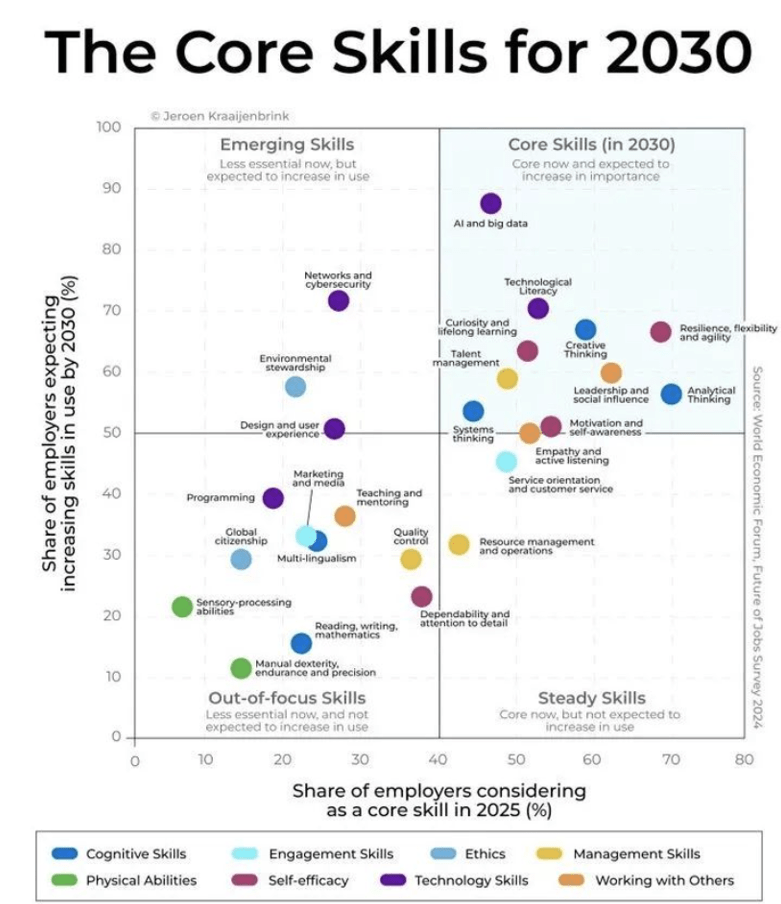



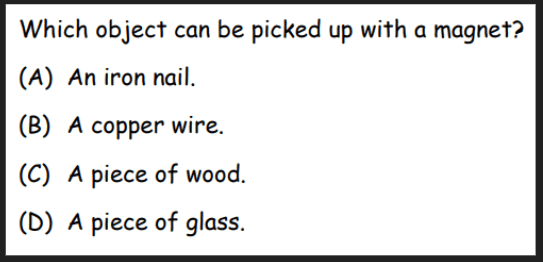
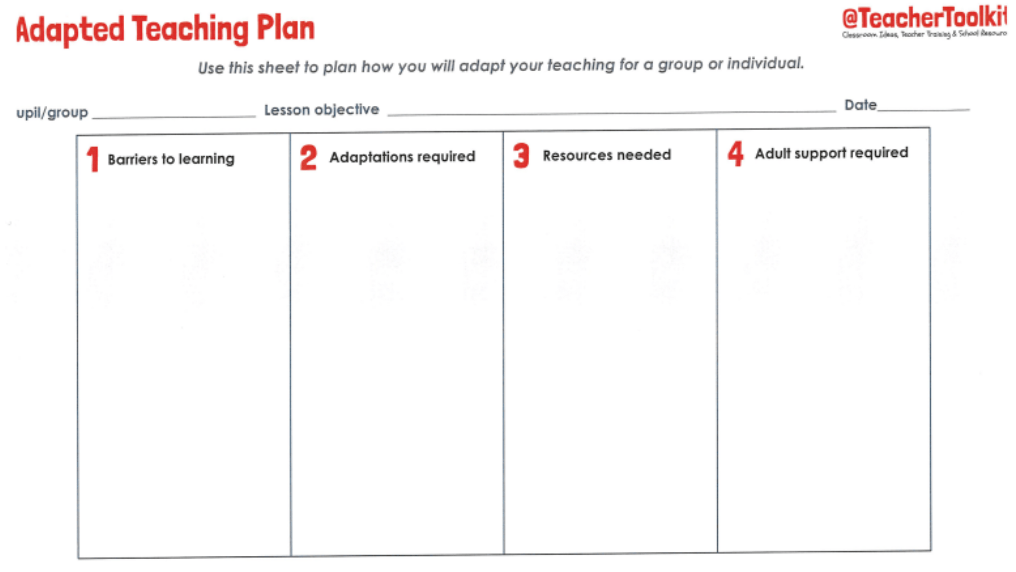
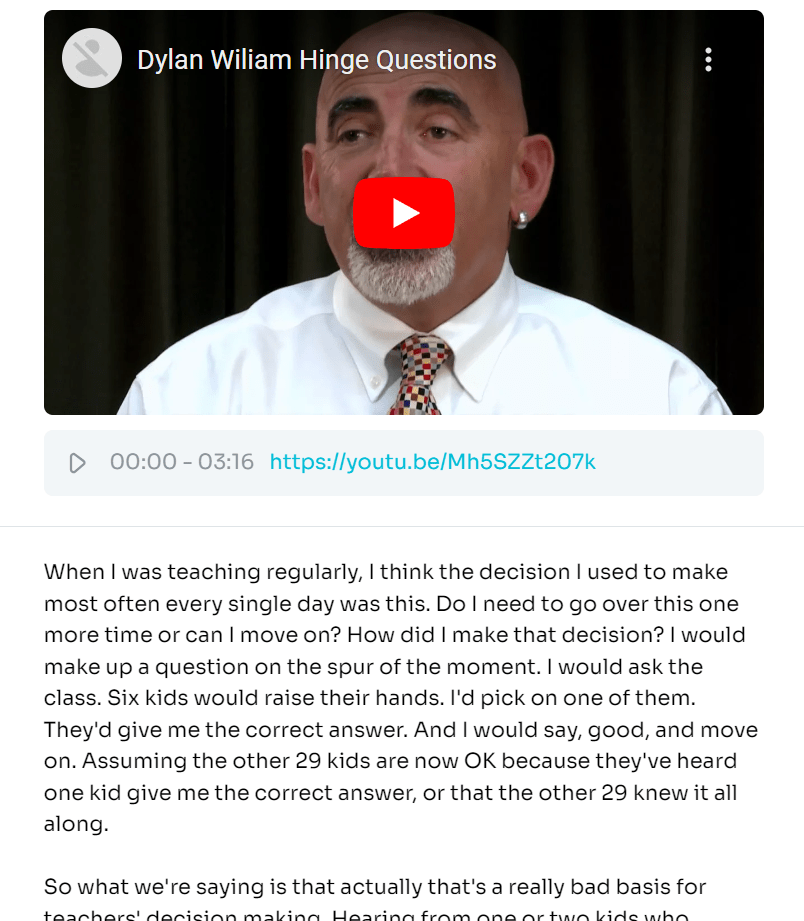
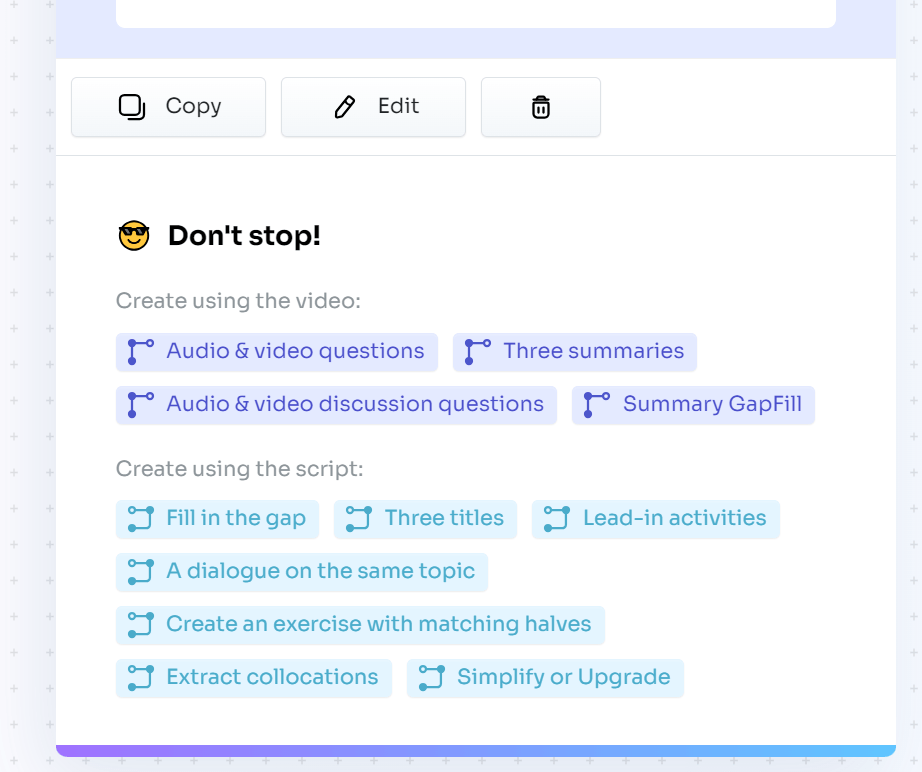
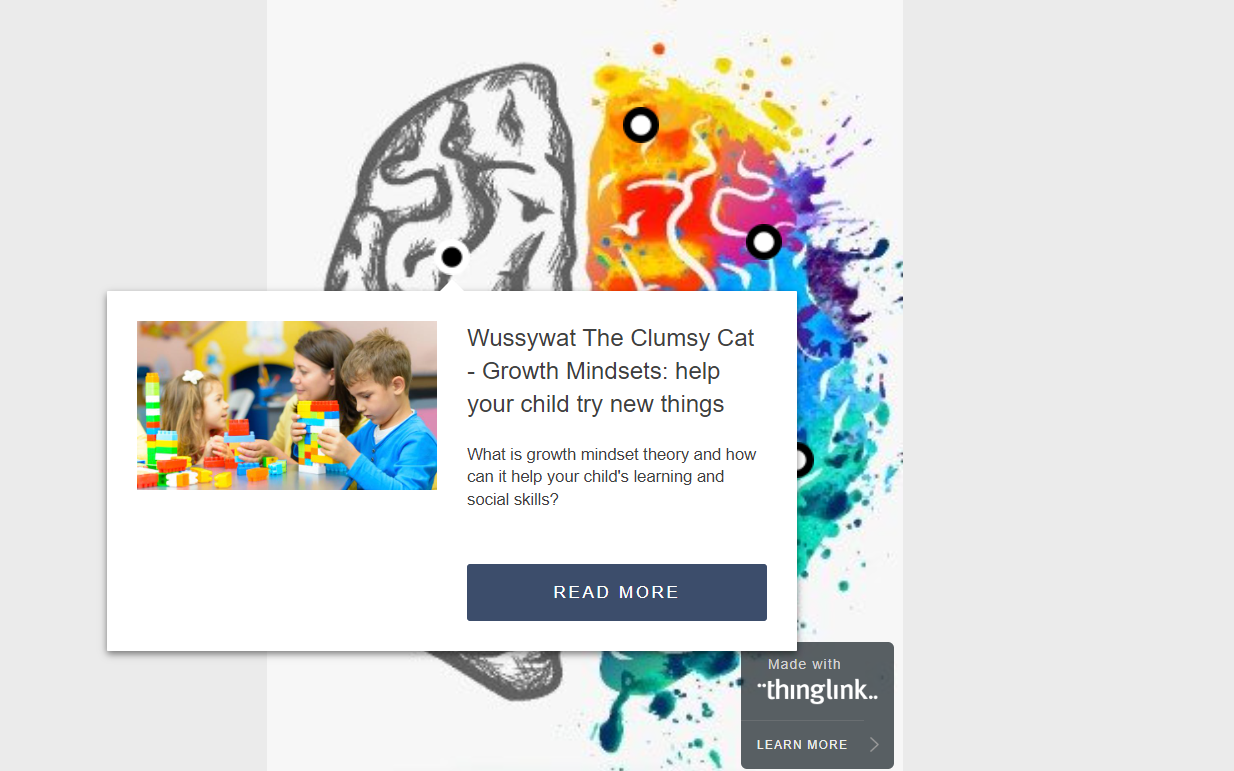
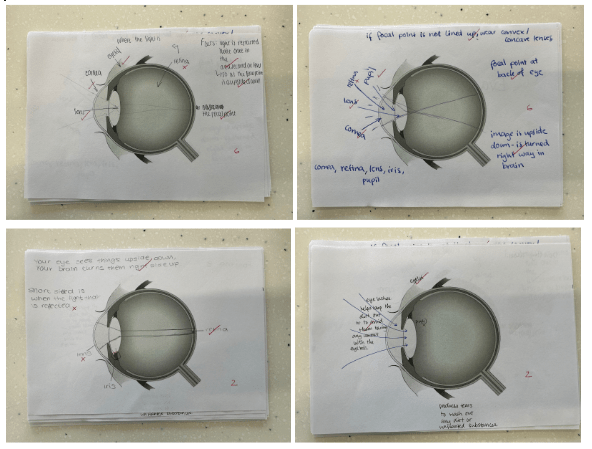
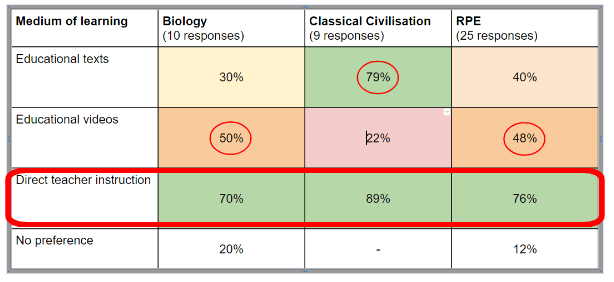





 This Teacher Blogs