

For this TeachMeet, we had a hybrid session partially at the GDST Trust Office in collaboration with the Research Champions CPD as well as online. This session was all about adaptive teaching and the emphasis being placed on this by ISI as well as the Teachers Early Careers Framework. Adaptive teaching is a welcomed change to the dated approach of differentiation. With this change in title, teaching approaches can be more inclusive and take on a pygmalion mindset that all can achieve. I would like to thank Debbie Hill, Trust Consultant for Research for your continued support and promotion of TeachMeet, Adam Giblin, Associate Assistant Head: Innovation and Learning, for always being an incredible guest speaker (often on little notice) at TeachMeet, and James Brown at Oxford High GDST for sharing the concept of ‘scaffolding up’ which I will be magpieing in this blog.
Te begin the session, I played out the following ‘futuristic’ world which is adapted from Peter Thomas’ blog ‘Docendo discimus’, we learn by teaching:
In a near-future world where AI reigns supreme, Willow Lau, a dedicated teacher at SuperTeacherGlobal, awakens to her meticulously designed morning routine. Her watch, connected to the educational cloud platform, dictates her day’s schedule, including an unexpected meeting flagged to improve her teaching methods.
As AI-driven analytics have transformed education, Willow participates in Automated Professional Teaching Assistance meetings (APTAs), crafted to optimise her teaching strategies based on vast amounts of data. While initially sceptical, she recognises the value in these AI-driven sessions, even as they occasionally feel intrusive.
The world has evolved significantly due to pivotal events like the #blacklivesmatter movement and advancements in AI. Policing, justice systems, healthcare, and transportation all operate under AI guidance, leading to a profound reshaping of societal norms and educational practices.
Teaching has transcended traditional notions, replaced by superteachers with core pedagogical and subject specific knowledge, as well as technological backgrounds and a proficiency in managing vast amounts of data. The classroom structure has shifted, with personalised, dynamically scaled learning experiences based on AI algorithms.
Willow’s workday unfolds with teaching sessions conducted across multiple countries, guided by AI-driven analytics and adaptive learning approaches. Even her APTA sessions are supervised by digital humans like Olivia, crafted to engage and assist teachers like her.
However, Willow’s routine takes an unexpected turn when Olivia introduces a groundbreaking program—DigitalSuperTeacher—an AI assistant designed to emulate Willow’s expertise and knowledge. To Willow’s shock, a digital human version of herself appears on the screen, equipped with a wealth of information about her life and teaching methods.
The story highlights a future where AI has revolutionised every aspect of life, including education, and blurs the line between human interaction and artificial intelligence. It portrays a world where technology has reshaped teaching methods and raises thought-provoking questions about the role of AI in education and society at large. Firstly, I must credit ChatGPT for helping me condense this story for the Teach Meet and Kapwing as an AI tool to create the video. Secondly, although this world appears somewhat scary and futuristic, some elements are not actually too far from reality. It goes without saying that teachers are not going to be replaced by robots, COVID has proven that, however, we are in a position where we have huge amounts of data that we can now analyse and use to adapt our teaching approaches. Cumulatively, the most important message here is that in order to do the best for our students, we do need to be constantly reflecting and reviewing our teaching to ensure that all students are achieving their full potential. Furthermore, it’s worth noting that due to the exponential growth in AI, there are a myriad of ‘adaptive’ platforms out there, lots of which are excellent. However, this Teach Meet and blog is about what we as teachers can do in the classroom. Thus, tools like Hegerty Maths or Duolingo, are not what this is about. They are fantastic tools for running parallel to what we as teachers can do in the classroom.
What is ‘adaptive teaching’?
Adaptive teaching is an approach a teacher will use to continually assess the strengths and needs of learners and adapt their teaching accordingly to ensure all learners can meet expectations. Technology may play a part in both assessment and subsequent personalisation of the teaching but it is not essential. With adaptive teaching, the teacher plans for the whole class and makes changes to the curriculum or resources so that all learners can achieve the same goals.
The danger of ‘differentiation’
This ‘concept’ is a replacement to the potentially dangerous and old strategy of ‘differentiation’. This reminded me of Lucy Crehan’s book ‘Cleverlands’ when talking about China and how they have a Growth Mindset and the Confucian way of thinking: “Learning does not privilege anyone, and neither does it discriminate against anyone. Everyone is capable of seeking and achieving knowledge regardless of one’s inborn capability and social circumstances.” In the book Lucy was talking to a Chinese teacher who had visited the UK and thought it odd how students are given different levels of maths, explaining that those with ‘easy’ maths will never keep up. Differentiation by task (as well as setting) disadvantages and caps our students’ learning rather than support them. If we want them to believe that everyone can achieve mastery knowledge, shouldn’t we start from the top and support all in getting there? This is where James Brown’s concept of ‘scaffolding up’ really resonated with me. I also remember how during my teacher training and first few years of teaching, Ofsted had a huge push on differentiation and differentiation by task specifically, which led to teachers creating multiple different resources. One for the Level 5 student, one for the Level 6, sometimes even broken down further to ‘Level 5a’ etc. and as a result any reference to ‘differentiation by outcome’ was not seen as differentiation at all. However, this idea was dangerous. Firstly, it may lead to a lowering of expectations, particularly when in-class groupings are permanent e.g. ‘the bottom group’ receives a different task to everyone else, regardless of the particular needs or aptitudes of the pupils in this area of learning. It also means that teachers can be expected to provide ‘unnecessarily elaborate’ approaches that are not considered to support the learning and progress for the majority of pupils; this means that, for example, the practice of providing three levels of task for every lesson, with different worksheets etc, would not be appropriate. Thus, our focus should be on providing support to students who are not making progress rather than creating a multitude of differentiated resources.
Why is adaptive teaching important?
The ‘why’ here leads me to think back to an earlier Teach Meet on the The Pygmalion effect, or Rosenthal effect. This is a psychological occurrence in which high expectations lead to improved performance in a given area. The original research focused on an experiment at an elementary school where students took intelligence pre-tests. Rosenthal and Jacobsen then informed the teachers of the names of twenty percent of the students in the school who were showing “unusual potential for intellectual growth” and would bloom academically within the year. Unknown to the teachers, these students were selected randomly with no relation to the initial test. At the end of the study, students were given the same IQ test. While all students performed better the second time, Rosenthal and Jacobsen found that those students who had been labelled ‘intellectual bloomers’ had improved to a greater degree than the other students. From this, they concluded that teachers expecting enhanced performance from students can actually lead to enhanced performance. Therefore, if we as teachers have belief that our students will do well, this almost becomes a self-fulfilling prophecy. Thus, we need to move on from differentiation, which can pigeonhole and stifle students’ achievement, to ‘adaptive teaching’ which focuses on unlocking all students’ potential by believing that all students should be provided with the opportunities to achieve.
The Early Career Framework breaks the term ‘adaptive teaching’ into more concrete recommendations for teaching. For example:
Provide opportunity for all pupils to experience success by:
- Adapting lessons, whilst maintaining high expectations for all, so that all pupils have the opportunity to meet expectations.
- Balancing input of new content so that pupils master important concepts.
- Making effective use of teaching assistants.
This is really helpful as it ensures that teachers are not just viewing ‘adaptive teaching’ as a checkbox to tick off, but rather gets them thinking, ‘what does it mean in our context?’ or ‘what does it mean in maths or PE lessons etc?’ Adaptive teaching also places a great emphasis on formative assessment, so we need to consider whether our assessments are well designed to produce information that guides instruction.
Having a full understanding of every child is extremely important in adaptive teaching. Time needs to be diverted to identifying reasons for learning struggles, not just the struggles themselves. Thus schools also need systems that ensure regular communication between teachers, families and the young people themselves to understand barriers and to share effective strategies. As alluded to with the Pygmalion Effect, these communications should remain positive and supportive, rather than becoming opportunities for ‘grumbles’ about students who don’t seem engaged in their learning.
Strategies and suggestions
So on to the fun part, what can we actually do… for this I looked into a few specific areas: rigorous formative assessment, scaffolding, planning tools and quick wins with EdTech.
- Rigorous formative assessment
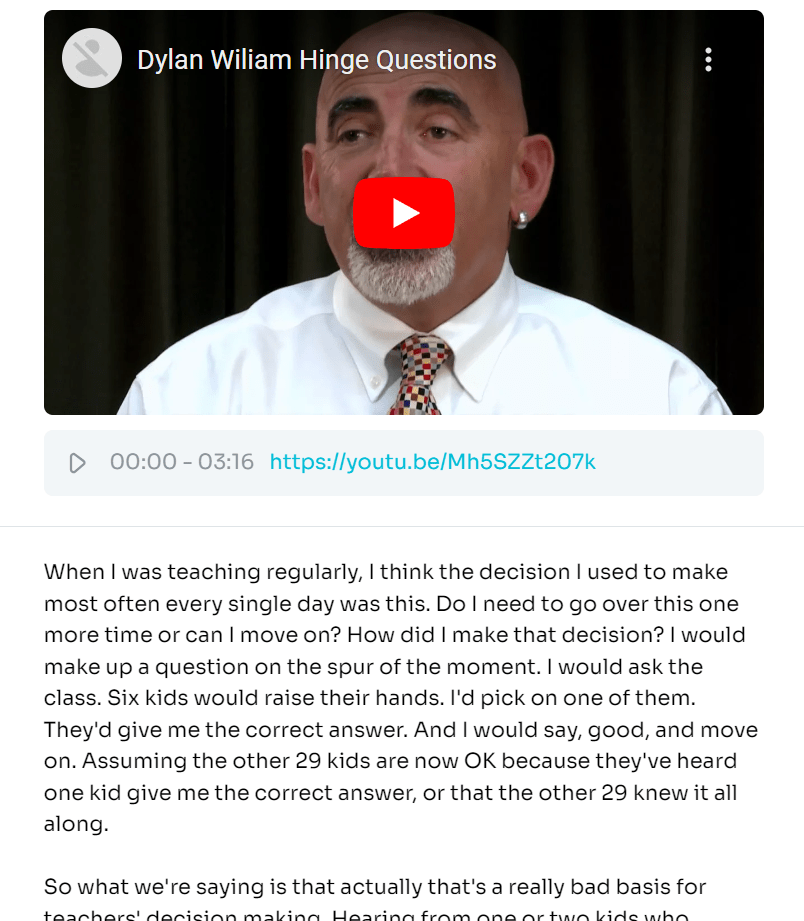
Formative assessments are regular, informal assessments that are used by teachers to assess student understanding and inform teaching strategy. As adaptive teaching requires continual assessment and changes to how we deliver content based on this assessment, it needs to be frequent and meaningful. One example of how teachers can do this is Dylan Wiliam’s Hinge Questions. He explains these by reflecting on how many teachers will frequently make decisions about the success of their instruction based on the response of a few students, for example, asking one A4L question, get one response and assume from this that all other students had the same answer. This approach is insufficient for gauging overall class understanding. Instead, we need to use “hinge questions” every 20 to 30 minutes, these are questions designed to quickly assess the entire class’s comprehension. These questions are concise, allowing for swift responses and immediate decision-making by the teacher. The key criterion for such questions is that students must provide correct answers for the right reasons, ensuring meaningful assessment. By incorporating various response methods like ABCD questions, whiteboards or electronic clickers, teachers can efficiently gather data on student understanding, making teaching more responsive and engaging while providing valuable insights for instructional adjustments.
According to Rosenshine’s principles of instruction, imaginative teachers have found ways to involve all students in answering questions. Examples include having all students:
- Tell the answer to a neighbour.
- Summarise the main idea in one or two sentences, writing the summary on a piece of paper and sharing this with a neighbour, or repeating the procedures to a neighbour.
- Write the answer on a card and then hold it up.
- Raise their hands if they know the answer (thereby allowing the teacher to check the entire class).
- Raise their hands if they agree with the answer that someone else has given.
- ABCD Questions
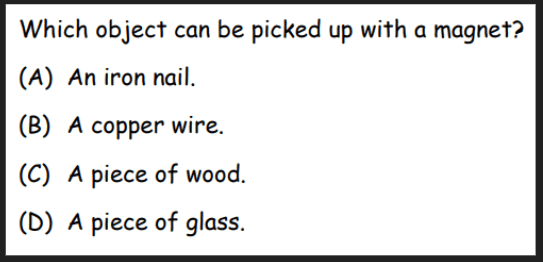
In addition to asking questions, the more effective teachers facilitated their students’ rehearsal by providing explanations, giving more examples, and supervising students as they practised the new material.
The following is a series of stems for questions that teachers might ask when teaching literature, social science content, or science content to their students.
- How are __________ and __________ alike?
- What is the main idea of __________?
- What are the strengths and weaknesses of __________?
- In what way is __________ related to __________?
- Compare __________ and __________ with regard to __________.
- What do you think causes __________?
- How does __________ tie in with what we have learned before?
- Which one is the best __________, and why?
- What are some possible solutions for the problem of __________?
- Do you agree or disagree with this statement: __________?
- What do you still not understand about __________?
2. Scaffolding
Scaffolding aims to provide students with temporary supports that are gradually removed or ‘faded out’ as they become increasingly independent. It is a common component of guided practice within instruction. Teachers are used to the idea of first, now, next – building the bigger picture and making connections for learning. Scaffolding is not just for those who need more support, it is a way to build up complex ideas so that all students can achieve and be stretched. This is why the idea of scaffolding up really landed with me. Examples of this might be:
- Graphic organisers
- Prompts such as “who,” “why,” and “how” to help students to ask questions while they read.
- Checklist to evaluate their work: “Have I found the most important information that tells me more about the main idea?” and “Does every sentence start with a capital letter?” The teacher then modelles the use of the checklist.
- Expert models with which they could compare their work.
- Think alouds:
- I predict ……. will happen next
- What do I know about this topic?
- This part of the text made me think of….
- I think the most important part was…..
- I was confused by……..
- The main idea of the text so far is……
- What new information did I just learn?
- I wonder why…
- I reread that part because….
- I just thought of……
3. Planning Tools
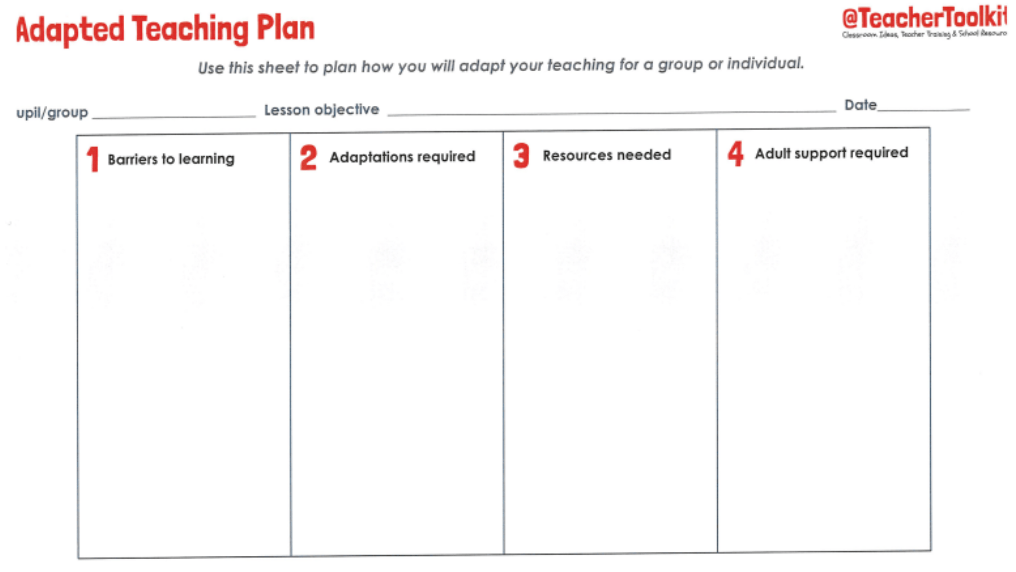
I like this as a tool for planning lessons as it makes you think about ‘barriers to learning’ before the lesson. The reality is, as ‘experts’ we might not be able to fully anticipate these, but taking the time to think about this or reflect on previous years’ experiences and barriers is really powerful. I’m also a realist and know that we don’t always have the time for this…! But as our experience grows, so will our intuitive awareness of what the ‘barriers to learning’ will be. Furthermore, you could add ‘hinge’ questions to this to ensure that you are considering not only the difficult concepts, but also how and when you will check that students are ready to move on.
4. Quick wins with EdTech:
Copilot and ChatGPT
Copilot and ChatGPT are able to change instruction to be more simplified or more complex, you can easily create lesson plans, quizzes, rubrics, model answers, checklists and other resources to suit the variety of learners in your class. As with any generative AI, it’s important that you are very specific about what you ask it to produce and ensure that you check what is produced.
Mentimeter
This is a fantastic tool which can allow you to create interactive ‘hinge questions’, these can be built into a presentation so you can add it to your slides around the 20-30min mark, depending on what tool you choose, it can create multiple ways for you to view the whole class’s responses. These include; word clouds, live and instant polling, entertaining quizzes, informative Q&As etc.
Canva
Canva is an online graphic design tool, therefore it can be used to create graphic organisers for scaffolding. It also has generative AI features called ‘Magic Write’, which allows you to adapt resources appropriately, such as; create short and long text (including paragraph generators, paraphrase tools and summary generators), create outlines of articles etc and provide support in structuring content, and create ‘pros and cons’ lists.
Twee
This is an AI tool which is technically designed for English teachers, however it actually can do a variety of things which would allow teachers to adapt their lessons and resources in a range of subjects. One of my favourites is that it allows you to create a transcript from any YouTube video, which quickly gives you two mediums for students.
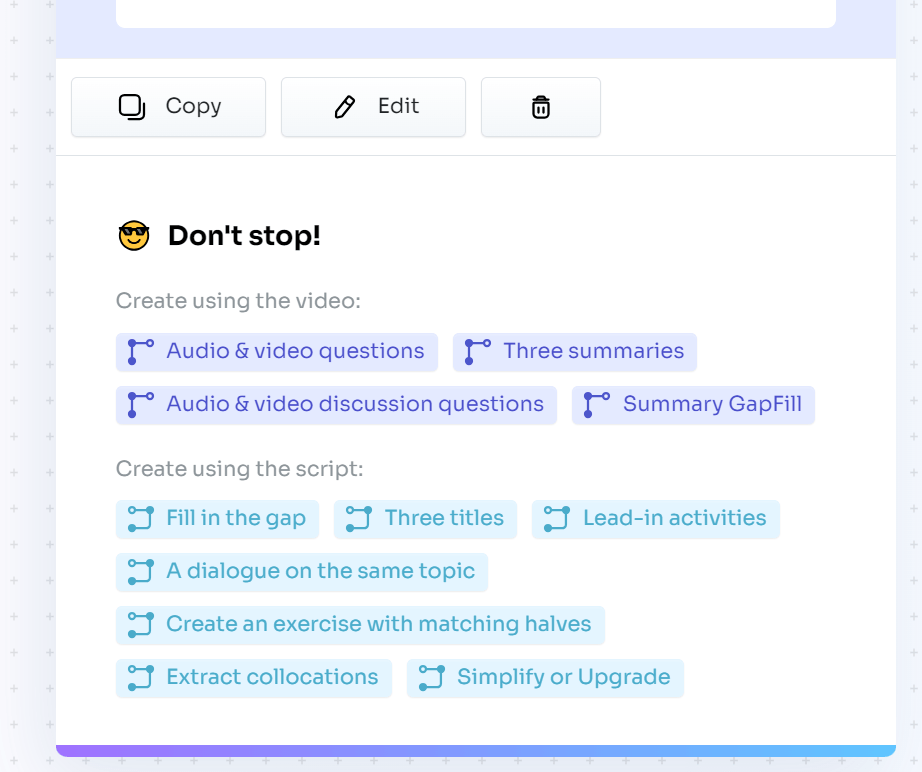
It also can generate questions for any YouTube video in just a few seconds, generate dialogues, stories, letters or articles on any topic and for any level, quickly create multiple choice questions, open questions, and True/False statements. This ‘Don’t stop’ section is fantastic, it generates multiple ideas from the video. This allows you to decide which ones will suit your classes, but is a real time saver.
ThingLink
This allows you to create a ‘digital space’ that lets teachers pull lots of different media types into one easy-to-access place. This is great to support and challenge students depending on what you include. I actually like embedding the interactive ideas from Twee into a ThingLink, they are a great collaboration of resources to support adaptive teaching.
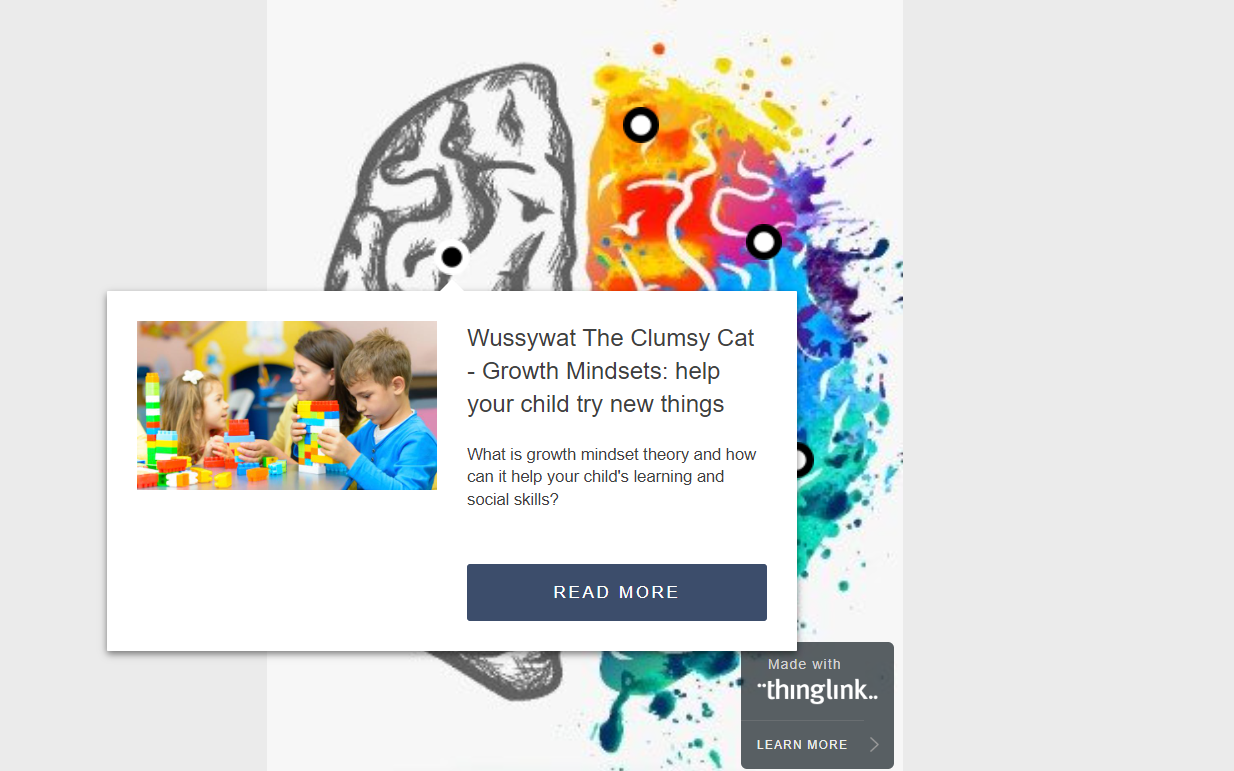
Each of these dots on the image represent a different media. Therefore this image has various different forms of support, scaffolding, activities and challenges, linked to the topic.
These tools all have a free or freemium element, which is enough to support teachers in creating adaptive resources for students. As I alluded to earlier, there are also tools which can be used parallel to lessons to support students which have adaptive elements to them. The main ones which are worth ‘investigating’ are Google Practice Sets and Microsoft Learning Accelerators. But the main aim of this session was to support teachers in ideas and tools to support the resources and strategies that they use in the classroom.
Conclusions
It is refreshing to see that ‘differentiation’ has been ditched for an approach which should allow all students to achieve their potential. Adaptive teaching means that we have the same high expectations and ambitions for all our students and our planning is about how we can support them in getting there. That’s why we need to consider whether adaptive teaching strategies are within the toolkit of every teacher in your school and what sort of further CPD we can provide to help them in having these. Equally, are we ensuring that there is a pygmalion view of all students, is the language used in schools emphasising that all can achieve with the right approaches or is there still a tendency to ‘pigeon hole’ students. Finally, how appropriate are the types of assessments we are doing before, during and after lessons to ensure that teaching is adapted to achieve this aim, the aim that all students can achieve? Ultimately, unlocking the potential of all our students is our aim as teachers.
References
Eaton, J. (2022, October 19). EEF blog: Moving from ‘differentiation’ to ‘adaptive teaching’ | EEF. Education Endowment Foundation. https://educationendowmentfoundation.org.uk/news/moving-from-differentiation-to-adaptive-teaching
How, L. (2023). A Practical Guide To Adaptive Teaching. @TeacherToolkit.
Mould, K. (2021, July 5). EEF Blog: Assess, adjust, adapt – what does adaptive teaching…. Education Endowment Foundation. https://educationendowmentfoundation.org.uk/news/eef-blog-assess-adjust-adapt-what-does-adaptive-teaching-mean-to-you
Noon, M. (2024, February 9). Adaptive Teaching: A Step-by-Step Guide For Teachers. Third Space Learning. https://thirdspacelearning.com/blog/adaptive-teaching/
Rosenshine, B. (2012). Principles of Instruction: Research-Based Strategies That All Teachers Should Know. AMERICAN EDUCATOR, (SPRING 2012), 12-19. https://www.teachertoolkit.co.uk/wp-content/uploads/2018/10/Principles-of-Insruction-Rosenshine.pdf
Thomas, P. (2020, June 12). Docendo discimus. https://medium.com. https://medium.com/@peterjthomas/docendo-discimus-a2ba6347e477
 This Teacher Blogs