
Making our girls 10% braver during Covid-19.

“You’re on mute” might have been the phrase of 2020, but we certainly want to make sure that our girls are not muted in their education or character. This year has been far from the year we expected and one which has really shown how flexible and creative those in the teaching profession are. Overnight, educators everywhere were upskilling and learning new ways to carry on teaching their students. Now that we have returned to school, and are trying to restore some form of ‘normality’ into our students lives, I wanted to look at how we can support our girls and staff as we all transition back into the classroom, and how we can continue to ensure that our girls are 10% braver. We often talk about the importance of developing our girls’ resilience, ability to learn from failure and how to celebrate their own success. I feel that due to Covid, our girls confidence will be knocked and with the chaos that surrounded the summer exams, fear of failure will be more prevalent than ever. So to tackle this issue, I want to look at applying Maslow’s hierarchy of needs to ensure girls have self-esteem and self-efficacy (Maslow, A Theory of Human Motivation, 1943), in particular, how we can apply this to support the best classroom climate to allow our girls to strive this academic year. As I have completed a Women into Leadership course, I am all too aware of how few women do pursue leadership ambitions and how important it is that women are inspired to follow their dreams. Girls are outperforming boys at school and university, yet men continue to outstrip women in terms of salaries and representation at the top of management structures (Kuriloff et al, 2017). This is also true in schools, a government report on the school workforce in England, in 2012, showed that the state education sector is 74% female, yet only 65% of Headteachers are women. The issue is far more prevalent in secondary schools. Here, 38% of the workforce are male and 62% are female. But when you look at Headteachers, the numbers are reversed: just 36% are women. So this is why this is important to me and why it is important for our girls.
Maslow’s Hierarchy of Needs
This explains what we human beings need in order to be motivated and successful, Maslow’s Hierarchy of Needs has often been represented in a hierarchical pyramid with five levels. The four levels (lower-order needs) are considered physiological needs, while the top level of the pyramid is considered growth needs. The lower level needs must be satisfied before higher-order needs can influence behaviour. The levels are as follows:
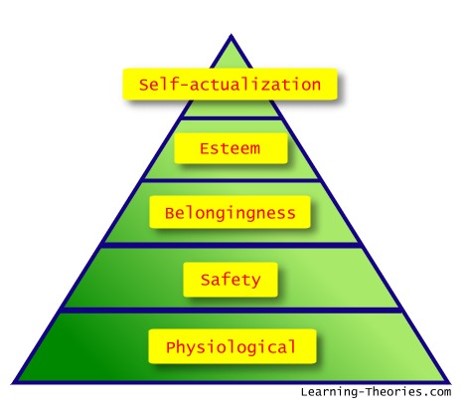
- Self-actualization – includes morality, creativity, problem solving, etc.
- Esteem – includes confidence, self-esteem, achievement, respect, etc.
- Belongingness – includes love, friendship, intimacy, family, etc.
- Safety – includes security of environment, employment, resources, health, property, etc.
- Physiological – includes air, food, water, sleep, other factors towards homeostasis, etc.
Maslow emphasises that people need to feel safe in order to achieve self-actualization. Feeling safe in the classroom is more than simply about a sense of comfort. Rather, it is about feeling safe to step outside of your comfort zone with the knowledge that risks are accepted and encouraged, where teachers help students feel safe to make mistakes.
To ensure that our girls feel safe in the classroom, it is important that we have the right ‘classroom climate’. This refers to the fundamental mood, attitudes, standards, and tone that you and your students feel when they are in your classroom. A negative classroom climate can feel hostile, chaotic, and out of control. A positive classroom climate feels safe, respectful, welcoming, and supportive of student learning. Thus bringing it back to Maslow’s hierarchy of needs. The good news is that a classroom’s climate doesn’t just happen, it’s created! Regardless of our girls’ past experiences, there are things you can do to deliberately shape the climate of your classroom into a positive learning environment.
These are some suggestions, but it’s important that you personalise these to your teaching style and the needs of your lesson. There might be more rules and routines in a science lab than a RPE classroom.
Strategies
1. Develop and reinforce classroom rules and norms that clearly support safe and respectful behaviour. Having classroom rules helps you create a predictable, safe learning environment for your students. Rules give your students clear boundaries and opportunities to practice self-regulation and make good choices. When students feel safe and respected both emotionally and physically, they are able to focus better on learning.
How to:
Girls will be taught a variety of lessons in the same space, therefore they may start to view teachers as coming into ‘their area’. Although at break and lunch time the room is ‘theirs’, they should see it as ‘ours’ when we are teaching. This is for multiple reasons, firstly, any ‘playground issues’ shouldn’t be brought into the classroom so they need to see this no longer as a social space but as a space for learning. And building on that, they need to respect that they are now in your classroom and so should be giving you their full attention. It might sound ‘draconian’ but it’s a good idea to insist that girls stand at the beginning of the lesson, until you greet them to be seated. It’s more to remind them that the lesson has begun and this is the time for learning.
Clear start of a lesson: Have clear and easy starters, as you might be coming from the other side of the school, here are three that just require a board pen…
- Nine box squares: Write nine key words, used in the previous lesson, in boxes on the board. Challenge students to make an accurate sentence of at least three words, or a short paragraph using them all.
- Play key word bingo: Ask students to select six words from a list of key words on the board to create a bingo grid. Read out the definitions to students. As they identify them, they tick off their bingo cards. The first student to get a full house wins.
- Analyse an object: Bring an item/image/artefact to the lesson, ask students to discuss what the lesson is about or how it links to what they have been learning.
End of the lesson: Along with our usual A4L plenaries, it is also a possible idea to have girls pack up at the end of every lesson (even though they aren’t going anywhere). It means their desks don’t become cluttered and that they see a firm end to one lesson to allow the beginning of another.
Another important skill that has an impact on the girls wellbeing is the feeling of being in control/organised. So although it might be ok to let ‘forgetfulness’ slide at first, (it has been 6 months after all), it is important to not allow girls to fall into bad habits around organisation.
Organisation: When they start the day, they should have their books/equipment for lessons 1 & 2, 3, 4 & 5, just as they would if they were moving around the school. For months everything has been in one space (their bedrooms/dining rooms/studies etc) and they haven’t had to think about this preparation for some time, but knowing that they need to have X, Y and Z will help them build back good habits and make them feel more in control.
Folder dividers with the specification on (for A Level and GCSE) can help reduce cognitive load, sense of pride in work and give our girls an awareness of the ‘big picture’/ the ‘why’.
This applies to the digital too and is why we have been working really hard with the girls this year to ensure that they are digitally organised too. They should have a digital folder for the academic year and within that folders for every subject they study.
2. Promote positive peer relationships. You want to create an environment where your students support and are kind to one another.
How to:
Notice and reinforce casual positive interactions between students on a daily basis. If you see a girl supporting her peer with technology, praise that behaviour. Pay attention to the social dynamics of your classroom. Do some students have trouble making friends? Do some students have trouble getting along with others? Who has a lot of friends? Who has few friends? You could have a no hands up policy on your classroom. Change the seating plan frequently as you start to notice these dynamics more.
Having seating plans is something that we encourage and review frequently already, but as we have situations where girls are remaining in their form rooms, we wanted staff to be as ‘creative’ with their seating plans as possible – not alphabetical order. At the beginning of this year we were hoping to be able to move the girls within their form rooms as it’s really important that they get up and move seats for each lesson. Initially we asked staff to remember health and safety measures by ensuring that they kept hold of their seating plans and wiped down the desks with virucide. Unfortunately, we have had to review this and decided to keep our girls in the same seating plans for the day (except for subjects where they are set). Although this is not ideal, as now girls may be spending the entire day in the same place, one idea inspired by Zara’s assembly, is that at the beginning of the lesson I am going to ask all girls stand in their power pose (think Wonder Woman) for two minutes, at least it will get them out of their chairs.
Drop everything and speak: If you have a class (or class members you know don’t like to speak) and want to practice this skill. Have all students read out their speeches/debates at the same time. Due to Covid, this will have to be done quietly as they shouldn’t be raising their voices, but it does mean that everyone gets to practice speaking and they will feel less insecure about public speaking.
This can also be achieved through class reading as this also allows everyone in the classroom a sense of voice, community and everyone is heard.
Toyota Bells: We know our girls are very much motivated by success, however, failure is seen as something to fear and often a barrier to learning. Mathew Syed’s ‘Black Box Thinking’ looks at why mind set is so important for success, and why failure is not something we should fear, but rather something we should embrace. Take for example, the car company Toyota, a highly successful business that uses instant feedback (and failure) to constantly ensure standards of their product and to avoid producing products that aren’t up to standard. If anyone on the production line is having a problem, or observes an error, they pull a cord which halts production across the plant. Senior executives then rush over to see what has gone wrong and help. This is why we need to implement a ‘Toyota pull cord’ in our classrooms. To embrace this idea, I have started using a similar concept with my exam classes. When introducing a new concept or text, I issue them ‘bells’. This way, when there is something they are unsure of or need clarifying again, they simply ring the bell.
3. Nurture positive relationships with all students. You need to let your students know that you not only care about their progress in the classroom, you also care about them as human beings.
How to:
Greet your students by name. Again, year group bubbles mean that they won’t necessarily be walking through your door for you to greet them so instead you can make a ‘show’ of the register. Get them to say or even sing ‘Good morning Mrs/Miss/Mr/Sir …’ and ensure you look at them when you say their name whilst taking the register. This lets them know that you notice and care that they are there and it will also help you learn their name quicker too.
Surprise tests: This concept inspired by Dweck and Nottingham has really lowered the stakes for tests and the wider impact is that students feel more confident at having a go in general as they know the value of failure. But again, with extra anxiety around exams and the belief that every mark counts (as we just don’t know what the summer exam series will be), it’s important to keep ‘surprise’ tests as a purely informative experience. That data isn’t going anywhere; it is just there to support their learning journey as well as their confidence.
Autonomy: Giving students ‘good, better and best’ learning outcomes and allowing them to choose their own outcome. You can also use Google Forms to inform your teaching, for example, asking the girls which topics they want to revise first or how they want to revise.
Conclusions
A lot of these ideas are just about the way we interact with our girls on a daily basis and we are doing most of these things naturally. But as we start the new academic year, it’s always important to remind ourselves of these things so that we can set up the right classroom climate that we want to create. It is much easier to hit the ground running than to try and change your behaviour a term in. Also, with recent events and the potential for another lockdown, so many of these ideas can translate into the digital and if this does happen again, it will be so important that we can support our girls in being brave.
As with all research, it is important that we can measure how well our classroom climate is doing. This is possible through simply checking in with your students throughout the year during one-on-one interviews, or ask for their written responses to some of the following types of questions: Do you feel safe in our class? Are students in our class kind to each other? Do students in our class follow the rules? Do you feel included by the other students? What else would you like me to know about you? Make adjustments as necessary based on your students’ feedback to ensure a positive learning environment for your students.
*Please note that these are only suggestions, it is important that you follow your schools own risk assessment and any changes that are made as a result of Government advice.
References
Matthew Syed, Black Box Thinking, 2016
Future Learn: https://www.futurelearn.com/courses/educating-girls/1#section-requirements [accessed 20.02.20]
Maslow, A Theory of Human Motivation, 1943
Kuriloff et al, 2017
Key Factors in Creating a Positive Classroom Climate, Rachel Kamb, 2012, https://www.cfchildren.org/blog/2012/08/key-factors-in-creating-a-positive-classroom-climate/ [Accessed 14.02.20]
https://www.learning-theories.com/maslows-hierarchy-of-needs.html [accessed 25.02.20]https://www.gov.uk/government/statistics/school-workforce-in-england-november-2012
 This Teacher Blogs