
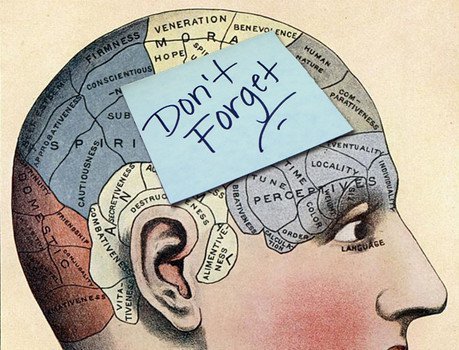
This year we have kicked off our Teach Meets with readings from Barak Rosenshine, Michael Linsin and Robert A. Bjork and Elizabeth L. Bjork. These articles looked at ‘the principles of instruction’, ‘silent modelling’ and ‘forgetting’. So why the title ‘forgetting’ when it was only the theme of one paper? Well, although the article on instruction by Rosenshine might read as though it is the bread and butter of teaching, there are some concepts that as we get to this point in the term, it can be important to remind ourselves of and Linsin’s practical example for instruction is one that we may want to try, and some may want to forget. As the autumn term draws to a close, it’s always refreshing to hear the opinions of our experts here at Northwood and also provided a nice opportunity to take a break from the ‘nitty-gritty’ of report writing and marking, to just remind ourselves of why we love our jobs. And this passion certainly came across in our discussions.
The Principles of Instruction, Rosenshine (2012)
This article presents 10 researched-based principles of instruction, along with some practical suggestions for the classroom. Here Rosenshine presents the following principles:
- Begin a lesson with a short review of previous learning.
- Present new material in small steps with student practice after each step.
- Ask a large number of questions and check the responses of all students.
- Provide models.
- Guide student practice.
- Check for student understanding.
- Obtain a high success rate.
- Provide scaffolds for difficult tasks.
- Require and monitor independent practice.
- Engage students in weekly and monthly review.
Although we did not dissect every point of Rosenshine’s ‘principles of instruction’, we all agreed that it was nice to refresh ourselves of these basic principles, especially when it is nearly the end of term and we can all feel ‘bogged-down’ with the administrative part of the job as oppose to the teaching and learning, which is the real reason we all became teachers in the first place. Our discussions did focus on some of the following areas:
We all agreed that Rosenshine’s ‘principles of instruction’ are fundamental for successful delivery of new skills and content. However, whether these principles were adequate for every lesson was certainly up for debate. Stages 1-8 are good reminders, especially for the initial teaching of new skills and content, but as we at Northwood value ‘soft skills’ such as resilience and independence, we were cautious that following this rigidly in every lesson could promote an ethos of ‘spoon feeding’ which will not translate to University or Careers.
That being said, some of what Rosenshine wrote, back in 2012 is certainly re-appearing under the term ‘meta-cognition’. For example, the emphasis on reviewing prior learning at the beginning of each lesson. Something which most teachers do instinctively, but the research around why this is so effective has gathered momentum over the last few years.
Some staff felt that Rosenshine’s article was too ‘instructional’ and prescriptive, but if we ensure that the ‘instructional’ side of teaching specific skills and fundamental facts that are required for later application is done successfully, we are able to allow more time for independent activities later on. This view and the principle that underlines step 7 does resonate with the skills progression at NWC… this means that steps 9 and 10 can be the most successful, and these were viewed as the most practical.
Research from Dragonfly Training explained the following statistics around ‘How much does the average student remember tomorrow’ if they use the following process.
- Read it: 4%
- Teacher explains it: 9%
- Teacher explains it with questions: 19%
- Teacher Demo: 32%
- Teacher Demo with questions: 49%
- Student demonstration: 89%
This supports not only Rosenshines principle of instruction but also the ‘generation effect’, which states that information is better remembered if it is generated from one’s own mind rather than simply read. Thus, it’s not surprising that staff believe that the most important ‘take away’ from the article is that a blend of all the steps is required.
Why silent modelling is a powerful strategy, Michael Linsin (2014)
This article looked at one practical strategy which cropped up within Rosenshine’s ‘Principles of Instruction’, modelling. The premise being that modelling is a key part of instruction, however often done poorly, e.g. rushed, points missed or too much teacher talk that distracts students from learning.
According to the article, modelling in silence can enhance learning outcomes for the following reasons:
- It makes you more interesting.
- It purifies your instruction (don’t need to worry about confusing or choosing the wrong words).
- It makes paying attention easier – by narrowing the senses needed to just one, sight, following becomes easier.
- It triggers an unforgettable movie in their mind, they will see themselves in their minds eye successfully doing the same.
- It allows direct access, all students, including second language learners, have direct access to you at your best.
- It improves performance.
From this a few staff members said they had tried this, one even gave an example from a previous school where there was a whole week every year, where students were not allowed to ask questions and therefore all tasks were modelled silently. They said that by the end of this week, students had a new appreciation for staff input, but also felt more independent in their ability to problem solve for themselves. With our focus this year on being ‘10% braver’, wouldn’t it be nice to have a week where students are not allowed to ask questions or all lessons are in silence? Or even just a day?
One observation we did all agree on is that you would need very good classroom management to maintain/ have success, but equally, a good ‘blend’ of this with other strategies is key. That being said, the article does state that it is not a strategy to rely on every time you model, as ‘carefully’ chosen words and explanations can be additionally effective. But, silent modelling will make you better at choosing these words.
Forgetting as the friend of learning: Implications for teaching and self-regulated learning, Robert A. Bjork and Elizabeth L. Bjork (2019)
This article was chosen as one of our Northwood Pillars is ‘meta-cognition’. This explores certain conditions that produce forgetting also enhance the learning of that information when re-studied. These are: change of environment, increasing the delay from when something is studied to when it is tested or restudied and interleaving.
Varying environmental contexts:
Restudying material in a different location, where there isn’t the ‘context effect’, means that more of it will have been forgotten, but this will actually enhance later recall, especially if students are re-tested in a different environment. This is particularly interesting, as we often carry out end of unit tests in the classroom, but their summer exams are always in the sports hall. Practically then, we should encourage the students to study in multiple locations will enhance the latter recall of that material. This is because context change induces encoding variability, essentially, a change of scene when restudying means we associate the information with a greater range of contextual cues.
Increasing the interval between study opportunities:
This is known as the ‘spacing’ effect: If material is restudied after a delay, rather than tested, increasing the delay between such study episodes has benefits, not costs in terms of the ability to recall the material later. Recent research has found that the use of spacing resulted in a 10% to 30% difference in final test results. However, students often don’t realise the benefit of this as ‘cramming’ gives results when tested the next day, which is why students who are pre-warned or anticipate an end of unit test, appear to do well, however the material is not committed to their long-term memory. This misunderstanding around the meaning and role of errors, aka assuming that errors are bad, can lead students to avoid effective learning procedures such as practice quizzes and asking questions. Whereas, responding to difficulties successfully, encourages processes that support learning, comprehension and remembering.
Interleaving vs blocking:
Blocking is the practicing of one topic or skill over and over, which produces ‘good’ results when tested instantly. Interleaving is the mixing up of the practice of different subjects and skills which leads to better results when tested later. Teachers are susceptible to thinking that ‘blocking’ instruction by problem or skill helps students and that interleaving can cause confusions. However, blocking can actually create an unreliable sense of understanding or comprehension and then a disappointing performance on a later test. In fact, a critical component of doing well on important tests, is deciding what procedure is required to solve a given problem. For example, in the RPE A Level, they are only examined on 4 of 9 possible units, and it’s not always clear which topic or synoptic element they will need in order to develop a greater level of analysis and application. Therefore, it is key that we encourage solving a problem rather than remembering the solution. Learners need to find operations and activities that will make the ‘to-be-learned’ material recallable after a delay. This is interesting as clearly modelling and instruction has a place, but this must be significantly varied so that the ‘model’ isn’t just learnt and so students learn to problem solve.
Conclusions:
We must remember that at NWC, our girls are so lucky to have a day packed full of different subjects, different teachers and different teaching styles. This is what makes their learning experience and what makes it ‘un-forgettable’, therefore one of my main ‘take-aways’ from this teach meet is that ‘variety is the spice of life’, ensuring that teaching and learning is soundly based in research is step one, how we then use our professional judgement to achieve skills and knowledge development should come from this, and this may look different depending on a variety of contexts. If we didn’t have this wonderful variety, every girl would be sat in 5 lessons where X amount of minutes are spent instructing, X amount of minutes are spent being modelled, and so on. In fact, I’m now tempted to start changing venues and locations to make lessons even less forgettable, except for when forgetting enhances the learning process.
References:
The Principles of Instruction, Rosenshine (2012)
Why silent modelling is a powerful strategy, Michael Linsin (2014)
Forgetting as the friend of learning: Implications for teaching and self-regulated learning, Robert A. Bjork and Elizabeth L. Bjork (2019)
 This Teacher Blogs